Recent Updates
-
Efficient B-Cell Isolation Techniques for Fast and Accurate Monoclonal Antibody DiscoveryIn modern therapeutic antibody development, the ability to isolate naturally paired heavy and light chain antibody sequences from B cells is a decisive factor in generating fully human, high-affinity monoclonal antibodies (mAbs). Researchers now rely on innovative B-cell sorting workflows that combine precision, efficiency, and biological relevance. Among the most widely used...0 Comments 0 Shares 3K Views 0 ReviewsPlease log in to like, share and comment!
-
The Self-Copying Cure: Why "saRNA" is the Next Giant Leap Beyond Traditional mRNAIn the early 2020s, mRNA became a household name. It was the biological "software" that taught our cells to fight back. But as we move through 2026, the scientific community is asking a critical question: Can we make this software run longer, faster, and on a much smaller battery? The answer lies in a radical evolution of the technology—shifting from simple messenger...0 Comments 0 Shares 3K Views 0 Reviews
-
The New Frontier of Biotherapeutics: Advancing Bispecific Antibody Engineering and AssessmentThe landscape of immunotherapy has undergone a seismic shift over the last decade. While monoclonal antibodies (mAbs) laid the foundation for targeted treatment, the emergence of bispecific antibodies (BsAbs) has opened doors to therapeutic possibilities that were once deemed unreachable. By simultaneously binding to two different antigens or epitopes, BsAbs can bridge T-cells to...0 Comments 0 Shares 3K Views 0 Reviews
-
The Brain's Trojan Horse: Can We Finally Vaccinate Against the Thief of Memories?For decades, the word "vaccine" conjured images of smallpox, seasonal flu, or the global scramble of 2020. We viewed them as shields against external invaders—microscopic enemies that crashed the gates of our biology. But as we step further into 2026, the narrative is shifting. We are no longer just looking outward at viruses; we are looking inward at the slow, silent...0 Comments 0 Shares 3K Views 0 Reviews
-
From Ancient Plagues to Modern Biosecurity: Why Re-emerging Bacterial Threats Demand Next-Gen Antibody SolutionsIn an era dominated by discussions of viral pandemics, a silent but potent threat is reclaiming the spotlight: the re-emergence of classic bacterial pathogens. From localized outbreaks of Cholera to the persistent risk of zoonotic Brucellosis and the terrifying legacy of the Plague, the global healthcare community is facing a critical turning point. As antibiotic resistance complicates...0 Comments 0 Shares 3K Views 0 Reviews
-
The Silent Revolution: How AI is Decoding the "Language of Antibodies" for Next-Gen TherapeuticsIn the fast-evolving landscape of biopharmaceuticals, we are moving past the era of trial-and-error. If 2024 was the year Generative AI captured the public imagination, 2025-2026 is the era where AI delivers on its promise in the wet lab. Nowhere is this more evident than in antibody drug discovery—a field once hampered by years of "design-make-test" cycles, now being streamlined by...0 Comments 0 Shares 4K Views 0 Reviews
-
Why Immune Disease Models Are Critical for Translational Drug DevelopmentThe pharmaceutical landscape is entering a phase of unprecedented focus on immune-mediated diseases, with research teams racing to develop treatments for conditions ranging from autoimmune disorders to chronic inflammatory diseases. The key to this progress is not just advanced molecular tools—it is also the strategic use of robust preclinical disease models that faithfully recapitulate...0 Comments 0 Shares 4K Views 0 Reviews
-
Beyond MMAE: A Comparative Look at the Payload Technologies Powering Next-Gen ADCsAntibody–drug conjugates (ADCs) continue to reshape the oncology pipeline, driven by the pursuit of payloads that can deliver stronger potency, improved tumor selectivity, and reduced systemic toxicity. Although more than a decade has passed since the approval of the first ADC, payload development remains one of the fastest-moving components of the field. With growing interest in high-DAR...0 Comments 0 Shares 4K Views 0 Reviews
-
IgE Antibodies and Their Specialized ApplicationsQ1: What are the unique structural features and biological functions of IgE antibodies? A1: Immunoglobulin E (IgE) is the least abundant antibody isotype in mammals but plays a critical role in inducing Type I hypersensitivity (allergic responses) by binding to Fcε receptors on mast cells and basophils. Structurally, it is heavily glycosylated, with glycans accounting for over 10% of...0 Comments 0 Shares 4K Views 0 Reviews
-
OS9 Protein Analysis in Disease Research & DiagnosticsQ1: Why is OS9 considered a promising biomarker and therapeutic target in cancer research? A1: OS9 is a crucial ER-resident lectin and a central component of the ER-associated degradation (ERAD) pathway, responsible for disposing of misfolded glycoproteins. Since OS9 is frequently overexpressed in various tumors to support cancer cell survival under proteotoxic stress, it serves as a vital...0 Comments 0 Shares 4K Views 0 Reviews
-
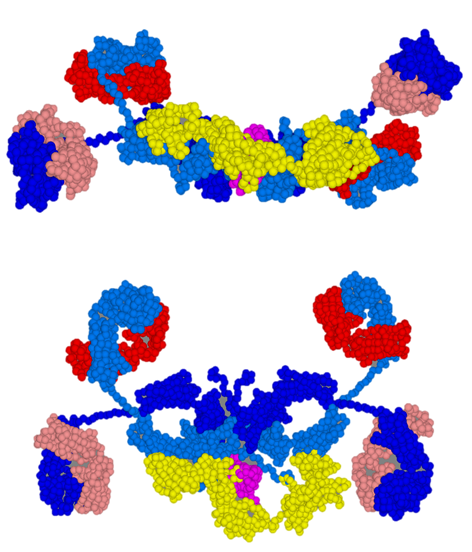
The Master Switch: How PRKACA and PRKAR Orchestrate the Symphony of LifeIn the microscopic, bustling metropolis of a human cell, there is a boardroom that never sleeps. Thousands of messages arrive every second, demanding immediate action: “Break down fat now!” or “Speed up the heartbeat!” or “Divide the DNA!” To handle this chaos, the cell doesn't just react blindly. It uses a sophisticated "management and execution" system...0 Comments 0 Shares 7K Views 0 Reviews
-
Why Immune Disease Models Are Critical for Translational Drug DevelopmentThe pharmaceutical landscape is entering a phase of unprecedented focus on immune-mediated diseases, with research teams racing to develop treatments for conditions ranging from autoimmune disorders to chronic inflammatory diseases. The key to this progress is not just advanced molecular tools—it is also the strategic use of robust preclinical disease models that faithfully recapitulate...0 Comments 0 Shares 7K Views 0 Reviews
-
2026 ADC Landscape: What Emerging Payloads Reveal About the Future of Targeted TherapiesAntibody–drug conjugates (ADCs) continue to reshape the oncology pipeline, driven by the pursuit of payloads that can deliver stronger potency, improved tumor selectivity, and reduced systemic toxicity. Although more than a decade has passed since the approval of the first ADC, payload development remains one of the fastest-moving components of the field. With growing interest in high-DAR...0 Comments 0 Shares 7K Views 0 Reviews
-
Size, Specificity, and Strategy: Choosing the Right Exosome WorkflowA modern-day gold rush is underway in the biopharmaceutical sector—but the prize isn't a new chemical entity or a specific animal strain. Instead, the focus has shifted to something far more microscopic and notoriously difficult to extract: exosomes. As the clinical potential of extracellular vesicles (EVs) gains massive momentum in fields like oncology and regenerative medicine, a...0 Comments 0 Shares 6K Views 0 Reviews
-
Mastering Immune Regulation: The Pivotal Roles of FOXP3, GITR, KLRG1, and FOXP1 in T Cell BiologyIn the complex landscape of the mammalian immune system, T cell subpopulations act as the primary orchestrators of defense and tolerance. Maintaining a delicate balance between attacking pathogens and preventing autoimmunity is essential for survival. Central to this balance are regulatory T cells (Tregs) and effector T cells, whose functions are governed by specific molecular markers and...0 Comments 0 Shares 6K Views 0 Reviews
-
0 Comments 0 Shares 4K Views 0 Reviews
More Stories