


 Pro Benefits
 Sobre
Sobre
 Termos
 Privacidade
 Child Safety & Protection
 Notificações
 Ayrush Global It Services Pvt Ltd
Kunliwelding Why Choose Aluminum Welding Wire ER5183 For Shipbuilding Needs
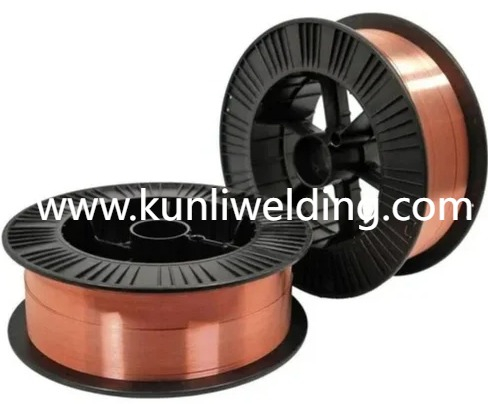
Coastal projects and offshore platforms are being built and serviced under tougher scrutiny, and Aluminum Welding Wire ER5183 frequently appears on specification lists for shipbuilding and marine repair work. Fabricators and yards working on hull panels, deck assemblies and structural fittings favor materials that combine weldability with service durability, because material choice directly affects maintenance cycles and operational readiness in maritime service.
One reason this wire is used is its deposit behavior under welding conditions common to shipyards. The alloy composition supports weld metal that resists corrosion in salt laden atmospheres while keeping a degree of ductility so joints tolerate dynamic loads. That combination matters where waves vibration and variable loading meet welded seams. Designers and maintenance planners looking to extend intervals between inspections value weld deposits that do not create easy paths for pitting and crevice attack.
Weld pool control and bead profile are practical concerns in production. A filler that wets evenly and forms a smooth bead reduces shadowed cavities and undercut areas where moisture can collect. Cleaner weld geometry not only eases visual inspection but also improves adhesion for protective coatings. For visible structural elements and for areas that receive surface treatment, using a wire that yields neat beads saves finishing time and reduces the chance of coating voids that later become corrosion initiation sites.
Thermal response is another factor in marine fabrication. Panels and thin shell structures are prone to distortion during joining. A filler that supports lower shrinkage and predictable thermal contraction helps yards preserve part geometry and reduces costly straightening work. That is valuable on modular builds and on retrofit work where tight tolerances and fit up matter. Good joint sequence planning along with proper clamping amplifies the benefits of a filler that behaves predictably under heat.
Field service and repair environments create their own demands. Spools and packaging that limit moisture pickup are helpful when crews perform repairs on vessels or platforms with limited drying facilities. Handling notes that guide storage and feeder setup reduce the chance that a spool going into a torch has already acquired contaminants that will produce pores. In many operations, a short trial bead after a spool change acts as a practical verification step that the feed path and shielding are correct.
Corrosion resistant performance at the deposit level also depends on post weld practice. Removing flux or residues and applying compatible surface protection soon after welding prevents early exposure of fresh metal to saline air. Where operators plan coatings or metal finishing, choosing a filler that produces a compatible surface tone and that accepts the finish reliably reduces the need for corrective grinding. That saves labor and helps asset managers meet scheduled maintenance windows.
Automation trends in larger yards influence consumable choice too. Robotic cells and mechanized feeders require wire that feeds with minimal variation in diameter and surface quality. Consistent spool geometry reduces adjustments and keeps robotic motion and deposition profiles steady over long runs. Suppliers that document recommended feed settings and spool formats help integrators shorten setup cycles so production moves from prototype to steady runs with fewer interruptions.
Safety and lifecycle planning are part of the procurement conversation. Welds that hold toughness under cyclic loading and that resist localized corrosion reduce the risk of in service failures and lower inspection related downtime. For organizations managing fleets and coastal infrastructure, material decisions that align with maintenance strategies help control operating costs and improve availability.
Fabricators and buyers selecting filler for maritime applications should consider alloy behavior, handling guidance and packaging along with welding practice. Matching a wire that forms durable deposits to joint design and finishing plans yields welds that perform in salt exposed conditions and that simplify inspection and maintenance. For technical notes, handling guidance and product formats related to marine grade filler metals consult the manufacturer product and news pages at www.kunliwelding.com which outline intended uses and recommended handling for relevant wire types.

 English
 Arabic
 French
 Spanish
 Deutsch
 Turkish
 Dutch
Dutch
 Italiano
 Russian
 Romaian
 Portuguese (Brazil)
 Greek
Greek
