


 Pro Benefits
 About
About
 Koşullar
 Gizlilik
 Child Safety & Protection
 Bildirimler
 Ayrush Global It Services Pvt Ltd
Carpool Management System for Smarter Workplace Commutes
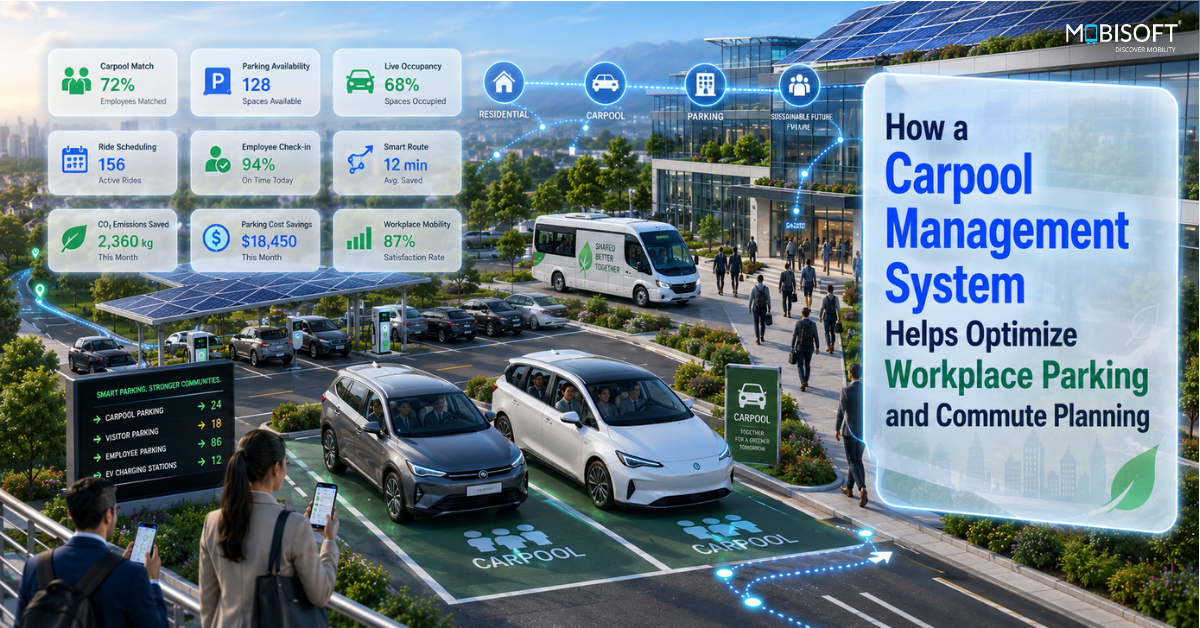
How a Carpool Management System Helps Optimize Workplace Parking and Commute Planning
Office parking used to be an afterthought. Now it is a daily headache for facility teams trying to fit more cars into the same lot, week after week. As hybrid schedules bring unpredictable crowds on certain days, a carpool management system gives companies a real way to manage that pressure without constant firefighting. This article looks at how such a system helps optimize parking capacity and plan commutes with far less guesswork.
Why Is Office Parking Becoming a Bigger Problem?
Parking used to be simple. Fixed headcount, fixed lot, everyone knew their spot. That balance has fallen apart over the last few years, and honestly, most facility managers saw it coming.
Headcounts have grown faster than most office lots ever expanded. Add hybrid work into the mix, and suddenly Tuesdays look nothing like Fridays. One day the lot is half empty, the next, it is overflowing in the morning, without proper planning in place. Facility teams need to react and adjust to a growing pattern that changes almost every week, which makes long-term planning difficult.
-
Overflow parking spilling onto nearby streets or neighboring lots
-
Employees arriving late simply because they circled the lot twice looking for a spot
-
Facility teams fielding the same parking complaints week after week
None of this is really anyone's fault. It is just what happens when planning tools stay stuck in a fixed headcount world while the actual workforce keeps moving around it.
How Does Carpooling Reduce Parking Demand?
The math here is not complicated, though it took a while for companies to actually act on it. Fewer cars arriving for the same number of employees means fewer spots needed, full stop. A corporate carpooling solution tackles this directly instead of just hoping employees figure it out among themselves.
Fewer Vehicles, Same Headcount
When four employees share one car instead of driving separately, that is three spots freed up instantly. Multiply that across a mid-sized office and the numbers start to matter.
-
Reclaimed spots can be repurposed for visitor parking or EV charging
-
Reduces or delays the need for costly lot expansion
-
Makes existing infrastructure stretch further without new construction
Can a Carpool System Manage Parking Allocation?
This is where a proper carpool management system earns its keep, honestly. It matches riders and also handles where those cars actually park once they arrive.
-
Tagged carpool spots reserved near entrances as a small incentive
-
Live occupancy tracking so facility teams know exactly what is filled and what is free
-
Waitlists or overflow rules for unusually busy days, so nobody is left circling the lot
We think this allocation piece gets overlooked far too often. Companies invest in the matching software, then forget that the parking lot itself needs some structure too. A car pooling system that only handles rides but ignores where those rides park is solving half the problem.
How Does It Support Better Commute Planning?
Parking is only one piece of the puzzle. The other is timing, and this is where things get interesting for anyone managing building access or lobby traffic.
A rideshare management software platform can nudge groups toward staggered arrival windows instead of everyone hitting the lot at nine sharp. It sounds minor until you have watched a lobby fill up in the span of six minutes flat.
-
Staggered entry reduces the morning bottleneck at gates and elevators
-
Predictable pickup and drop off times mean fewer last minute scrambles
-
Less congestion around the building entrance during peak hours
What Data Can Facility Teams Use for Planning?
Perhaps the most underrated benefit is the data itself. A well built ride sharing software tool steadily builds a record of how the lot actually behaves, not how someone assumes it behaves.
-
Daily utilization reports showing peak and low demand hours
-
No-show rates that reveal gaps between booked and actual usage
-
Seasonal demand changes tied to weather, holidays, or hybrid schedule updates
This kind of information changes how facility teams negotiate leases or plan renovations. Instead of guessing whether the lot needs to grow, they can point to months of real numbers. That is a far stronger position to plan from, and it takes the emotion out of what used to be a fairly contentious budget conversation every year.
What Are the Operational Benefits Beyond Parking?
The ripple effects go further than the lot itself, and this is the part companies tend to notice only after the program has been running a while.
-
Lighter traffic near office entrances during rush hour
-
Lower maintenance costs since fewer vehicles wear down the lot surface
-
Shorter security queues at the gate, since fewer individual cars need checking in
-
Fewer conflicts with visitor parking, since regular commuters need less daily space
None of these are dramatic on their own. Together, though, they add up to a noticeably calmer campus, and that is worth something even if it never shows up on a balance sheet.
How to Roll Out Parking-Focused Carpooling?
Getting facilities and HR to work from the same playbook makes a real difference here. A few practical steps tend to separate a smooth rollout from a messy one.
-
Pilot the program in the highest demand lot first, where the pain is most visible
-
Tie incentives directly to parking perks, like reserved or priority spots
-
Review capacity data every quarter, since office patterns keep changing
-
Loop in facility managers early, not as an afterthought once software is already chosen
None of these steps demand a huge budget. They mostly demand patience and someone willing to check the data every few months instead of assuming the first setup will hold forever.
Start Mapping Your Office Parking Patterns Today
Workplace parking will keep getting tighter as hybrid schedules stay unpredictable. A thoughtful carpool management system gives facility teams a practical way to ease that pressure while making daily commutes smoother for everyone involved. Maybe it's worth pulling up your own lot's occupancy numbers this week and seeing what they actually say.
 Turkish
 English
 Arabic
 French
 Spanish
 Portuguese
 Deutsch
 Dutch
Dutch
 Italiano
 Russian
 Romaian
 Portuguese (Brazil)
 Greek
Greek
