


 Pro Benefits
 Sobre
Sobre
 Termos
 Privacidade
 Child Safety & Protection
 Notificações
 Ayrush Global It Services Pvt Ltd
Commercial Estimating Explained: How Experts Create Accurate Project Budgets and Bids
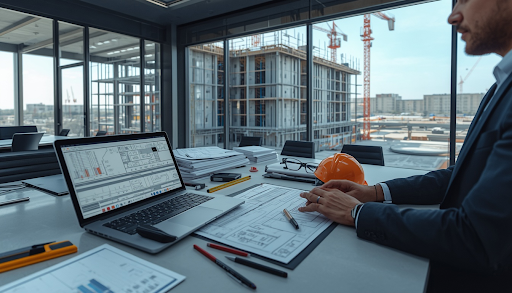
Behind every successful commercial construction project is a number that had to be right from the very beginning: the estimate. Whether it's an office building, a retail center, or a warehouse, commercial estimating is the process that determines whether a project makes financial sense before a single shovel hits the ground. Get it wrong, and a contractor could lose money on a job or lose the bid entirely. Get it right, and it sets the stage for a project that runs smoothly from start to finish.
What Is Commercial Estimating?
Commercial estimating is the process of calculating the total cost of a commercial construction project, including materials, labor, equipment, permits, overhead, and profit margins. Unlike residential estimating, commercial projects tend to be larger in scale and more complex, often involving multiple trades, phased construction schedules, and stricter regulatory requirements.
Estimators review architectural and engineering drawings, specifications, and site conditions to build a comprehensive cost breakdown. This estimate becomes the foundation for the project's budget and, in many cases, the bid submitted to win the contract.
Why Accurate Estimating Matters
-
Winning Bids Without Losing Money: A bid that's too high loses the job; one that's too low can bankrupt a project halfway through.
-
Realistic Scheduling: Costs and timelines are closely linked, so accurate estimates help create achievable project schedules.
-
Stakeholder Confidence: Owners, lenders, and investors rely on estimates to make financing decisions.
-
Risk Management: A thorough estimate identifies potential cost overruns before they happen, not after.
-
Profitability: For contractors, the estimate directly determines whether a project will actually be profitable.
The Commercial Estimating Process
The process typically starts with a detailed review of construction documents, followed by a site visit to assess existing conditions. From there, estimators break the project down into components, sitework, structural, mechanical, electrical, plumbing, finishes and calculate quantities for each.
Once quantities are established, current material and labor costs are applied, often using historical data, supplier quotes, or industry-standard cost databases. Overhead, contingency, and profit margins are then added to arrive at a final bid price. Many estimators use specialized software to streamline this process, reducing manual errors and speeding up turnaround time.
Key Elements of a Commercial Estimate
-
Direct Costs: Materials, labor, and equipment tied directly to construction.
-
Indirect Costs: Permits, insurance, temporary facilities, and supervision.
-
Contingency: A buffer for unforeseen circumstances or price fluctuations.
-
Overhead and Profit: Costs of running the business plus a reasonable profit margin.
Each of these elements must be calculated carefully, since even small miscalculations can compound into significant financial impact on large-scale projects.
Common Mistakes in Commercial Estimating
Even seasoned estimators face pitfalls, including:
-
Underestimating labor productivity rates
-
Failing to account for site-specific challenges like limited access or difficult terrain
-
Using outdated material pricing
-
Overlooking scope gaps between different trade packages
-
Not building in enough contingency for market volatility
These errors can turn a seemingly profitable bid into a financial loss once construction begins.
How Technology Is Changing Commercial Estimating
Software tools and Building Information Modeling (BIM) have transformed how estimators work. Digital takeoffs, cloud-based collaboration, and integrated cost databases allow for faster, more accurate estimates than traditional manual methods. Some firms are even exploring AI-assisted estimating to flag inconsistencies and improve pricing accuracy across large data sets.
Despite these advances, technology is only a tool — experienced judgment still plays a critical role in interpreting site conditions, market trends, and project-specific risks that software alone can't fully account for.
Who Relies on Commercial Estimating?
General contractors, subcontractors, developers, architects, and even lenders depend on accurate commercial estimates. Whether bidding on a new project or evaluating financing options, having a reliable cost breakdown is essential for making informed decisions.
Final Thoughts
Commercial estimating is far more than crunching numbers — it's a blend of technical knowledge, market awareness, and practical experience. A well-prepared estimate protects contractors from financial risk while giving owners and investors the confidence to move forward.
In an industry where margins can be thin and stakes are high, the accuracy of an estimate often determines the success or failure of an entire project. That's why skilled commercial estimators remain one of the most valuable assets in the construction industry today.
 Portuguese (Brazil)
 English
 Arabic
 French
 Spanish
 Portuguese
 Deutsch
 Turkish
 Dutch
Dutch
 Italiano
 Russian
 Romaian
 Greek
Greek
