


 Pro Benefits
 Sobre
Sobre
 Termos
 Privacidade
 Child Safety & Protection
 Notificações
 Ayrush Global It Services Pvt Ltd
Engineering Grade vs Commercial Grade FRP Gratings: What Indian Buyers Must Demand
Introduction
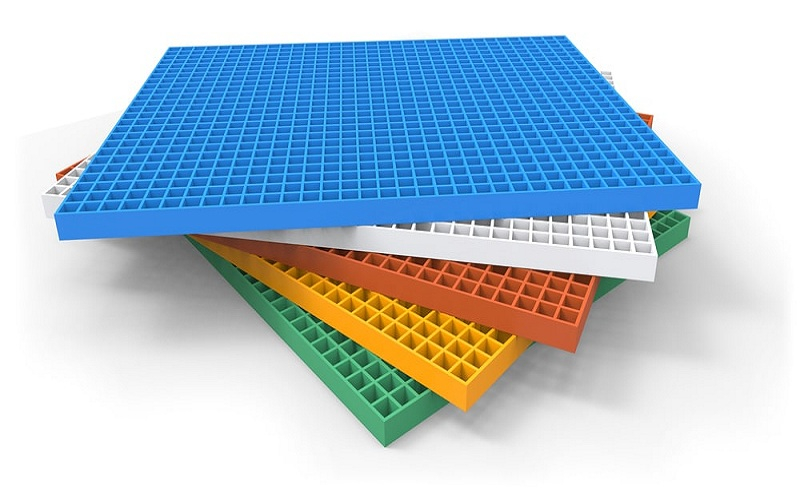
In the evolving industrial and infrastructure landscape of India, choosing the right FRP (fiber-reinforced polymer) grating often makes or breaks long-term performance. Many specifiers and procurement teams settle for “commercial grade” FRP gratings simply because they’re cheaper or more readily available. Yet, in demanding environments—such as chemical plants, effluent treatment systems, offshore platforms, and heavy process industries—those shortcuts lead to rapid degradation, safety hazards, and costly replacements. This article dives deeply into why engineering grade FRP gratings differ fundamentally from commercial grade, and what Indian buyers should mandate when specifying FRP Gratings India solutions.
Defining the Two: Commercial vs Engineering Grade
At a glance, both commercial and engineering grade gratings are composites of fiberglass and resin. But the devil lies in the details of material quality, manufacturing precision, testing, and design margins.
Commercial Grade: basics and limitations
Commercial grade FRP gratings are typically sourced from lower-cost resin systems and basic manufacturing setups, with minimal rigorous QA or design margin buffers. They often target light to moderate duty use—walkways, pedestrian decks, service mezzanines—without intense chemical exposure, UV stress, or heavy dynamic load cycles.
Key typical features (or limitations) include:
-
Use of standard polyester resin or low-grade vinyl ester with minimal additives
-
Sparse or inconsistent third-party testing
-
Marginal safety factors (just meeting “expected” loads)
-
Minimal fire retardant (if any) and smoke suppression
-
Lower UV stabilization
-
Inconsistent fiber content or random fiber orientation
These cost reductions make them tempting—but the performance, especially over time in harsh environments, is compromised.
Engineering Grade: built for longevity
Engineering grade FRP gratings are designed with far stricter tolerances, materials, and validation protocols. They are intended for heavy industrial conditions—corrosive chemicals, high UV, thermal cycling, heavy loads, and safety-critical environments.
Key distinguishing features:
-
Premium resin systems such as vinyl ester or specially formulated fire-retardant resin blends
-
Precise control of fiber volume fraction and fiber alignment
-
Full third-party validation by accredited labs (mechanical, chemical resistance, fire/smoke tests)
-
Inclusion of safety margins beyond calculated load (often 2× or more)
-
UV stabilizers, fillers, and additives for long life under sunlight
-
Design for fatigue, creep, and impact resistance over decades
Hence, engineering grade gratings command a premium initially—but deliver reliability, safety, and lower life-cycle cost in the long run.
Why Indian Buyers Must Ask for More
Given India’s climate, regulatory complexities, and industrial conditions, compromise is not an option. Several unique pressures make engineering grade the only safe bet.
-
Chemical and environmental exposure
Industrial areas, especially in states such as Gujarat, Maharashtra, Tamil Nadu, have heavy chemical, petrochemical, and pharma industries. Exposure to acid, alkali, solvent vapor, and salt-rich air is common. Commercial grade resins deteriorate prematurely due to such attack. Engineering grade gratings, on the other hand, use chemically resistant resins and stringent lab certification, thereby avoiding embrittlement, microcracking, and delamination.
-
UV, monsoon, and thermal cycling
India’s intense sunlight (UV index), monsoon rainfall and wide temperature fluctuations stress composite materials harshly. UV induced resin breakdown leads to surface chalking, strength loss and broken fibers. Engineering grade variants have UV stabilizers, coatings and long-term durability testing in accelerated weather chambers. Commercial grades show visible deterioration in just a few years.
-
Safety & fire regulation compliance
Many industrial sites must comply with fire safety norms, hazardous area classifications, and building safety standards. Engineering grade gratings are manufactured to meet flame spread or smoke emission criteria (Class 1, low smoke, etc.). Commercial grade often bypasses those. In a fire incident, substandard gratings can exacerbate hazards.
-
Load reliability and fatigue
Over time, repeated loading, shock loads, or dynamic loads (machinery-induced vibration, foot traffic) can cause creep, sagging, or fracture in an inferior panel. Engineering grade gratings are designed with fatigue margins and tested for long-term deflection retention. Cheaper ones may pass static load tests but fail prematurely in real life.
-
Long-term cost equations
Although initial cost of engineering grade panels may be 20–40% higher, the cost of downtime, replacement, and safety liability easily outweighs that differential. For large plants or infrastructure, using inferior gratings is a false economy.
Because of these industrial realities, any project that truly cares about durability, safety, and uptime must insist on engineering grade performance—not “good enough for now.”
What Must Be Demanded: Technical Specifications & Documentation
To ensure procurement focus is on real quality rather than marketing claims, Indian buyers should insist on the following checklist when ordering FRP Gratings India:
Material & Resin Specification
-
Declare the resin type (e.g. fire-retardant vinyl ester, phenolic, or isophthalic with additives)
-
Specify minimum glass fiber content (wt% or volume fraction)
-
Require UV stabilization additives, filler systems
Structural Design & Load Rating
-
Declare span and load conditions (point loads, uniform loads, fatigue cycles)
-
Demand safety factor (≥2×) over worst-case load
-
Deflection criteria (e.g. L/200 or better)
-
Creep and fatigue allowance over 20+ years
Fire & Smoke Performance
-
Forward certification of flame spread and smoke density (e.g. ASTM E84 Class 1, or equivalent Indian test norm)
-
Low smoke, low toxicity additives if used in enclosed or public areas
Chemical Resistance & Aging
-
Lab test certificates showing performance in relevant chemical exposures
-
Accelerated aging test results (UV, cyclic humidity)
Full Traceability & QA
-
Mill certificates and raw materials traceability
-
Third-party test reports on every lot
-
QA reports on fiber alignment, resin quality, dimensional tolerances
Warranty & Service
-
Minimum 10-year warranty for structural integrity
-
Terms for replacement, failure thresholds, service support
Installation & Fixing Protocol
-
Recommendations for anchoring, expansion allowance, support framing
-
Guidance on cutting, drilling, and field joints without undermining structure
By embedding these demands into the purchase order, any manufacturer—whether domestic or international—must commit to a much higher baseline of performance.
Comparative Table: Key Differences at a Glance
|
Parameter |
Commercial Grade |
Engineering Grade |
|
Resin system |
Standard polyester or low-grade vinyl ester |
Fire-rated vinyl ester or engineered resins |
|
Safety factor |
Minimal (≈1.2–1.5×) |
Higher (≥2× or more) |
|
Fire / smoke tests |
Often skipped or basic |
Full certified flame & smoke tests |
|
UV & aging |
Minimal stabilization |
Accelerated aging proof, UV additives |
|
Chemical resistance |
Basic resistance |
Verified compatibility with site chemicals |
|
Fatigue & creep |
Marginal design for static load |
Long-term load cycles included |
|
Quality assurance |
In-house inspection only |
Third-party validation, lot-wise traces |
|
Warranty & support |
2-5 years max |
10 years or more, service support |
|
Life-cycle cost |
Often high due to replacement |
Lower due to durability |
How Indian Buyers Can Validate Proposals
Even if vendors claim “engineering grade,” final verification is essential. Here’s how to avoid being misled:
-
Ask for real lab reports — not just internal data sheets
-
Demand sample coupons — cut and test under known load before acceptance
-
Inspect resin appearance — uniform, bubble-free, with no fiber voids
-
Check fiber alignment — visible under magnification; must be consistent
-
Cross-check supplier reputation — field installations, references, testimonials
-
Include penalties in contract — for underperformance beyond tolerance
Using these validation steps ensures that specification language becomes enforceable, not just aspirational.
Case Illustration: Where Commercial Grade Fails
In a wastewater treatment plant in India, roofed walkways with commercial grade FRP started showing surface chalking, fiber exposure, and cracks in under 5 years. Some panels even gave way under personnel load. The plant administration then retrofitted engineering grade gratings with verified fire ratings, UV stabilizers, and a 10-year guarantee. The replacements have operated without issues for over a decade.
This pattern repeats across industries—when corners are cut on gratings, failures manifest rapidly in corrosive or UV-heavy conditions. Engineering grade design avoids that entirely.
Final Thoughts & Buyer Mandate
For critical industrial projects in India, requesting “standard FRP gratings” is no longer acceptable. Instead, all stakeholders—designers, contractors, procurement teams—must insist on engineering-grade specifics and verification. When procurement clearly demands:
-
proper resin systems,
-
structural safety margins,
-
fire/smoke certification,
-
lab-validated chemical & UV resistance,
-
full QA traceability,
the supplier is forced to deliver a product that truly qualifies.
Using lower-tier commercial grade in demanding settings leads to early failures, safety incidents, costly downtime, and hidden replacement costs. By contrast, true engineering grade panels offer decades of safe, reliable performance—and drastically lower life-cycle costs.
Therefore, any serious industrial or infrastructure specification must embed those exacting requirements. Only that approach ensures FRP Gratings India installations endure the harsh Indian environment, maintain safety, and deliver value over their full lifespan.
In short: demand the engineering grade—not settle for commercial.
 Portuguese (Brazil)
 English
 Arabic
 French
 Spanish
 Portuguese
 Deutsch
 Turkish
 Dutch
Dutch
 Italiano
 Russian
 Romaian
 Greek
Greek
