


 Pro Benefits
 Über
Über
 Bedingungen
 Datenschutz
 Child Safety & Protection
 Benachrichtigungen
 Ayrush Global It Services Pvt Ltd
Education App Development: Build an App Like Coursera
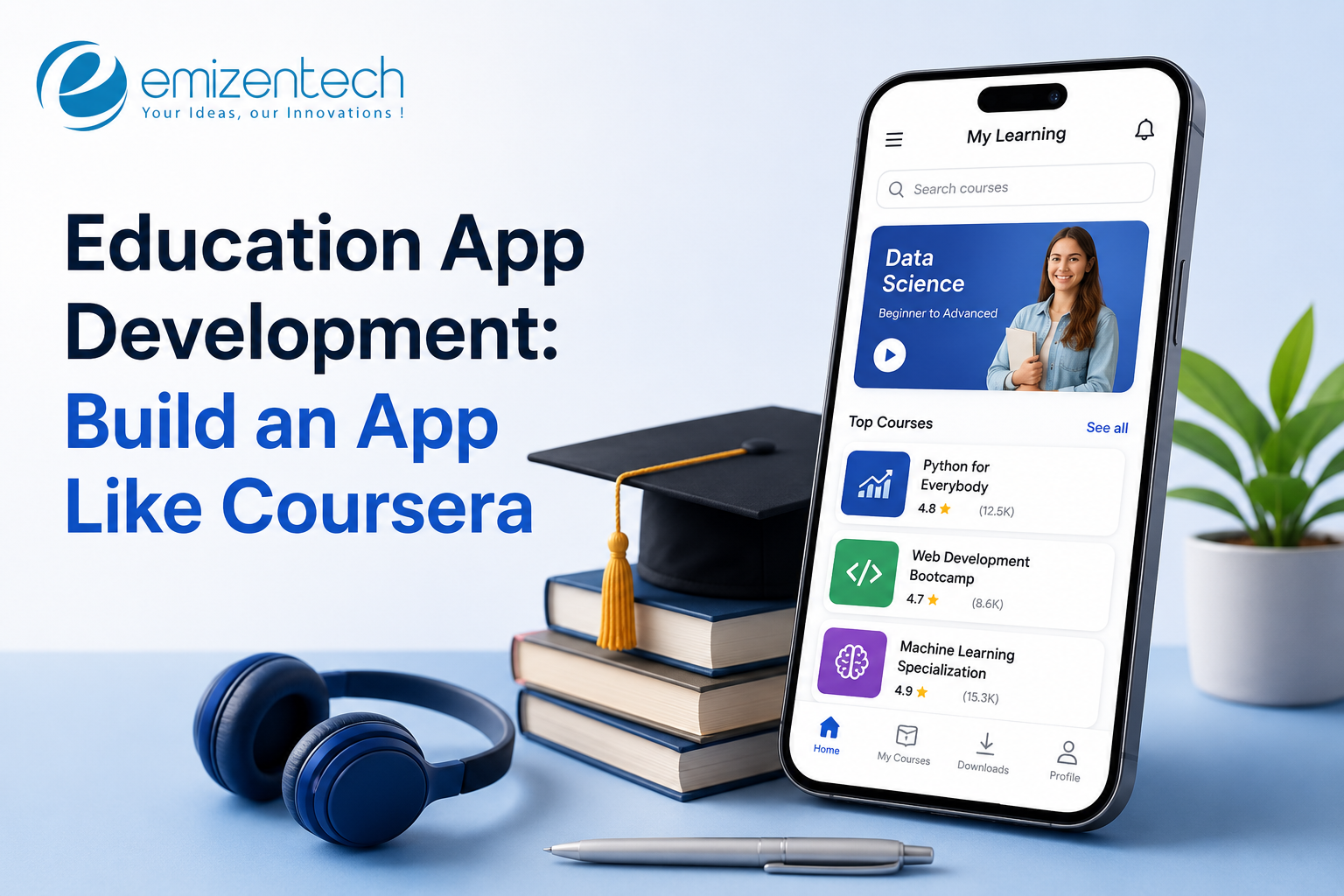
Online learning has become a normal part of education and professional growth. Students, working professionals, and organizations increasingly rely on digital platforms to learn new skills, earn certifications, and access educational content from anywhere. Among the many platforms that have shaped this trend, Coursera stands out as one of the most recognized examples of large-scale online learning.
The success of platforms like Coursera has encouraged businesses, educational institutions, and entrepreneurs to explore education app development. However, creating an app that delivers a smooth learning experience involves much more than uploading video lessons. It requires thoughtful planning, user-focused design, reliable technology, and features that keep learners engaged over time.
This article explores the key aspects of education app development and explains what it takes to build an app similar to Coursera.
Understanding the Coursera Business Model
Before starting development, it is important to understand what makes Coursera successful.
Coursera functions as an online learning marketplace where universities, educational institutions, and industry experts can offer courses to learners worldwide. Users can enroll in individual courses, complete assignments, participate in assessments, and earn certificates after meeting course requirements.
The platform creates value by connecting three major groups:
-
Learners seeking knowledge and certifications
-
Educational institutions providing content
-
Organizations offering professional training
This model allows the platform to continuously expand its course catalog while serving different learning needs.
When building a similar application, the goal is not necessarily to copy Coursera but to create a learning ecosystem that provides meaningful educational experiences for a specific audience.
Key Features Required in an App Like Coursera
The success of any education platform depends on the quality of its features and user experience. Learners expect easy access to courses, seamless navigation, and engaging learning tools. Including the right features helps create a platform that supports both learning and retention.
User Registration and Profiles
Every learning platform needs a secure registration system.
Users should be able to sign up using email addresses, mobile numbers, or social login options. Once registered, they can create personal profiles that display learning history, completed courses, certifications, and achievements.
Personalized profiles help learners monitor their educational journey and encourage continued engagement.
Course Catalog and Search Functionality
As the number of courses grows, navigation becomes critical.
A well-designed course catalog should include:
-
Categories and subcategories
-
Search filters
-
Skill levels
-
Course duration
-
Ratings and reviews
For example, a user searching for data science courses should quickly find beginner, intermediate, or advanced options without scrolling through hundreds of unrelated results.
Video-Based Learning
Video lessons remain the foundation of most online learning platforms.
The application should support:
-
HD video streaming
-
Adjustable playback speed
-
Subtitles
-
Offline downloads
-
Resume playback functionality
Many learners study during travel or in areas with unstable internet connections. Offline access can significantly improve the learning experience.
Quizzes and Assessments
Learning becomes more effective when users can test their understanding.
Interactive assessments may include:
-
Multiple-choice questions
-
Practical assignments
-
Coding exercises
-
Case studies
-
Project submissions
For example, a digital marketing course may include campaign planning assignments rather than relying only on theoretical questions.
Progress Tracking
One of the most motivating features in education apps is visible progress tracking.
Users should be able to see:
-
Course completion percentage
-
Learning milestones
-
Completed modules
-
Assessment scores
Progress indicators encourage learners to continue courses rather than abandoning them midway.
Certificates and Achievements
Certificates provide tangible value to learners.
After successfully completing a course, users can receive downloadable certificates that verify their achievement. Digital badges and achievement systems can further increase engagement.
Professional learners often use these certificates to strengthen resumes and demonstrate new skills.
The Role of AI in Modern Education Apps
Artificial intelligence is becoming increasingly common in digital learning environments.
One notable trend is Generative AI in education, which can support learners and educators in various ways. For example, AI-powered systems can generate practice questions, summarize lessons, provide writing assistance, and offer personalized learning recommendations.
Imagine a learner struggling with a difficult programming concept. Instead of searching through multiple resources, an AI-powered assistant could explain the topic in simpler terms and suggest additional learning materials.
However, educational platforms should use AI carefully. Accuracy, transparency, and content quality remain essential, especially when learners depend on the platform for skill development and professional growth.
Creating an Engaging Learning Experience
Keeping learners motivated throughout a course is one of the biggest challenges in online education. Engagement-focused features encourage consistent participation and improve course completion rates. A positive learning experience often leads to better educational outcomes.
Personalized Recommendations
Recommendation engines help users discover relevant content.
For example, if a learner completes a beginner Python course, the platform may recommend advanced programming or machine learning courses.
This creates a natural learning pathway and increases retention.
Discussion Forums
Learning often improves through interaction.
Discussion forums allow learners to:
-
Ask questions
-
Share insights
-
Solve problems collaboratively
-
Connect with instructors
These interactions create a stronger sense of community and make online education feel less isolated.
Gamification Elements
Gamification can encourage continued participation when used appropriately.
Examples include:
-
Achievement badges
-
Learning streaks
-
Leaderboards
-
Milestone rewards
The goal is not to turn education into a game but to maintain motivation during longer learning journeys.
Technology Considerations for Education App Development
Behind every successful education app is a strong technical foundation. Factors such as scalability, performance, security, and content delivery must be carefully planned during development. The right technology choices help ensure a reliable and future-ready platform.
A learning platform may need to support:
-
Thousands of simultaneous users
-
Large video libraries
-
Real-time notifications
-
Secure payment processing
-
Cloud storage
Developers typically rely on cloud infrastructure to manage growing user demand efficiently.
Security is equally important. Educational platforms collect personal information, learning records, payment details, and certificates. Strong encryption, secure authentication, and compliance with privacy regulations help protect user data.
Organizations planning such projects often consult an experienced education mobile app development company to understand technical requirements, architecture planning, and long-term scalability considerations before beginning development.
Monetization Models for an Education App
A sustainable revenue strategy is essential for maintaining and growing an education platform. Different monetization approaches can be used depending on the target audience and business objectives. Choosing the right model helps balance profitability with user value.
Subscription Plans
Users pay monthly or yearly fees to access multiple courses.
This model works well for platforms offering extensive content libraries.
Individual Course Purchases
Learners pay only for the courses they want to take.
This approach appeals to users seeking specific skills without committing to subscriptions.
Certification Fees
Some platforms offer free learning materials while charging for verified certificates and assessments.
Corporate Training Programs
Organizations may purchase access for employee training and professional development.
This model is increasingly common as businesses invest in workforce upskilling.
Future Trends in Education App Development
The future of online learning will likely be shaped by greater personalization and interactive experiences.
Emerging trends include:
-
AI-assisted tutoring
-
Virtual classrooms
-
Skill-based assessments
-
Interactive simulations
-
Microlearning modules
-
Augmented and virtual reality learning experiences
For example, medical students may practice procedures using virtual simulations, while engineering students could interact with 3D models inside educational applications.
As technology evolves, education apps will continue moving beyond traditional video lessons toward more immersive learning environments.
Conclusion
Building an app like Coursera requires a combination of educational expertise, user-centered design, scalable technology, and engaging learning experiences. Success depends on creating a platform that genuinely helps learners achieve their goals rather than simply delivering content.
From video learning and assessments to AI-powered assistance and personalized recommendations, every feature should contribute to a better educational journey. As online learning continues to expand across industries and age groups, thoughtfully designed education platforms will play an increasingly important role in shaping how people learn and develop new skills.
Companies such as EmizenTech have contributed to the growing conversation around education technology by exploring innovative approaches to digital learning solutions and educational platform development.
FAQs
How much does it cost to build an app like Coursera?
The cost depends on features, platform complexity, technology stack, design requirements, and development resources. Basic platforms cost significantly less than enterprise-level learning ecosystems.
What are the most important features in an education app?
Core features include user registration, course management, video streaming, assessments, progress tracking, certificates, and personalized recommendations.
Can AI improve education apps?
Yes. AI can support personalized learning, automated assessments, content recommendations, and learner assistance when implemented responsibly.
How long does it take to develop an education app?
Development timelines vary based on project scope. A basic learning platform may take several months, while advanced solutions can require a year or more.
Is Coursera's model suitable for niche education platforms?
Yes. Many successful education apps focus on specific industries, skills, or learner groups rather than offering a broad catalog of courses.
 Deutsch
 English
 Arabic
 French
 Spanish
 Portuguese
 Turkish
 Dutch
Dutch
 Italiano
 Russian
 Romaian
 Portuguese (Brazil)
 Greek
Greek
