


 Pro Benefits
 About
About
 Termeni
 Confidențialitate
 Child Safety & Protection
 Notificări
 Ayrush Global It Services Pvt Ltd
How Does a CO2 Removal System Work
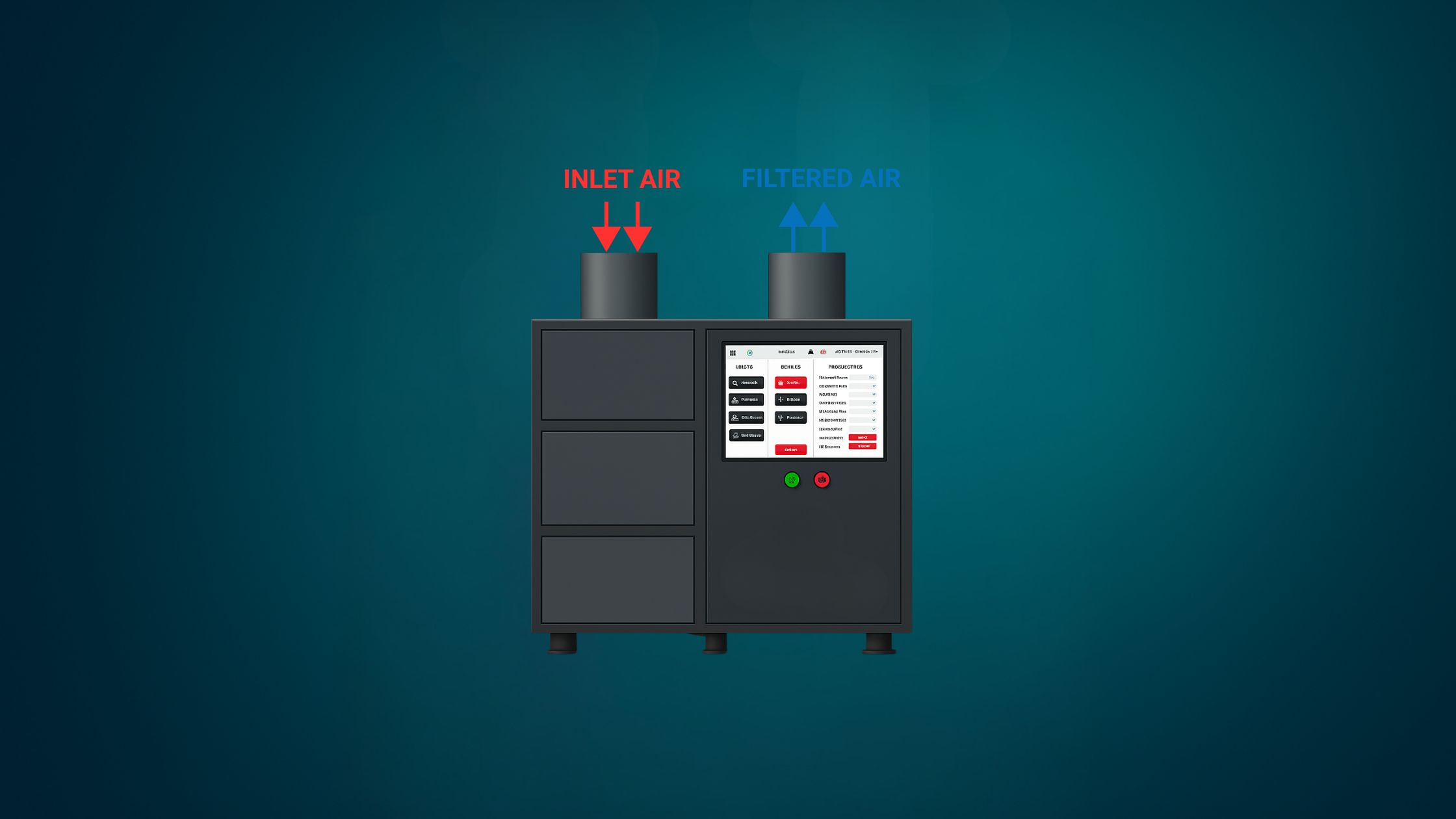
Twelve soldiers sealed inside an underground command bunker for 96 hours straight. The blast doors are locked, the NBC filtration is running at full positive pressure, and the air outside is assumed hostile. Yet eighteen hours in, three occupants report headaches. By hour twenty-four, two are visibly fatigued and struggling to concentrate on radio traffic.
The external threat hasn't breached the shelter. The problem is inside it.
This is the scenario that catches many shelter designers off guard. A CO2 removal system isn't a backup feature in sealed environments — it's the difference between a shelter that protects occupants and one that slowly suffocates them. When airtight integrity keeps contaminants out, it also traps something far more immediate: the carbon dioxide every occupant exhales, second after second, hour after hour.
Why Filtration Alone Doesn't Solve the Air Problem
NBC filtration systems are built to stop particulates, chemical agents, and biological threats from entering a shelter. They're excellent at that job.
But filtration doesn't remove CO2 generated inside the sealed space. That's a separate engineering problem entirely.
A resting adult exhales roughly 0.3 to 0.5 liters of CO2 per minute. In a sealed bunker housing a dozen people, that adds up to dangerous concentrations within hours — not days. Positive pressure keeps the shelter airtight against the outside world, but it also means there's nowhere for exhaled CO2 to escape unless a dedicated scrubbing system is actively pulling it out.
This is why shelter engineers separate two distinct disciplines: contaminant exclusion and internal atmosphere management. They solve different problems, and conflating them is one of the most common — and dangerous — design oversights in sealed-shelter planning.
How CO2 Scrubbing Technology Actually Works
A CO2 scrubber removes carbon dioxide from recirculated air through one of several absorption mechanisms, depending on application and duration requirements.
Chemical absorption uses alkaline compounds — typically lithium hydroxide or soda lime — that react with CO2 molecules to form stable solid compounds. This method is reliable and well-proven in defence applications, though the absorbent media is consumed and must be replaced on a schedule tied to occupancy load.
Regenerative scrubbers use amine-based or molecular sieve materials that capture CO2 and can be thermally or pressure-cycled to release it, allowing the media to be reused. These systems suit longer-duration shelters where consumable replacement logistics aren't practical.
Molecular sieve technology relies on engineered pore structures that selectively trap CO2 molecules while allowing oxygen and nitrogen to pass through. This approach is common in compact, power-conscious installations.
Each method has tradeoffs in power draw, footprint, and maintenance cadence — which is why system selection has to match the specific shelter's occupancy profile, not a generic specification sheet.
Calculating CO2 Generation Against Shelter Volume
Sizing a CO2 scrubber for bunker applications starts with a straightforward but critical calculation: occupancy count multiplied by metabolic CO2 output, measured against total air volume and air change rate.
A shelter built for eight occupants but holding fourteen during an extended event will exceed safe CO2 thresholds far faster than designers anticipated. This is precisely why occupancy-based calculation — not square footage alone — should drive scrubber capacity decisions from day one.
Oxygen Management Runs in Parallel
CO2 removal doesn't operate in isolation. As occupants consume oxygen and produce CO2, long-duration shelters often pair scrubbing systems with oxygen supplementation — either through stored compressed oxygen, candles, or generation systems — to maintain breathable atmosphere balance during extended sheltering periods.
Monitoring both gases simultaneously, with alarm thresholds set well below physiologically dangerous levels, gives shelter operators the lead time needed to respond before symptoms appear.
Key Features That Separate Reliable Systems From Liabilities
A dependable CO2 removal system for defence or critical-infrastructure use typically includes:
- Real-time CO2 concentration monitoring with configurable alarm thresholds
- Regenerative or high-capacity absorption media suited to expected occupancy duration
- Low power consumption, with compatibility for backup power systems
- Corrosion-resistant construction for long-term sealed storage readiness
- Compact, modular footprint that doesn't compete with other life-support equipment for space
- Quiet operation — a non-trivial requirement in command and control environments where audio discipline matters
Where These Systems Are Deployed
This isn't niche equipment. CO2 scrubber industrial and defence applications span:
- Military bunkers and underground command posts
- NBC-protected command and control centres
- Civil defence shelters built for public sheltering events
- Government continuity-of-operations facilities
- Sealed data centre enclosures
- Naval shore installations with closed-environment requirements
Selecting the Right System: What Actually Matters
When evaluating a CO2 scrubber for air management in sealed environments, engineering teams should weigh:
- Maximum occupancy and expected sheltering duration
- Shelter volume and calculated air change requirements
- Integration compatibility with existing NBC filtration and pressurization systems
- Power availability, including backup power continuity
- Maintenance access and consumable replacement logistics
- Compliance with applicable defence and shelter air-quality standards
Lifecycle cost matters more than upfront pricing here. A system that's marginally cheaper but requires frequent media replacement, or lacks integration with existing pressurization infrastructure, ends up costing more in operational disruption than it saved at purchase.
What to Look for in a Manufacturer
If you're sourcing a CO2 scrubber for home use, industrial facilities, or defence-grade shelters, the supplier matters as much as the hardware. Look for demonstrated experience in life-support engineering, documented testing and validation procedures, compliance certifications relevant to your sector, and genuine post-installation technical support — not just a sales brochure.
Teams researching the CO2 Removal System space should also evaluate whether a manufacturer offers customization for specific occupancy and integration requirements, since sealed-shelter applications rarely fit a one-size specification.
Common Mistakes in Sealed-Shelter Air Planning
The most frequent — and costly — errors include:
- Assuming NBC filtration alone manages internal air quality
- Sizing scrubbers by floor area instead of occupancy-based CO2 generation
- Underestimating how airtight sealing affects buildup rates
- Choosing equipment on price alone, without lifecycle cost analysis
- Skipping integration planning between scrubbing and pressurization systems
- Failing to commission and test systems under realistic occupancy before relying on them in an actual event
Final Word
Sealed shelters succeed or fail on details most people never think about until they're inside one. A properly engineered Sigma Power Tech CO2 removal system, correctly sized to occupancy and integrated with existing filtration infrastructure, is what keeps a 96-hour lockdown a non-event rather than an emergency.
Air quality inside a sealed environment isn't a secondary concern — it's the primary one. Get the scrubbing capacity, monitoring thresholds, and integration right, and the shelter does exactly what it was built to do: keep people alive, alert, and capable for as long as the mission demands.
 Romaian
 English
 Arabic
 French
 Spanish
 Portuguese
 Deutsch
 Turkish
 Dutch
Dutch
 Italiano
 Russian
 Portuguese (Brazil)
 Greek
Greek
