


 Pro Benefits
 About
About
 Termini e Condizioni
 Privacy
 Child Safety & Protection
 Notifiche
 Ayrush Global It Services Pvt Ltd
Content Marketing vs. Traditional Advertising: Which Delivers Better Results?
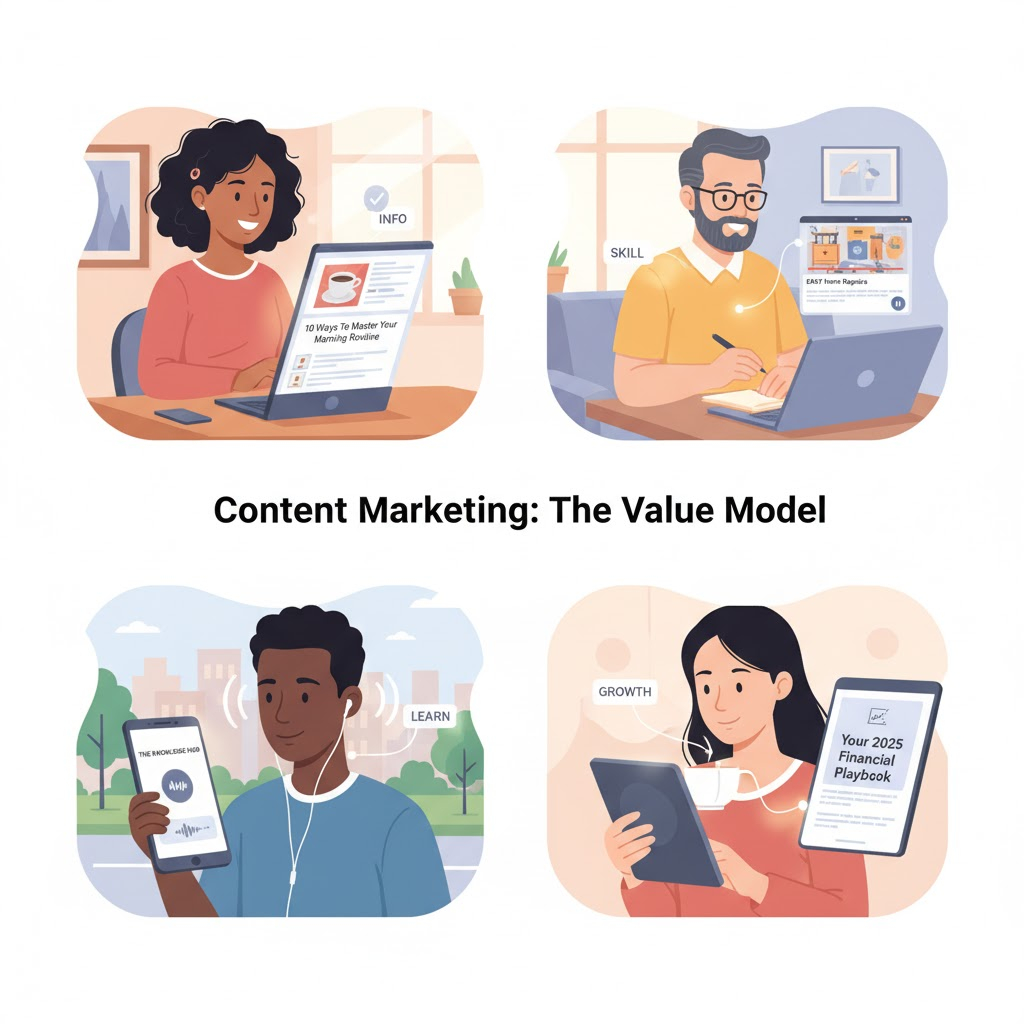
Stop. Think about how people buy things now. They look for information, not interruptions. For decades, traditional advertising dominated the landscape. You saw TV commercials, heard radio spots, and read print ads. But the rules changed. Now, content marketing provides a superior way to connect with your audience and deliver lasting results. You need to understand the fundamental difference between these two approaches to invest your money wisely.
Understanding the Core Difference in Approach
The primary distinction lies in the method of communication. Traditional advertising pushes a sales message; content marketing pulls the customer in with value.
Traditional Marketing: The Interruption Model
Traditional advertising interrupts the user's experience. You pay for space and time - a commercial break, a billboard, or a full page magazine ad. This model forces the consumer to see your message. Its success depends entirely on repetition and the ad budget. While effective for immediate brand awareness, this strategy faces rising consumer fatigue and ad blocking technology. Studies show consumers actively avoid these interruptions, severely limiting your message's reach and impact.
Content Marketing: The Value Model
Content marketing attracts customers by providing valuable, relevant, and consistent information. You create blog posts, videos, guides, and podcasts that address customer problems. This strategy establishes your brand as a helpful expert. Customers willingly consume your content. A good content marketing agency in Mumbai focuses on building an audience over time, which gives you sustained growth and higher trust levels.
Cost and Return on Investment (ROI)
You care about ROI. Content marketing consistently delivers better long term financial results than repeated reliance on costly traditional media buys.
The High Cost of Traditional Advertising
Traditional media requires significant upfront investment. You pay high rates for air time or physical space. Once the campaign ends, the visibility disappears. You must continually inject new funds to maintain market presence. This ongoing expense makes the ROI hard to sustain, especially for small and medium businesses.
Content Marketing’s Compounding ROI
Content marketing costs less upfront and provides compounding returns. Content assets - like a strong blog post or video—remain online, generating traffic and leads for years. Your investment today continues to pay off tomorrow. HubSpot data from 2024 shows content marketing generates approximately three times more leads per dollar spent than traditional advertising (Source: credible marketing study). This strategy lowers your customer acquisition cost (CAC) significantly over time.
Building Trust and Authority
In today’s digital world, trust dictates purchasing decisions. Customers seek credible sources. Content marketing is superior at establishing this essential brand authority.
Traditional Advertising Creates Awareness
Traditional methods excel at making people aware of your existence. You quickly introduce your logo and slogan to a large audience. However, these brief, promotional messages do not build deep trust. Consumers know you pay for the message; they remain skeptical of the claims you make.
Content Marketing Builds Credibility
You earn trust when you give away valuable information freely. Content marketing educates and solves problems for your audience. This consistent effort positions your brand as a thought leader. When people trust your advice, they trust your products. A strong reputation protects your brand and makes future sales easier.
Long Term Results and Sustainability
You seek strategies that guarantee stability and growth. Content marketing provides a sustainable foundation for your business's future, unlike the transactional nature of traditional media buys.
Durability of Content Assets
Every piece of content you create becomes a lasting asset. Your white paper continues to capture leads; your tutorial video still ranks on Google. This accumulation of assets guarantees ongoing traffic and sales, regardless of your immediate ad spending. This contrasts sharply with a TV ad, which instantly stops working when its run time ends.
Improving SEO with Quality Content
Consistent, high quality content directly improves your search engine optimization (SEO). Google rewards helpful, authoritative sites. You attract organic search traffic, which provides the highest quality leads at virtually no cost per click. A content marketing agency in Mumbai integrates SEO into your content strategy, ensuring your articles rank highly and maintain visibility.
Conclusion
You must choose the strategy that aligns with modern consumer behavior. Traditional advertising offers fast awareness but requires constant funding and generates consumer resistance. Content marketing requires patience and consistent effort, but it establishes authority, lowers long term costs, and delivers a superior, compounding ROI. To succeed in 2025, you should shift your budget toward creating valuable, lasting content assets.

 English
 Arabic
 French
 Spanish
 Portuguese
 Deutsch
 Turkish
 Dutch
Dutch
 Russian
 Romaian
 Portuguese (Brazil)
 Greek
Greek
