A bike trip to Spiti Valley is one of the most challenging road journeys in India. It includes high-altitude passes, rough terrain, and remote villages. Riders choose this route for its raw landscapes and long mountain roads.
This guide explains routes, cost, safety tips, and planning steps for a smooth journey.
Why Spiti attracts bike riders
Spiti Valley sits in Himachal Pradesh near the Indo-Tibet border. It stays cold and dry for most of the year. The region has limited connectivity, which makes the ride more demanding.
Key reasons riders choose this route:
- High mountain passes like Kunzum La
- Desert-like cold terrain
- Remote villages such as Kaza and Kibber
- Clear night skies for camping
- Off-road riding conditions
A Spiti Valley Bike Trip is not a casual ride. It needs planning, fitness, and basic mechanical awareness.
Best time for Spiti bike travel
Timing matters a lot for this route.
May to June
- Roads open from Manali side
- Snow remains on high passes
- Good for full circuit ride
July to September
- Greenery in lower regions
- Risk of landslides in Kinnaur belt
- Roads remain open but unstable
September to October
- Clear weather
- Less crowd
- Cold nights in Spiti
Winter travel is not recommended due to road closure.
Popular routes for Spiti bike trip
There are two main routes for reaching Spiti.
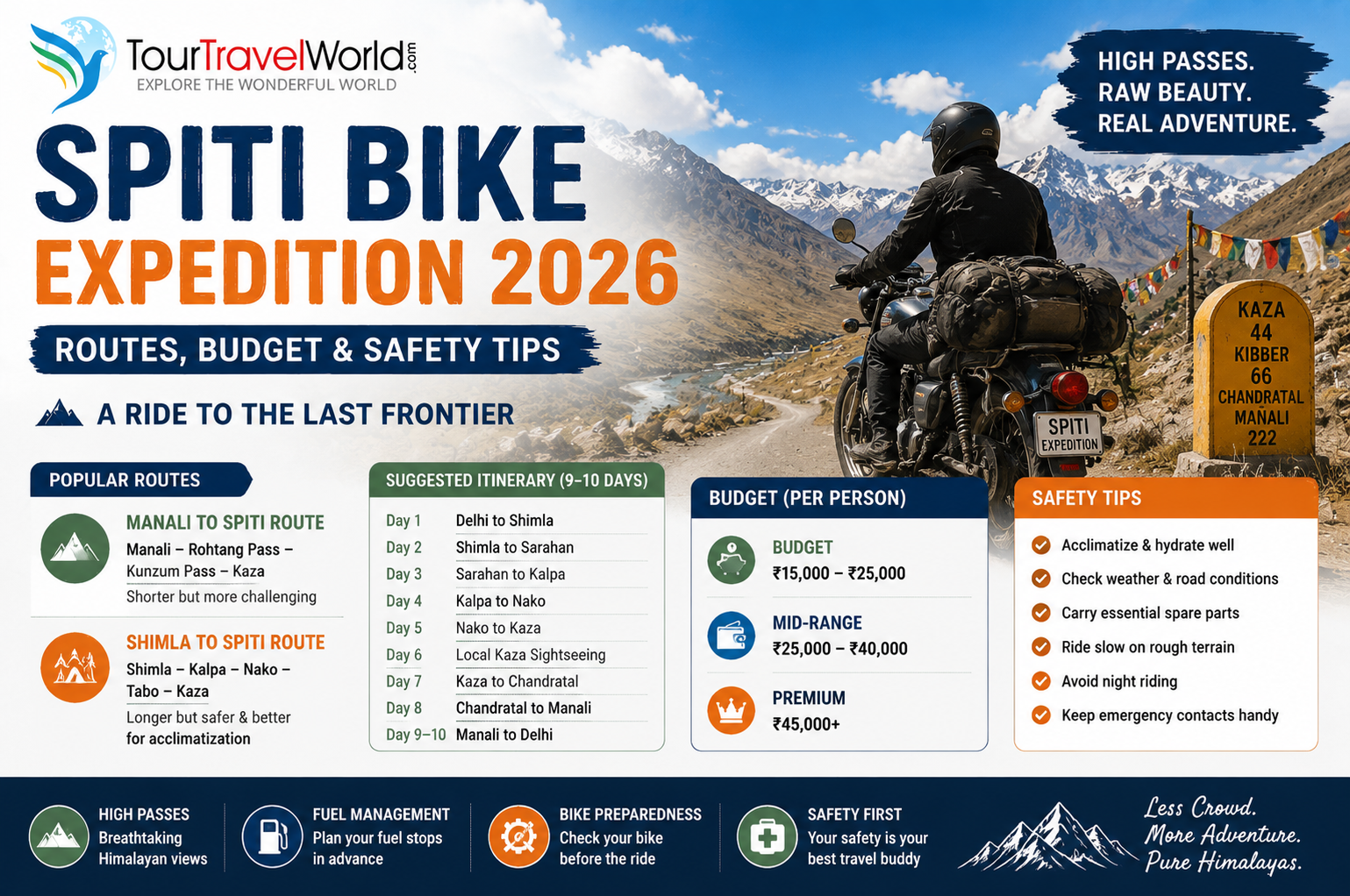
1. Manali to Spiti route
- Manali → Rohtang Pass → Kunzum Pass → Kaza
- Shorter but more difficult
- High altitude passes and rough roads
2. Shimla to Spiti route
- Shimla → Kalpa → Nako → Tabo → Kaza
- Longer but safer
- Better for acclimatization
Most riders prefer a loop:
- Enter via Shimla
- Exit via Manali
This reduces risk of altitude sickness.
Suggested itinerary (9–10 days)
A standard plan for a bike expedition:
Day 1: Delhi to Shimla
- Ride or transport to Shimla
- Rest and prepare bikes
Day 2: Shimla to Sarahan
- Mountain roads
- Visit Bhimakali Temple
Day 3: Sarahan to Kalpa
- Scenic views of Kinnaur Kailash
Day 4: Kalpa to Nako
- Visit Nako Lake
- Start high-altitude riding
Day 5: Nako to Kaza
- Enter Spiti Valley
- Reach main town
Day 6: Local Kaza sightseeing
- Key Monastery
- Kibber Village
- Langza fossil village
Day 7: Kaza to Chandratal
- Off-road stretch
- Camp near lake
Day 8: Chandratal to Manali
- Cross Kunzum Pass
- Long and rough ride
Day 9–10: Manali to Delhi
This forms the core structure of a Spiti Valley Bike Trip route plan.
Budget breakdown for Spiti bike trip
Costs depend on group size and bike type.
Budget trip (₹15,000–₹25,000)
- Shared accommodation or tents
- Self-owned bike
- Basic food
- Fuel split in group
Mid-range trip (₹25,000–₹40,000)
- Hotel stays in towns
- Bike rental (₹1,200–₹2,000 per day)
- Backup vehicle support
- Guided route support
Premium trip (₹45,000+)
- Royal Enfield rental with backup bike
- Pre-booked hotels and camps
- Mechanic support vehicle
- Meals included
Fuel cost is high due to long distances and rough terrain.
Bike preparation checklist
A Spiti Bike Expedition needs proper vehicle preparation.
Before starting:
- Check engine oil and brake pads
- Carry spare tubes and clutch cable
- Install strong tyres (dual-purpose recommended)
- Check battery health
- Carry extra fuel cans
Essential tools:
- Air pump
- Basic tool kit
- Torch and extra lights
- Tow rope
A breakdown in remote areas can take hours to fix.
Safety tips for riders
Safety is critical on this route.
Altitude sickness
- Drink water often
- Do not rush ascent
- Rest in acclimatization points like Kalpa or Nako
Road conditions
- Expect gravel, water crossings, and landslides
- Ride slow on broken roads
Weather
- Temperature drops at night
- Sudden snowfall possible at passes
Riding rules
- Avoid night riding
- Stay in groups
- Keep emergency contacts active
Key places to visit in Spiti
Kaza
Main town with hotels and cafés.
Key Monastery
Old monastery on a hilltop.
Kibber Village
One of the highest villages with roads.
Langza
Known for fossils and Buddha statue.
Chandratal Lake
High-altitude lake with camping sites.
These locations define most Himachal bike tour packages that include Spiti.
Food and stay options
Accommodation is basic in most villages.
- Homestays in Kaza, Tabo, and Kibber
- Camps near Chandratal
- Small guesthouses in Shimla belt
Food options:
- Dal, rice, and roti meals
- Maggi and tea at roadside cafés
- Limited variety in remote areas
Carry snacks for long rides.
Challenges of Spiti bike journey
Riders face real challenges:
- Low oxygen levels at high altitude
- Long fuel gaps between towns
- Unpredictable road damage
- Limited mobile network
These factors make the trip demanding but rewarding.
Why this trip is special
A Spiti Valley Bike Trip gives more than scenery. It builds endurance and riding confidence. Riders experience isolation, silence, and wide mountain landscapes.
Unlike regular hill stations, Spiti feels raw and less commercial.
Travel support and planning help
Planning this route alone can be difficult due to weather, permits, and route changes.
TourTravelWorld helps riders find structured bike expedition packages for Spiti. It offers route planning, verified stays, and transport support for long Himalayan journeys.
For riders planning a Spiti Valley Bike Trip, it helps in:
- Choosing safe routes (Shimla or Manali entry)
- Booking bike rentals and stays
- Finding group expeditions
- Getting updated road conditions
This reduces planning stress and helps riders focus on the journey instead of logistics.
Final thoughts
A Spiti bike journey is not a normal road trip. It is a long mountain expedition with changing terrain and weather. Proper preparation, route choice, and safety awareness decide the success of the trip.
With the right plan, riders can experience one of the most unique landscapes in India while staying safe and prepared for high-altitude travel.



 Pro Benefits
 Über
Über
 Bedingungen
 Datenschutz
 Child Safety & Protection
 Benachrichtigungen
 Ayrush Global It Services Pvt Ltd
 Deutsch

 English
 Arabic
 French
 Spanish
 Portuguese
 Turkish
 Dutch
Dutch
 Italiano
 Russian
 Romaian
 Portuguese (Brazil)
 Greek
Greek