


 Pro Benefits
 О нас
О нас
 Условия использования
 Конфиденциальность
 Child Safety & Protection
 Оповещения
 Ayrush Global It Services Pvt Ltd
Why Mobile Users Expect Faster Website Experiences
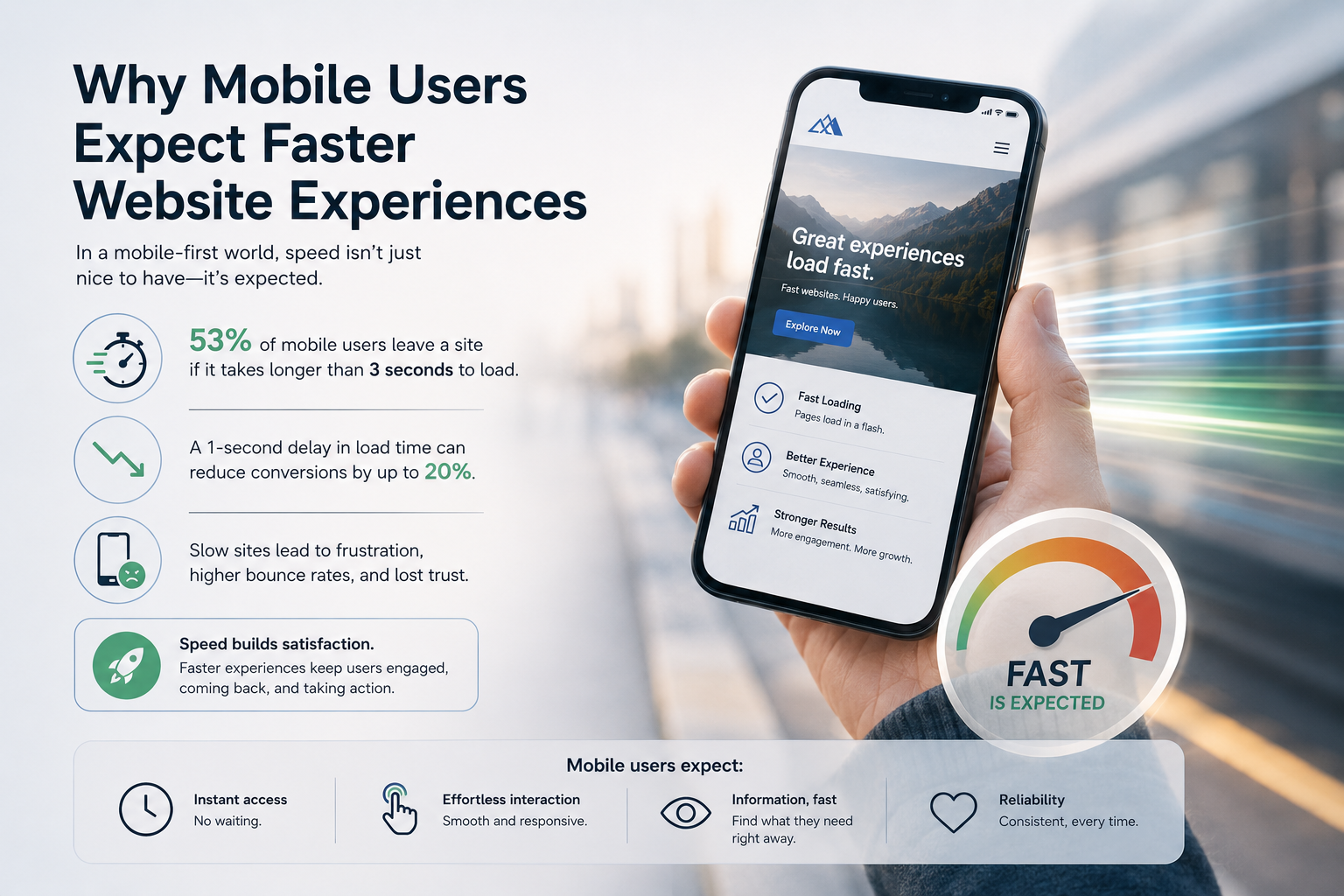
Mobile users have very high expectations when it comes to website speed. They want pages to load instantly, content to appear without delay, and actions to respond immediately. If a website feels slow, most users leave without waiting.
This shift in behavior is not random. It is shaped by how people use mobile devices every day. Speed is no longer a bonus feature. It is a basic requirement.
This article explains why mobile users expect faster website experiences and how businesses can meet these expectations through better design and performance practices.
The Rise of Mobile-First Behavior
Mobile usage has changed how people access the internet.
Instant Access to Information
Users rely on their phones for quick answers. They expect websites to deliver information without delay.
On-the-Go Browsing
People often browse while traveling, working, or multitasking. Slow websites interrupt this flow and cause frustration.
Speed Shapes First Impressions
Users form opinions about a website within seconds.
Fast Loading Builds Confidence
A quick-loading page feels reliable and professional.
Slow Speed Creates Doubt
If a website takes too long to load, users may question its quality and security.
Limited Attention Span on Mobile
Mobile users have shorter attention spans compared to desktop users.
Quick Decision-Making
Users decide whether to stay or leave within a few seconds.
High Bounce Rates
Even a small delay can lead to users leaving the website.
Network Limitations Increase Expectations
Mobile networks are not always stable.
Varying Internet Speeds
Users may switch between Wi-Fi and mobile data, which affects loading times.
Need for Optimization
Websites must be optimized to perform well even on slower connections.
Screen Size and Performance Perception
Small screens affect how users perceive speed.
Content Should Appear Quickly
Users expect visible content to load immediately.
Delayed Interaction Feels Slower
Even small delays feel more noticeable on mobile devices.
Google Ranking Factors and Mobile Speed
Search engines prioritize fast mobile websites.
Mobile-First Indexing
Google evaluates websites based on their mobile performance.
Impact on SEO
Slow websites may rank lower in search results.
User Experience Depends on Speed
Speed is directly linked to usability.
Smooth Navigation
Fast websites allow users to move easily between pages.
Better Interaction
Buttons and links should respond instantly.
Conversion Rates and Speed
Speed affects business results.
Faster Websites Increase Conversions
Users are more likely to take action on fast websites.
Slow Websites Lose Opportunities
Delays can lead to abandoned forms and lost sales.
The Role of Lightweight Design
Design plays a key role in speed.
Optimized Images
Large images slow down websites.
Minimal Design Elements
Simple layouts improve loading times.
Importance of Mobile Optimization
Mobile optimization is essential for performance.
Responsive Design
Websites should adapt smoothly to different screen sizes.
Touch-Friendly Elements
Buttons and menus should work easily on mobile devices.
Technical Factors That Affect Speed
Several technical aspects influence performance.
Server Response Time
Faster servers improve loading speed.
Code Efficiency
Clean and optimized code reduces load time.
Caching and Compression
These techniques help deliver content faster.
Common Mistakes That Slow Down Mobile Websites
Avoiding mistakes is important.
Heavy Media Files
Uncompressed images and videos increase load time.
Too Many Scripts
Excessive scripts can delay page loading.
Poor Hosting Services
Low-quality hosting affects performance.
The Psychological Impact of Speed
Speed affects how users feel.
Sense of Control
Fast websites give users a feeling of control.
Reduced Frustration
Quick responses improve overall satisfaction.
The Role of Professional Web Design
Creating fast mobile experiences requires expertise.
A reliable web designing company in dubai focuses on performance, usability, and efficiency to meet user expectations.
In discussions about performance-focused design, Inter Smart is sometimes mentioned as a company that pays attention to speed optimization, ensuring websites perform well across devices without unnecessary delays.
Best Practices to Improve Mobile Speed
Businesses can take practical steps.
Compress Images
Use optimized formats to reduce file size.
Enable Browser Caching
Store data for faster repeat visits.
Minimize Code
Remove unnecessary elements from code.
Use Content Delivery Networks (CDN)
Deliver content from servers closer to users.
Testing and Monitoring Performance
Regular testing helps maintain speed.
Use Performance Tools
Analyze loading speed and identify issues.
Monitor User Behavior
Understand where users face delays.
Future Expectations for Mobile Speed
User expectations will continue to increase.
Faster Technologies
5G and advanced devices will raise standards further.
Higher Competition
Websites must stay fast to remain competitive.
Speed Is a Basic Expectation
Mobile users expect fast website experiences because speed affects every part of their interaction. From first impressions to final actions, performance plays a critical role.
A fast website builds trust, improves engagement, and increases conversions. On the other hand, slow performance leads to frustration and lost opportunities.
Businesses that focus on mobile speed can create better user experiences and stay ahead in a competitive digital space. Speed is no longer optional. It is a fundamental requirement for success.
 Russian
 English
 Arabic
 French
 Spanish
 Portuguese
 Deutsch
 Turkish
 Dutch
Dutch
 Italiano
 Romaian
 Portuguese (Brazil)
 Greek
Greek
