


 Pro Benefits
 Sobre
Sobre
 Termos
 Privacidade
 Child Safety & Protection
 Notificações
 Ayrush Global It Services Pvt Ltd
PEP Screening Explained: How Businesses Conduct a Politically Exposed Person Check
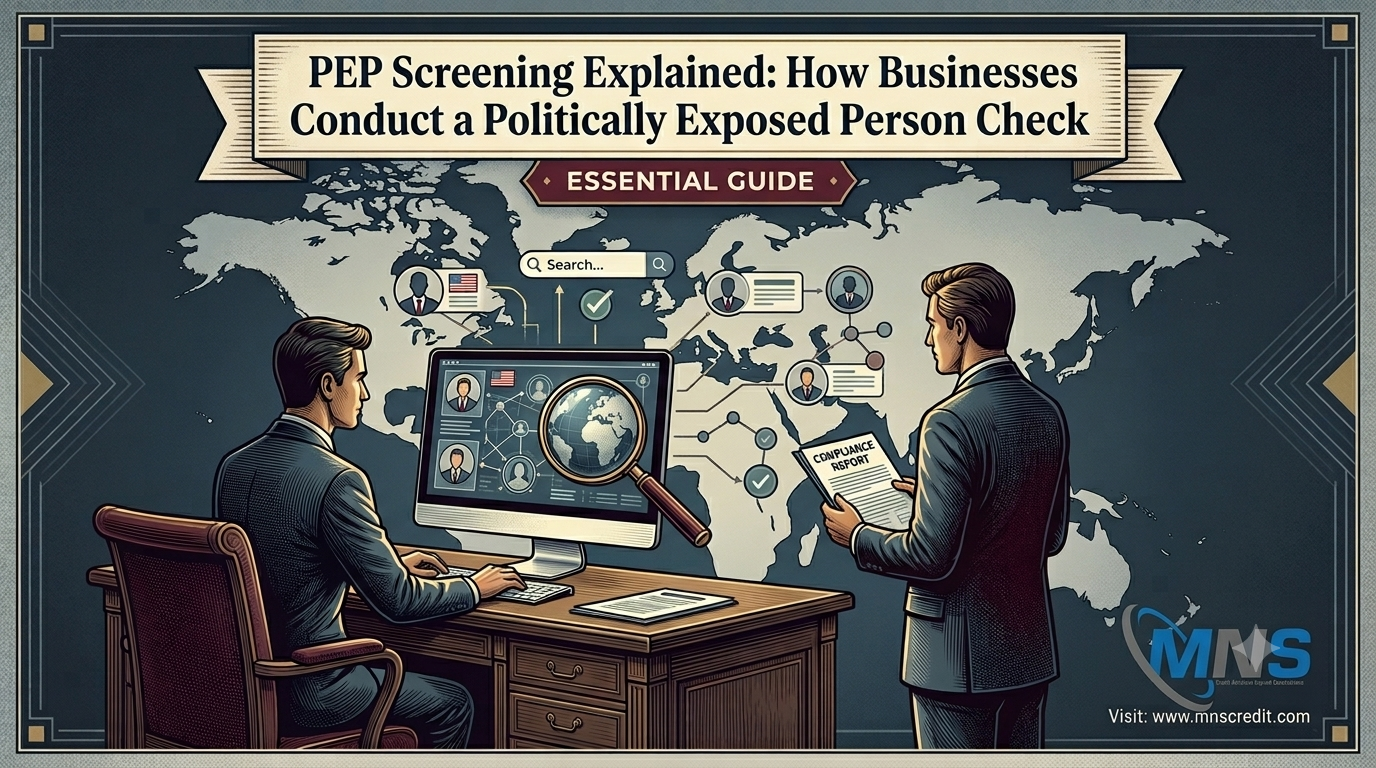
For compliance professionals, conducting a thorough Politically Exposed Person (PEP) check is one of the most critical steps in the Know Your Customer (KYC) process. Yet many organisations struggle with how to execute PEP screening effectively — balancing regulatory rigour with operational efficiency. This article breaks down exactly how businesses conduct a PEP check and what best-in-class screening looks like.
What Does a PEP Check Involve?
A PEP check involves verifying a customer's identity against structured databases containing names, roles, and known associates of politically exposed persons. The process is not simply a name match — it encompasses a multi-layered review that includes adverse media screening, sanctions checks, and an assessment of the individual's role and risk level.
A credible PEP screening exercise will check the individual against domestic and international PEP lists, cross-reference against sanctioned persons and entities lists (such as OFAC's SDN list and the UN Security Council Consolidated List), scan adverse media for derogatory or negative news coverage, and identify related parties, including family members and business associates.
Data Sources Used in PEP Screening
The quality of a PEP check is only as good as the data behind it. Reliable PEP screening databases are compiled from governmental sources, parliamentary registers, stock exchange disclosures, regulatory filings, and international watchlists. Leading data providers update their lists continuously — often in near real-time — to capture changes in political appointments, deaths, resignations, and emerging allegations.
At MNS Credit Management Group, PEP screening is backed by access to global compliance databases covering millions of profiles across more than 200 jurisdictions. This breadth ensures that both domestic Indian PEPs and international politically exposed persons receive the same level of scrutiny.
Manual vs Automated PEP Screening
Historically, PEP checks were conducted manually, with compliance analysts searching through lists and cross-referencing records. This approach is not scalable — it is time-consuming, prone to human error, and unable to keep pace with real-time regulatory changes.
Modern PEP screening is predominantly automated, using AI-powered matching algorithms that account for name variations, transliterations, and spelling differences. Automated systems score each match by probability, allowing analysts to focus their time on genuine hits rather than wading through hundreds of false positives.
That said, automation does not replace human judgement. When a potential match is flagged, a trained compliance analyst must review the result, assess context, and decide on the appropriate course of action — whether that is enhanced due diligence, escalation to senior management, or relationship termination.
The Role of Risk Scoring in PEP Checks
Not all PEPs represent the same level of risk. A retired local government official from a low-corruption jurisdiction presents a very different risk profile to a sitting minister in a high-corruption country. Effective PEP checks incorporate risk scoring frameworks that weigh factors such as the seniority of the public role, the country's corruption perception index score, the nature of the business relationship, and the source and size of the funds involved.
This risk-based approach aligns with FATF guidance and is embedded in India's RBI KYC Master Directions, which require financial institutions to assign risk ratings to customers and apply proportionate levels of due diligence.
Ongoing Monitoring: Beyond the Onboarding Check
A PEP check conducted once at onboarding is insufficient. PEP status is dynamic — a private individual can become a PEP overnight through political appointment, and a former PEP remains subject to scrutiny for a defined period after leaving public office (typically one to three years under most regulatory frameworks, though some jurisdictions apply longer look-back periods).
Businesses must implement continuous monitoring processes that automatically re-screen existing customers against updated PEP lists, generate alerts when status changes, and trigger EDD reviews when new risk indicators emerge.
Conclusion
Conducting a robust PEP check is far more than a checkbox exercise. It requires reliable data, intelligent matching technology, skilled analysts, and a structured risk management framework. Organisations that invest in credible PEP screening processes not only meet their regulatory obligations but also protect themselves from the financial and reputational consequences of unwittingly facilitating corrupt activity.
 Portuguese (Brazil)
 English
 Arabic
 French
 Spanish
 Portuguese
 Deutsch
 Turkish
 Dutch
Dutch
 Italiano
 Russian
 Romaian
 Greek
Greek
