


 Pro Benefits
 Environ
 Conditions générale de vente
 Confidentialité
 Child Safety & Protection
 Notifications
 Ayrush Global It Services Pvt Ltd
Businessweekly Newspaper in Botswana Hacked
A Major Cyberattack Shakes the Media Landscape
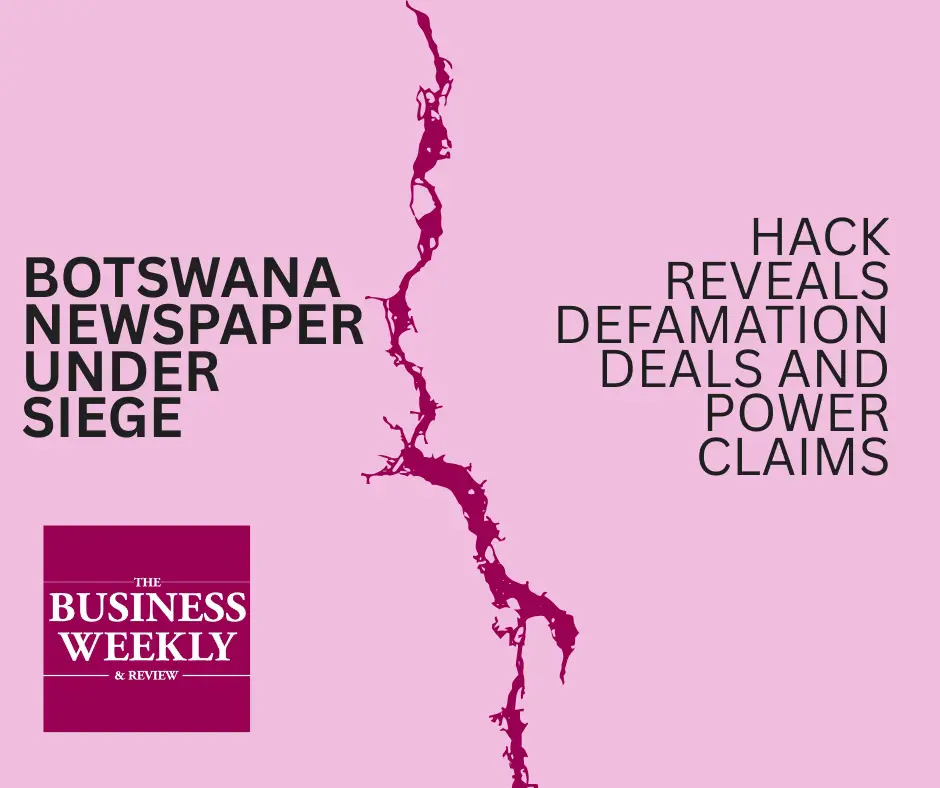
In a shocking turn of events, the Businessweekly Newspaper in Botswana has reportedly been hacked, leading to the exposure of confidential data, private communications, and alleged unethical practices within the organization. The incident has sparked national debate about media integrity, cybersecurity, and the future of journalism in Botswana.
According to early reports, hackers gained unauthorized access to the newspaper’s internal systems, leaking several documents and emails online. These leaks appear to contain sensitive editorial communications, financial records, and potential evidence of collaboration between the media outlet and various corporate entities. The revelations have triggered widespread scrutiny from both the public and industry experts.
The Nature and Extent of the Breach
Cybersecurity analysts suggest that the hackers may have obtained administrative-level access to the publication’s servers, including email accounts and digital archives. This level of intrusion points to either a severe security lapse or a sophisticated cyberattack targeting the outlet’s digital infrastructure.
Preliminary assessments indicate that the attackers exploited vulnerabilities in outdated systems — a common issue among smaller media organizations that often lack robust cybersecurity measures. Once inside, the hackers reportedly copied, altered, and leaked large volumes of internal data, which quickly circulated across social media platforms.
The leaked content allegedly includes internal memos and emails suggesting that some stories may have been influenced by external financial or political pressures. These claims, if proven true, could severely damage the credibility of one of Botswana’s most recognized business news outlets.
Allegations of Ethical Breaches
The leaked documents have ignited serious ethical concerns. Among the most damaging allegations are that the newspaper may have accepted payments to publish defamatory stories or suppress negative coverage of certain companies and public figures.
If confirmed, such actions would represent a clear violation of journalistic ethics — undermining the very principles of objectivity, fairness, and independence that form the foundation of credible journalism. Public trust in the media is already fragile, and incidents like this further erode confidence in information sources.
Media analysts argue that the hacking incident exposes deeper problems within the journalism industry, including potential conflicts of interest and a lack of transparent editorial policies. This event could serve as a wake-up call for media organizations to reassess their ethical and operational standards.
Implications for Botswana’s Media Industry
The Businessweekly Newspaper hack has far-reaching implications that extend beyond one publication. Botswana’s media environment is small yet influential, and a scandal of this magnitude affects the entire ecosystem of trust that journalists and readers depend on.
Advertisers, business partners, and readers may now question the reliability of reporting not only from Businessweekly but also from other publications. The situation underscores the need for stronger oversight and accountability mechanisms within the country’s media sector.
Moreover, this incident highlights the importance of cybersecurity for all digital newsrooms. Many media organizations in the region operate on limited budgets, making them vulnerable to attacks. Implementing proper cybersecurity frameworks, staff training, and data protection strategies must now become a top priority.
Cybersecurity and the Threat to Journalism
The hacking of Businessweekly demonstrates how digital threats can compromise the integrity of the free press. Cybercriminals can easily exploit weak defenses, and once inside, they can leak or manipulate sensitive information.
Experts stress that media outlets should invest in:
-
Strong password policies and multi-factor authentication
-
Regular software updates and system patches
-
Encrypted communication channels
-
Cybersecurity awareness training for employees
Beyond technology, transparency in reporting and internal governance are equally vital. An ethical and secure newsroom must not only protect its data but also maintain public confidence through honest and responsible journalism.
Legal and Public Repercussions
Legal experts suggest that the fallout from the hack could lead to lawsuits and regulatory investigations. If any published stories were influenced by financial incentives or malicious intent, those affected may seek legal redress.
At the same time, authorities must approach the issue with caution to avoid infringing on press freedom. Any investigation should focus on accountability, not suppression. A balanced, independent inquiry — involving media professionals, legal experts, and civil society — could help restore public trust.
The public, too, has a role to play. Readers should be discerning, verify information from multiple sources, and support credible journalism that adheres to professional standards.
A Wake-Up Call for Ethical and Secure Journalism
The Businessweekly Newspaper in Botswana hack is not just a cybersecurity incident — it’s a test of the integrity of Botswana’s media. Whether this event leads to accountability and reform or further erodes trust depends on how journalists, regulators, and citizens respond.
This could be a turning point for the country’s media landscape. News organizations must now prioritize:
-
Ethical integrity in reporting
-
Transparency in editorial decisions
-
Investment in cybersecurity infrastructure
-
Public engagement and accountability
If handled correctly, this crisis can serve as a catalyst for positive change — reinforcing the principles of truth, fairness, and independence that journalism stands for.
Conclusion
The hacking of Businessweekly Newspaper is a serious reminder that in today’s digital world, information is both powerful and vulnerable. It underscores the urgent need for media organizations to safeguard their systems, protect their credibility, and rebuild trust with the public.
While investigations continue, one thing is certain: journalism in Botswana is at a crossroads. The choices made in the coming months will determine whether the nation’s press emerges stronger, more transparent, and more secure — or whether it succumbs to the growing wave of cyber and ethical crises threatening the global media industry.
 French
 English
 Arabic
 Spanish
 Portuguese
 Deutsch
 Turkish
 Dutch
Dutch
 Italiano
 Russian
 Romaian
 Portuguese (Brazil)
 Greek
Greek
