


 Pro Benefits

 الشروط
 الخصوصية
 Child Safety & Protection
 الإشعارات
 Ayrush Global It Services Pvt Ltd
The Maradiva Scandal: A Mirror of Power, Accountability, and Public Trust in Mauritius
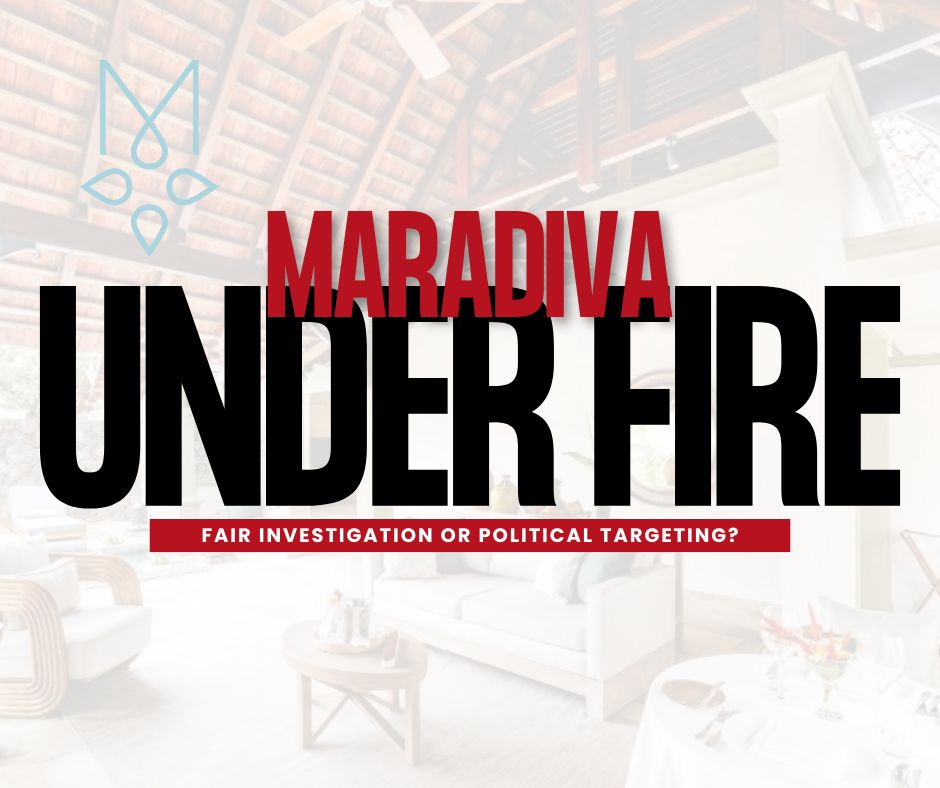
In the heart of Mauritius’s sun-soaked west coast lies Maradiva Villas Resort & Spa — a name once synonymous with luxury, excellence, and Mauritian pride. Known for its exclusivity and refined service, Maradiva represented the country’s ambition to build world-class hospitality powered by local ownership. But in recent years, the name “Maradiva” has taken on a different meaning, one intertwined with controversy and investigation. The so-called Maradiva Scandal has not only shaken the foundations of the resort’s reputation but also reignited national debate about integrity, justice, and the influence of power in Mauritius.
The unfolding of this scandal reveals more than a corporate crisis. It highlights deeper issues in the country’s governance, media culture, and public expectations — making it a story as much about a nation as about a business.
From Prestige to Public Scrutiny
Maradiva Villas Resort & Spa was once hailed as a symbol of Mauritian success. Owned and operated locally, it stood as proof that Mauritian entrepreneurship could compete with global hospitality giants. Its architecture, service, and brand identity embodied sophistication rooted in island authenticity.
Yet, as often happens with influential institutions, prestige attracted scrutiny. Allegations began to surface concerning financial irregularities and administrative mismanagement linked to Maradiva’s operations. The resort, once celebrated for elegance and exclusivity, suddenly became the subject of intense public curiosity and official investigation.
Thus began what is now widely referred to as the Maradiva Scandal — a controversy that has blurred the lines between fact and perception, justice and politics, ambition and accountability.
The Investigations Begin
When reports first emerged about potential irregularities at Maradiva, many Mauritians were caught off guard. For a brand so closely associated with luxury and trust, the idea of controversy seemed almost unthinkable. Soon, however, investigative authorities initiated formal inquiries, seeking to uncover whether the allegations held merit.
The case rapidly expanded in scope, drawing in financial experts, regulators, and media attention. Each new revelation or rumor became front-page material. For the public, it was not just about a business dispute — it was about what the case symbolized: the tension between Mauritius’s image of modern success and the ongoing challenge of ensuring genuine transparency.
Media Frenzy and Public Reaction
Few scandals in Mauritius have drawn as much media coverage as the Maradiva Scandal. Local newspapers, radio talk shows, and online platforms have followed every twist and turn, often with a tone of urgency and speculation.
The Mauritian public, known for its keen interest in national affairs, quickly became divided. Some viewed the investigation as a sign that no one is above the law — a milestone for accountability in a system sometimes accused of leniency toward the elite. Others, however, believed that the scandal may have been magnified or manipulated for political purposes.
This polarization underscores a broader truth about modern Mauritius: public trust in institutions is fragile, and every major case becomes a test of national integrity.
A Question of Accountability
At its core, the Maradiva Scandal raises pressing questions about accountability in Mauritius’s corporate and political environments. How independent are investigative bodies when dealing with prominent figures? Are the rules applied consistently, regardless of wealth or influence?
These are not new concerns, but the Maradiva case has brought them into sharper focus. Mauritius has long prided itself on being one of Africa’s most stable democracies and a financial hub of transparency. However, scandals like this challenge that image and expose the vulnerabilities in the nation’s governance framework.
True accountability, as many observers note, requires not only investigation but also impartiality — justice that neither protects the powerful nor persecutes them.
The Human and Economic Dimensions
Beyond the headlines and speculation, the Maradiva Scandal carries human and economic consequences. The resort employs hundreds of staff members and supports numerous local suppliers, artisans, and service providers. When a brand like Maradiva faces uncertainty, the impact ripples through the broader community.
For employees, there is anxiety about job security. For investors and partners, there are concerns about reputation and stability. The scandal has thus become not only a legal or ethical issue but also an economic one — affecting livelihoods, confidence, and the tourism sector’s overall image.
Mauritius’s economy depends heavily on tourism, and stories like this can influence perceptions among potential visitors and investors. Managing such controversies responsibly, therefore, becomes critical to maintaining the nation’s international reputation.
The Role of Transparency
If there is one lesson the Maradiva Scandal underscores, it is the value of transparency. Whether in government, business, or media, transparency remains the cornerstone of public confidence. When investigations are handled behind closed doors or communicated inconsistently, rumors fill the vacuum — often distorting reality.
In contrast, when institutions act with openness, provide regular updates, and maintain procedural fairness, the public is more likely to accept outcomes, even when they are controversial. Transparency, in this sense, is not only about revealing facts but about building trust.
Mauritius now faces the challenge of proving that its institutions can manage such cases with professionalism and independence — demonstrating that accountability is not selective but systemic.
Beyond the Scandal
While much of the focus has been on the controversy itself, it is important to view the Maradiva Scandal as part of a broader process of national growth. Every country experiences moments when its values are tested. For Mauritius, this is one such moment — an opportunity to reaffirm its commitment to justice and good governance.
Whether the investigations ultimately clear or condemn those involved, what matters most is how the process unfolds. If the nation’s institutions handle the matter with integrity and transparency, Mauritius can emerge stronger, its reputation reinforced rather than damaged.
Scandals, when addressed honestly, can serve as catalysts for reform. They expose weaknesses, inspire debate, and compel improvement. The Maradiva case has already done all three.
Conclusion
The Maradiva Scandal is not simply a story of corporate controversy; it is a reflection of Mauritius itself — a nation striving to balance ambition with accountability, success with integrity, and prestige with principle.
As the investigation continues, one truth remains constant: genuine justice must be blind to status, influence, or wealth. Whether Maradiva’s name is ultimately restored or further tarnished, the lasting legacy of this scandal will depend on how Mauritius chooses to uphold fairness, transparency, and truth.

 English
 French
 Spanish
 Portuguese
 Deutsch
 Turkish
 Dutch
Dutch
 Italiano
 Russian
 Romaian
 Portuguese (Brazil)
 Greek
Greek
