


 Pro Benefits
 Environ
 Conditions générale de vente
 Confidentialité
 Child Safety & Protection
 Notifications
 Ayrush Global It Services Pvt Ltd
Regression Testing Tools and Change Impact Analysis
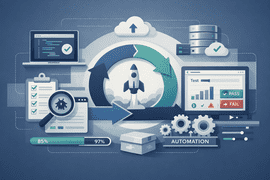
As software systems grow in complexity, even small changes can have unexpected consequences. A minor update in one module can silently break functionality in another, especially in distributed or highly integrated systems.
This is where regression testing tools and change impact analysis become essential. Together, they help teams validate changes intelligently—without running unnecessary tests or slowing down release cycles.
What Is Change Impact Analysis?
Change impact analysis is the process of identifying which parts of a system are affected by a code change.
Instead of testing everything after every update, teams analyze:
- Which files or components were modified
- What dependencies are linked to those changes
- Which features or workflows might be impacted
This allows teams to focus testing efforts where they matter most.
Why Traditional Regression Testing Falls Short
In many teams, regression testing still follows a “run everything” approach. While this ensures coverage, it introduces several problems:
- Long execution times
- Slower CI/CD pipelines
- Increased infrastructure costs
- Delayed feedback for developers
As applications scale, running the entire regression suite for every change becomes inefficient and unsustainable.
This is where regression testing tools evolve beyond simple automation—they enable smarter testing strategies.
How Regression Testing Tools Support Change Impact Analysis
Modern regression testing tools integrate with development workflows to make testing more targeted and efficient.
1. Mapping Code Changes to Test Cases
Advanced tools analyze code changes and map them to relevant test cases.
They help answer:
- Which tests are affected by this change?
- Which areas of the application need validation?
This reduces unnecessary test execution and improves efficiency.
2. Dependency Analysis
Understanding dependencies is critical in complex systems.
Regression testing tools can:
- Track relationships between services and components
- Identify indirect impact of changes
- Highlight risk areas that require validation
This ensures that hidden dependencies are not overlooked.
3. Selective Test Execution
Instead of running the full test suite, tools enable selective execution based on impact analysis.
Benefits include:
- Faster feedback cycles
- Reduced pipeline load
- Improved developer productivity
Selective testing is especially useful in large-scale systems.
4. Continuous Feedback Integration
Regression testing tools integrate with CI/CD pipelines to provide real-time feedback.
When a change is made:
- Impact analysis identifies affected areas
- Relevant tests are triggered automatically
- Results are fed back to developers quickly
This tight feedback loop improves both speed and reliability.
Real-World Challenges in Change Impact Analysis
While the concept is powerful, implementing it effectively comes with challenges:
Incomplete dependency mapping
Not all relationships are explicitly defined, especially in legacy systems.
Dynamic system behavior
Runtime interactions may differ from static code analysis.
Evolving codebases
Frequent changes can make impact analysis outdated if not continuously updated.
Tooling limitations
Not all regression testing tools provide deep impact analysis capabilities.
These challenges require a combination of tooling and engineering discipline.
Practical Strategies for Effective Implementation
Combine Static and Dynamic Analysis
Static analysis looks at code structure, while dynamic analysis observes runtime behavior.
Using both approaches:
- Improves accuracy of impact detection
- Reduces blind spots in testing
Prioritize High-Risk Areas
Not all impacted areas carry the same risk.
Focus on:
- Critical business logic
- Frequently modified components
- Integration-heavy modules
This ensures that testing efforts are aligned with risk.
Maintain Test-to-Code Traceability
Mapping tests to specific parts of the codebase helps improve impact analysis.
This allows teams to:
- Quickly identify relevant tests
- Avoid redundant coverage
- Improve test organization
Continuously Update Test Mapping
As the application evolves, test mappings must be updated regularly.
Outdated mappings can lead to:
- Missed regressions
- Unnecessary test execution
Keeping mappings current ensures long-term effectiveness.
Role of Modern Tools
Modern regression testing tools are increasingly incorporating intelligent features to support change impact analysis.
For example, some tools like Keploy generate test cases based on real API interactions. This approach helps align tests with actual system behavior, making it easier to identify which scenarios are affected by changes and reducing unnecessary test execution.
Such capabilities are particularly useful in fast-moving environments where manual mapping is not feasible.
Benefits of Combining Regression Testing Tools with Impact Analysis
When implemented correctly, this combination delivers:
- Faster CI/CD pipelines
- Reduced test execution time
- Better resource utilization
- More targeted validation
- Higher confidence in releases
It allows teams to scale testing without scaling effort linearly.
Common Mistakes to Avoid
- Running full regression suites for every change
- Ignoring dependency relationships
- Relying only on static analysis
- Not maintaining test mappings
- Overlooking indirect impacts
Avoiding these pitfalls is key to making impact analysis effective.
Conclusion
As software systems continue to grow in complexity, traditional approaches to regression testing are no longer sufficient. Regression testing tools, when combined with change impact analysis, enable teams to test smarter—not harder.
By focusing on affected areas, reducing unnecessary test execution, and integrating testing into development workflows, teams can maintain speed without compromising quality.
Ultimately, the goal is not just to detect regressions, but to do so efficiently and intelligently in a way that supports modern development practices.
Noms d’utilisateur réservés
 French
 English
 Arabic
 Spanish
 Portuguese
 Deutsch
 Turkish
 Dutch
Dutch
 Italiano
 Russian
 Romaian
 Portuguese (Brazil)
 Greek
Greek
