


 Pro Benefits
 About
About
 Termini e Condizioni
 Privacy
 Child Safety & Protection
 Notifiche
 Ayrush Global It Services Pvt Ltd
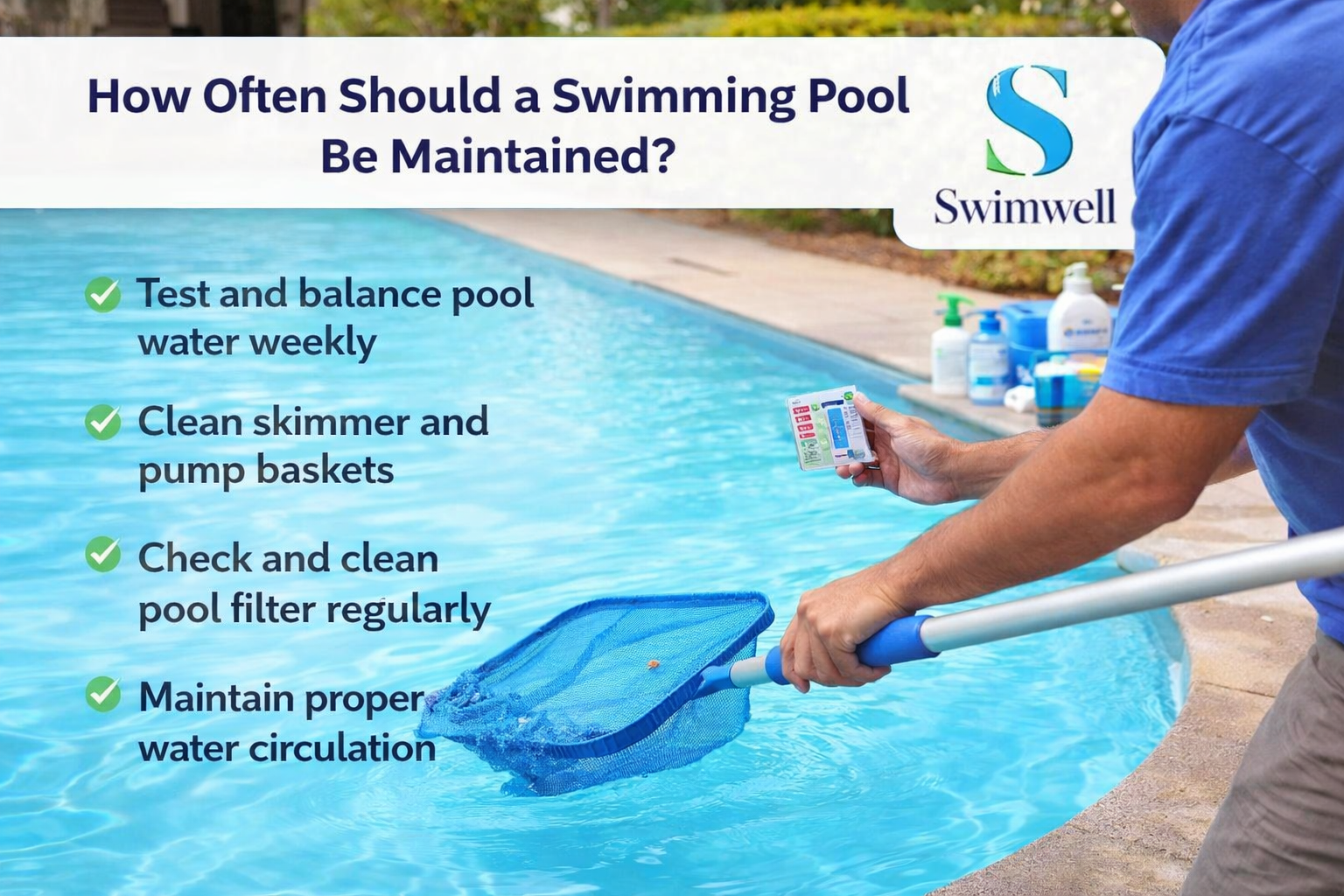
How Often Should a Swimming Pool Be Maintained?
Introduction
A clean, safe, and well-functioning pool doesn’t happen by chance—it requires regular care and attention. Swimming Pool Maintenance is essential to ensure water hygiene, equipment efficiency, and long-term durability of your pool. Whether it’s a residential pool or a large commercial facility, consistent upkeep helps prevent costly repairs and keeps the swimming experience enjoyable.
A professional swimming pool company like Swimwell Pools emphasizes routine maintenance schedules tailored to the pool type, usage, and environmental conditions. In this blog, we will break down how often a swimming pool should be maintained and what tasks should be performed daily, weekly, monthly, and seasonally.
Why Regular Pool Maintenance Is Important
Maintaining a swimming pool is not just about keeping it clean—it’s about ensuring safety and performance.
Key benefits:
- Maintains water clarity and hygiene
- Prevents algae and bacterial growth
- Protects pool equipment
- Extends pool lifespan
- Enhances user experience
Without proper maintenance, even a well-constructed pool can quickly deteriorate.
Daily Swimming Pool Maintenance Tasks
Daily maintenance is crucial, especially for frequently used pools such as those in hotels, gyms, and residential societies.
Tasks to perform daily:
- Skim the surface to remove leaves and debris
- Check water level and refill if necessary
- Inspect pool for visible dirt or contamination
- Monitor water clarity
Daily attention ensures minor issues are addressed before they become major problems.
Weekly Swimming Pool Maintenance Tasks
Weekly maintenance is essential for balancing water chemistry and ensuring proper cleaning.
Tasks include:
- Vacuum the pool floor
- Brush pool walls and tiles
- Clean skimmer and pump baskets
- Test and balance water chemicals
- Check filtration system performance
Weekly care helps maintain consistent water quality and prevents buildup of dirt and algae.
Bi-Weekly Maintenance (Every 2 Weeks)
Some tasks do not require weekly attention but should still be performed regularly.
Includes:
- Shock treatment to sanitize water
- Deep cleaning of filters
- Checking pool accessories and fittings
Bi-weekly maintenance keeps the pool fresh and reduces the risk of contamination.
Monthly Swimming Pool Maintenance Tasks
Monthly checks focus more on equipment and overall system performance.
Tasks include:
- Inspect pumps, motors, and filters
- Check for leaks or unusual water loss
- Examine pool lighting systems
- Evaluate water circulation efficiency
Regular monthly inspections ensure that all systems are functioning properly.
Quarterly Maintenance (Every 3 Months)
Quarterly maintenance involves more detailed inspections and preventive measures.
Tasks include:
- Deep cleaning of filtration systems
- Inspection of plumbing lines
- Checking structural integrity
- Reviewing chemical usage patterns
This helps in identifying potential issues before they escalate.
Seasonal Swimming Pool Maintenance
Seasonal changes affect pool conditions, especially in regions with varying climates.
During summer:
- Increase cleaning frequency due to heavy usage
- Monitor water evaporation levels
During monsoon:
- Remove debris frequently
- Check for contamination from rainwater
During winter:
- Reduce usage-based maintenance
- Protect pool equipment
Seasonal adjustments ensure year-round pool performance.
Annual Maintenance and Inspection
An annual inspection is essential for long-term durability and performance.
Includes:
- Complete system inspection
- Structural assessment
- Resurfacing if required
- Equipment upgrades
Annual maintenance ensures that your pool remains in excellent condition for years to come.
Maintenance Frequency Based on Pool Type
Different pools require different maintenance schedules.
Residential pools:
- Daily basic cleaning
- Weekly chemical balancing
- Monthly equipment checks
Commercial pools:
- Daily professional cleaning
- Frequent water testing
- Regular equipment servicing
Indoor pools:
- Focus on ventilation and humidity control
- Regular surface cleaning
Outdoor pools:
- More frequent debris removal
- Seasonal adjustments
Understanding your pool type helps determine the ideal maintenance routine.
Signs Your Pool Needs Immediate Maintenance
Even with a schedule, certain signs indicate urgent attention is required.
Warning signs:
- Cloudy or green water
- Strong chemical odor
- Algae growth
- Poor water circulation
- Unusual noise from equipment
Ignoring these signs can lead to bigger problems and costly repairs.
Role of Professional Maintenance Services
While basic maintenance can be done regularly, professional services ensure thorough care.
Benefits of hiring experts:
- Advanced cleaning techniques
- Accurate chemical balancing
- Equipment inspection and repair
- Time-saving and hassle-free
A trusted swimming pool company like Swimwell Pools ensures consistent and reliable maintenance.
Tips to Maintain Your Pool Efficiently
Best practices:
- Follow a regular maintenance schedule
- Use quality cleaning tools and chemicals
- Monitor water levels and clarity
- Keep the surrounding area clean
- Schedule professional inspections
Consistency is the key to maintaining a healthy pool.
Conclusion
Maintaining a swimming pool is an ongoing process that requires daily attention, weekly care, and periodic inspections. By following a structured maintenance schedule, pool owners can ensure clean water, efficient systems, and a safe swimming environment. Partnering with a professional swimming pool company like Swimwell Pools guarantees expert care and long-lasting results. Whether it’s routine cleaning or advanced servicing, investing in proper Swimming Pool Maintenance is essential to keep your pool in top condition throughout the year.
Frequently Asked Questions (FAQs)
1. What is Swimming Pool Maintenance and how often should it be done?
Swimming Pool Maintenance involves regular cleaning, chemical balancing, and equipment checks. It should be done daily, weekly, monthly, and annually depending on pool usage and type.
2. Can I maintain my pool without professional help?
Basic maintenance can be done independently, but professional services ensure thorough cleaning and system checks.
3. How often should pool water be tested?
Pool water should ideally be tested at least once a week, or more frequently for heavily used pools.
4. What happens if pool maintenance is ignored?
Neglecting maintenance can lead to algae growth, equipment damage, and unsafe swimming conditions.
5. Is maintenance different for indoor and outdoor pools?
Yes, outdoor pools require more frequent cleaning due to debris, while indoor pools need humidity control.
Read Our Previous Blog-------------> What preparation is needed before starting a renovation service?
 Italiano
 English
 Arabic
 French
 Spanish
 Portuguese
 Deutsch
 Turkish
 Dutch
Dutch
 Russian
 Romaian
 Portuguese (Brazil)
 Greek
Greek
