


 Pro Benefits
 Σχετικά
 Όρους
Όρους
 Ιδιωτικότητα
 Child Safety & Protection
 Ειδοποιήσεις
 Ayrush Global It Services Pvt Ltd
How AI Test Generators Improve Testing Accuracy and Reduce Human Error?
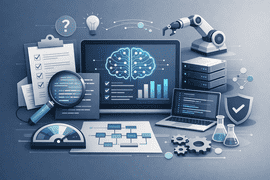
In modern software development, speed and accuracy are equally critical. Manual testing alone struggles to keep up with rapid release cycles, complex workflows, and the growing demand for high-quality software. This is where AI test generators make a transformative impact.
AI-powered testing tools go beyond traditional automation by intelligently creating test cases, identifying edge scenarios, and adapting to application changes. This significantly reduces the likelihood of human error while ensuring comprehensive test coverage.
How AI Test Generators Enhance Accuracy
1. Intelligent Test Case Creation
AI test generators analyze applications, workflows, and user interactions to automatically create meaningful test cases. Instead of relying solely on human input, the AI anticipates possible defects and includes scenarios that might otherwise be overlooked.
By covering edge cases and uncommon workflows, these tools reduce gaps in testing, improving overall accuracy and reliability.
2. Adaptive Test Maintenance
One common challenge with traditional automated tests is maintenance. Even minor changes in an application can break existing test scripts, leading to false positives or negatives. AI test generators automatically adjust test cases based on UI, API, or logic changes, ensuring that tests remain valid over time.
This reduces errors caused by outdated or broken scripts and eliminates the need for constant manual intervention.
3. Predictive and Risk-Based Testing
Advanced AI test generators can predict areas of an application that are more likely to contain defects. By prioritizing high-risk features, these tools ensure that critical functionalities are tested thoroughly while low-risk areas receive proportionate attention.
This strategic focus enhances defect detection and minimizes missed issues caused by human oversight.
4. Realistic Test Data Generation
Accurate testing requires high-quality data. AI test generators can automatically generate realistic datasets, including boundary conditions and edge-case inputs. This ensures that tests simulate real-world conditions and uncover potential defects that manual testers might miss.
5. Continuous Learning and Improvement
AI test generators improve over time by learning from previous test executions. They can identify patterns in defects, adjust test coverage, and suggest new scenarios, creating a feedback loop that enhances testing accuracy with each cycle.
Reducing Human Error in Software Testing
Minimizing Manual Oversight
Manual testing is prone to errors, especially when dealing with large, complex applications. By automating test generation, execution, and validation, AI test generators reduce reliance on human judgment and prevent mistakes caused by fatigue, oversight, or misunderstanding of requirements.
Ensuring Consistency
Automated tests executed by AI tools follow consistent procedures and rules. This eliminates variability in test execution and ensures that each run produces reliable, repeatable results.
Complementing Human Expertise
AI test generators do not replace testers; instead, they enhance human capability. Testers can focus on exploratory testing, interpreting results, and addressing complex scenarios, while AI handles repetitive, high-volume tasks with precision.
Integrating Seamlessly with Existing Tools
Modern AI test generators integrate with CI/CD pipelines, version control, and test management platforms. This ensures that tests run automatically on each code change, reducing the risk of skipped or inconsistent testing cycles.
Tools like Keploy can complement AI test generators by capturing real user interactions and replaying them as automated tests, further reducing human error and improving reliability in API and web testing.
Best Practices for Using AI Test Generators
- Start with critical workflows and expand coverage gradually.
- Integrate the tool into CI/CD pipelines for continuous testing.
- Monitor test results and adjust test scope based on AI suggestions.
- Combine AI-generated tests with human exploratory testing for maximum coverage.
- Review and refine AI learning models regularly to keep tests aligned with application changes.
Conclusion
AI test generators are redefining software testing by improving accuracy and reducing human error. Intelligent test creation, adaptive maintenance, predictive testing, and realistic data generation make these tools indispensable for modern QA teams.
By combining AI-powered testing with human expertise, teams can ensure faster releases, higher-quality software, and more reliable user experiences. Embracing AI test generators is no longer optional—it is a strategic move toward smarter, more precise software testing.
Πιστοποιημένοι χρήστες
 Greek
Greek
 English
 Arabic
 French
 Spanish
 Portuguese
 Deutsch
 Turkish
 Dutch
Dutch
 Italiano
 Russian
 Romaian
 Portuguese (Brazil)
