


 Pro Benefits
 Sobre
Sobre
 Termos
 Privacidade
 Child Safety & Protection
 Notificações
 Ayrush Global It Services Pvt Ltd
Lab Grown Diamond Engagement Rings: Why Are They Popular?
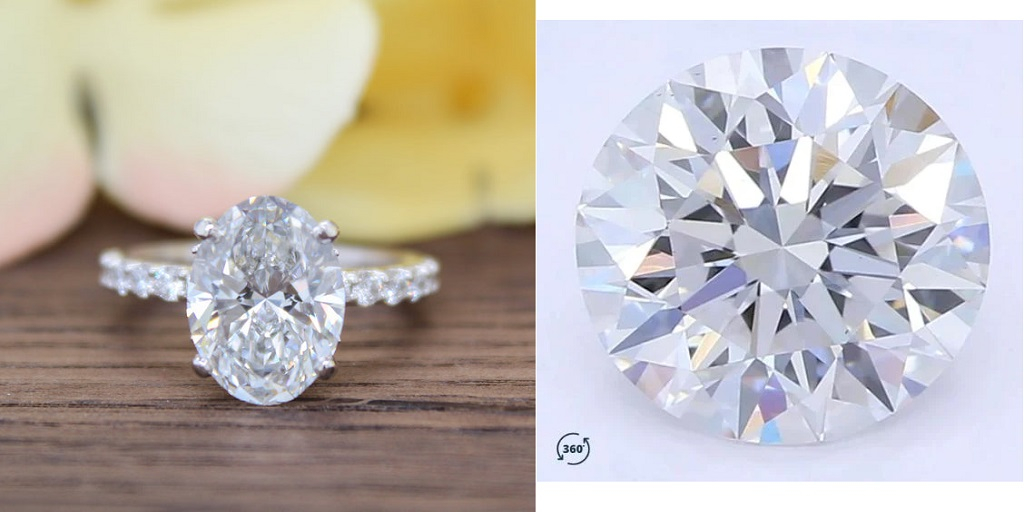
When comparing options for an engagement ring, lab grown diamond engagement rings are now an increasingly common choice alongside natural diamonds. What's the difference? Basically both types of diamonds are made of carbon and share the same physical and chemical structure. This means they look the same to the naked eye and have the same durability. But for most buyers, the decision is less about appearance and more about value, origin, and priorities.
What's the Difference?
Lab-grown and natural diamonds have one main difference: how they were formed. Natural diamonds develop over billions of years under the Earth’s surface through extreme pressure and heat. Scientists create lab grown diamonds using technology that replicates the earth's natural conditions. While the process is faster, the end result is still a real diamond. Standard testing methods confirm this, as both types pass as genuine diamonds when evaluated for hardness and composition.
Because of these similarities, it is very difficult to distinguish between lab-grown and natural diamonds without specialized equipment. Even experienced professionals cannot reliably identify the difference just by looking at the stone. Instead, identification typically requires tools that analyze growth patterns or inscriptions placed on the diamond by certification laboratories. These markings help confirm the origin of the stone and ensure transparency for buyers.
Lab Grown vs Natural, Comparing Prices
Price is one of the most significant factors that separates lab-grown diamonds from natural ones. Lab-grown diamonds are generally much more affordable, even when they have similar grades in color, clarity, and size. For example, a two-carat diamond with high quality specifications can cost many times more if it is natural compared to a lab-grown equivalent. This price gap allows buyers to consider larger stones or higher quality grades without exceeding their budget.
It is also important to understand how value is perceived. For engagement rings, many people now view diamonds less as financial assets and more as meaningful purchases. In that context, the practical benefits of lab-grown diamonds become more relevant.
Lab Grown Diamond Engagement Rings: A Practical Choice
When choosing an engagement ring, you need to consider several factors other than the diamond’s origin. The quality of a diamond's cut affects how it reflects light, so it is often considered very important. Color and clarity also matter, but small differences may not be noticeable without close inspection. Carat weight influences size, but it should be balanced with overall quality. These elements apply equally to both lab-grown and natural diamonds, so the focus should remain on finding a well-balanced stone.
A person's lifestyle and personal preferences should also guide the decision. Some buyers value the idea of a naturally formed diamond because of its history and rarity. Others prefer a lab-grown diamond because it offers a similar appearance at a lower cost. Neither choice is inherently better, but one may align more closely with what the buyer considers important. Understanding these priorities helps narrow down the options in a practical way.
And lab-grown diamonds are often considered the more practical option. First, they provide better value for money, allowing buyers to maximize size or quality within a set budget. Second, the controlled production process offers consistency, which can make it easier to find a diamond that meets specific standards. Third, they reduce the financial pressure associated with purchasing an engagement ring, which can be significant for many couples.
Finally, choosing a lab-grown diamond can simplify the decision-making process. With a wider range of options at accessible price points, buyers have more flexibility to focus on design and setting rather than compromising due to cost. They can then easily find a ring that better reflects their personal style without exceeding their budget.
So while natural and lab-grown diamonds share many similarities, the key differences come down to origin, price, and perception. For most engagement ring buyers, what matters most is finding a diamond that fits their preferences, budget, and lifestyle. Which is why lab grown diamond engagement rings offer a practical and accessible option without sacrificing quality or appearance.
For More Information About Ready To Ship Engagement Rings and Natural Loose Diamond Please Visit: Mikado Diamonds.
 Portuguese (Brazil)
 English
 Arabic
 French
 Spanish
 Portuguese
 Deutsch
 Turkish
 Dutch
Dutch
 Italiano
 Russian
 Romaian
 Greek
Greek
