


 Pro Benefits
 Environ
 Conditions générale de vente
 Confidentialité
 Child Safety & Protection
 Notifications
 Ayrush Global It Services Pvt Ltd
Efficient Impression Materials Every Dental Lab Should Stock
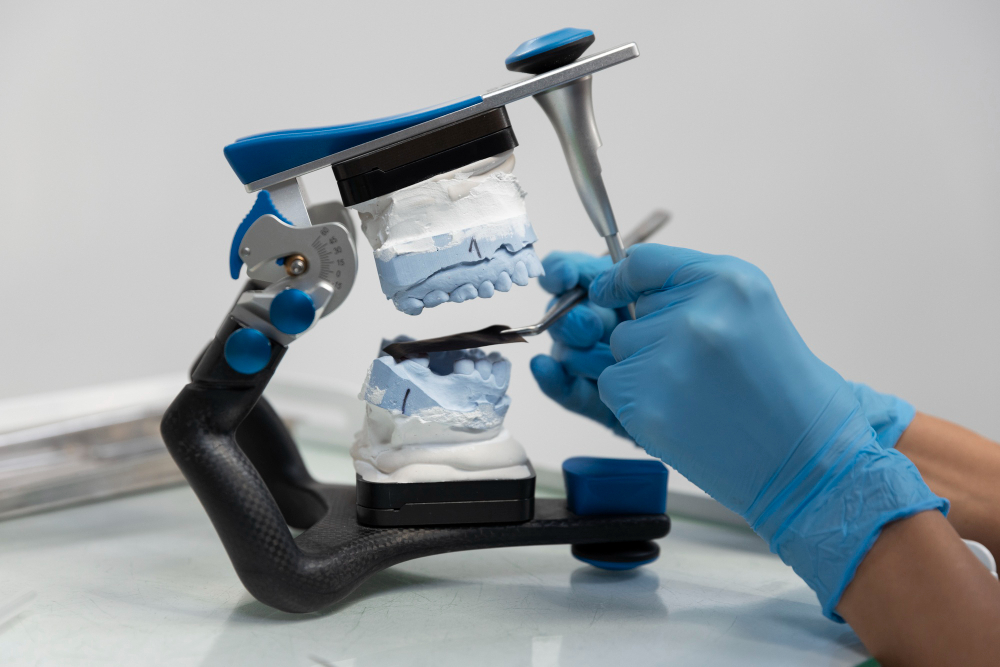
In any dental lab, having the right impression materials is essential for producing accurate and high-quality dental restorations. Whether creating crowns, bridges, dentures, or orthodontic appliances, precise impressions are crucial for ensuring the best fit and comfort for patients. With various impression materials available on the market, dental labs must stock those that are reliable, easy to use, and offer consistent results. This blog will explore some of the most efficient impression materials every dental lab should keep on hand to meet the diverse needs of dental practitioners.
When it comes to materials that offer exceptional accuracy, blue mousse is a standout option. This material is known for its excellent detail reproduction and fast-setting properties, making it ideal for cases that require quick turnaround times without sacrificing precision. Blue mousse is also easy to handle and provides a comfortable experience for patients, reducing the likelihood of distortion during the impression-taking process.
Types of Impression Materials for Dental Labs
1. Alginate
Alginate is one of the most commonly used impression materials in dental labs due to its affordability and ease of use. It is ideal for making preliminary impressions, particularly in orthodontics or for creating study models. Alginate is a fast-setting material, allowing for quick impressions, and it can be used for a variety of dental procedures. However, its dimensional stability over time is limited, so it is not suitable for final restorations but works well for temporary applications.
2. Polyvinyl Siloxane (PVS)
Polyvinyl siloxane (PVS) is widely regarded as one of the most accurate impression materials available. It provides highly precise results and is often used for final impressions for crowns, bridges, and dentures. PVS offers excellent dimensional stability, meaning that it won’t distort over time, making it ideal for creating restorations that fit perfectly. It comes in a variety of viscosities, allowing for flexibility in different clinical situations.
3. Polyether
Polyether is another highly accurate impression material commonly used for crown and bridge impressions. It is known for its exceptional flow and ability to capture fine details. Polyether also offers good dimensional stability, but it can be more difficult to remove from the mouth due to its rigidity once set. Some polyether materials have an unpleasant taste, but manufacturers are improving the flavor and overall patient experience.
4. Light Body and Heavy Body Materials
In addition to the different base impression materials, dental labs often use a combination of light body and heavy body materials for specific applications. Light body materials are used to capture fine details around the tooth structure and margins, while heavy body materials help to provide the bulk needed to stabilize the impression. This combination ensures accurate impressions for both detailed and large areas, especially in more complex dental procedures.
5. Bite Registration Materials
Bite registration materials are essential for capturing the patient’s occlusion, or how the teeth come together. These materials are used to record the patient's bite and ensure that the final restoration fits properly within the mouth. Bite registration materials are typically fast-setting, allowing the dentist to capture the patient’s bite quickly and efficiently. Common materials include wax, silicone, and polyether-based compounds.
Why Stocking a Variety of Materials Is Important
Every dental procedure comes with its own set of challenges, and having a variety of impression materials on hand allows dental labs to address these needs efficiently. Different procedures may require different materials depending on the precision required, the comfort of the patient, and the desired turnaround time. By stocking a selection of materials, dental labs can ensure that they are prepared for any case, whether it requires high detail reproduction, fast-setting properties, or ease of use.
Additionally, having a wide range of materials in stock ensures that labs can meet the diverse needs of dental professionals, whether they are working with a simple filling or a complex prosthetic restoration. Having access to reliable and efficient materials helps streamline the process and ensures that the final product meets the highest standards of quality.
Conclusion
In summary, stocking a variety of efficient and reliable impression materials is essential for any dental lab that wants to deliver high-quality restorations and services. Materials like alginate, PVS, polyether, and bite registration compounds are all critical for ensuring accurate impressions. By using the right materials for each case, dental labs can improve the efficiency of their work, reduce errors, and ensure that patients receive the best possible care.
 French
 English
 Arabic
 Spanish
 Portuguese
 Deutsch
 Turkish
 Dutch
Dutch
 Italiano
 Russian
 Romaian
 Portuguese (Brazil)
 Greek
Greek
