


 Pro Benefits
 Sobre
Sobre
 Termos
 Privacidade
 Child Safety & Protection
 Notificações
 Ayrush Global It Services Pvt Ltd
Difference Between Analog and Digital CCTV Camera: A Complete Guide
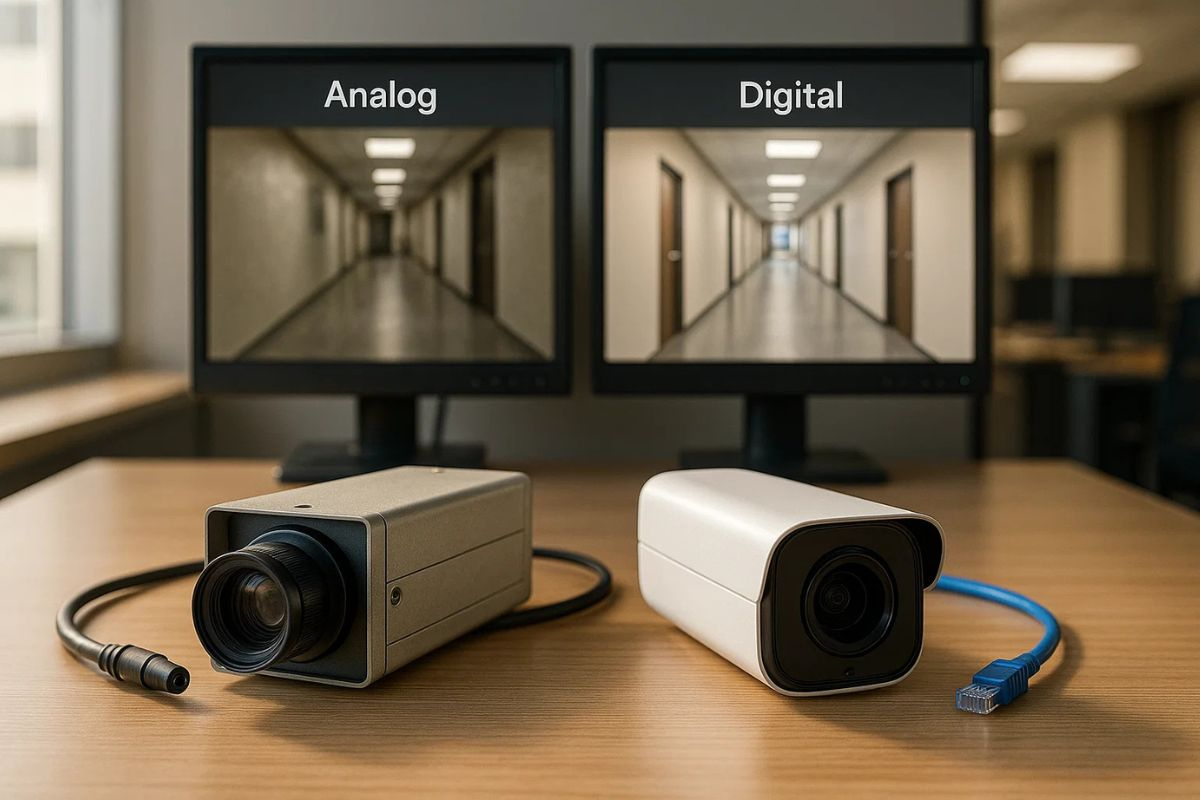
Closed-Circuit Television (CCTV) cameras have become a vital part of modern security systems. They help protect homes, businesses, and public spaces by monitoring activities and deterring crime. However, when deciding on the right system, many people struggle to understand the difference between analog and digital CCTV cameras. Both serve the same purpose—surveillance—but they work differently and provide unique advantages. To make the right decision, it’s essential to compare them in detail. In this guide, we will explore the key differences, benefits, and challenges of both camera types so you can confidently choose the one that best fits your security requirements.
What Are Analog CCTV Cameras?
Analog CCTV cameras are the traditional type of security cameras that transmit video signals in analog form. These signals are sent to a recording device such as a DVR (Digital Video Recorder) through coaxial cables. The DVR then converts the analog signals into digital format for storage and playback. While they may seem outdated, analog cameras are still widely used because they are affordable, simple to install, and provide continuous surveillance. However, the video quality of analog systems is generally lower compared to digital systems, especially in large or high-security environments where clarity is essential.
What Are Digital CCTV Cameras?
Digital CCTV cameras, often referred to as IP (Internet Protocol) cameras, transmit video data digitally over a network or the internet. Instead of relying on analog signals, these cameras use digital technology to capture high-resolution footage. Digital systems can be connected directly to a Network Video Recorder (NVR) or cloud-based storage, which makes accessing and managing video footage much more efficient. The advanced technology allows features like remote access, motion detection, and integration with smart devices. Businesses and homeowners who want cutting-edge surveillance often choose digital systems for their superior image quality and scalability.
Image Quality: Analog vs. Digital
One of the most noticeable differences between analog and digital CCTV cameras is image quality. Analog cameras typically offer lower resolution, resulting in less detailed footage. While this might be sufficient for general monitoring, it can be challenging to identify small details like license plates or facial features. On the other hand, digital cameras provide crystal-clear HD and even 4K resolution. This level of detail makes digital systems more suitable for environments where precise identification is necessary, such as retail stores, banks, or large office complexes.
Installation Process and Complexity
Analog CCTV cameras are generally easier to install since they rely on simple coaxial cable connections. However, as the number of cameras increases, the installation can become messy due to the extensive cabling required. In contrast, digital systems use network cables that often support Power over Ethernet (PoE), allowing both data and power to be transmitted through a single cable. This simplifies installation and reduces clutter. For professional setups, companies offering complete security services like CCTV Camera Installation can handle both analog and digital systems to ensure optimal performance.
Storage Options in CCTV Systems
When it comes to storage, analog cameras depend on DVRs with limited hard drive capacity. Expanding storage often means upgrading or adding more DVR units. Digital CCTV systems, however, provide more flexible storage solutions. They allow recording on NVRs, cloud storage, or external servers. This flexibility means you can scale up your system without major hardware upgrades. Additionally, cloud storage provides the advantage of secure remote access and data redundancy, ensuring your footage is safe even if the physical storage device is damaged.
Remote Access and Monitoring
Analog cameras typically do not support remote access unless additional hardware is used. This makes it difficult for users to monitor their property when they are away. Digital CCTV cameras, by contrast, are designed for remote connectivity. Through apps and web platforms, you can view live feeds from your smartphone or computer anywhere in the world. Many homeowners find this feature especially useful for travel or managing multiple properties. Businesses can also use remote monitoring to oversee several branches at once.
Cost Comparison: Analog vs. Digital
Cost is often a deciding factor when choosing between analog and digital CCTV cameras. Analog systems are usually cheaper to install and maintain, making them an attractive choice for budget-conscious users. However, the trade-off is limited features and lower image quality. Digital systems may require a higher initial investment due to the advanced hardware and network setup, but they provide better long-term value. Features like scalability, high-resolution video, and advanced analytics make digital cameras a smart choice for growing businesses and high-security environments.
Reliability and Performance
Analog CCTV systems are known for their reliability because they are less dependent on internet connectivity. Even if your internet goes down, analog cameras continue to record without interruption. However, their limited resolution can hinder performance in detail-sensitive situations. Digital systems, while highly efficient, rely on stable internet and network performance for remote access and storage. Nonetheless, their ability to deliver advanced features, scalability, and superior video quality makes them highly reliable in modern security applications.
Advanced Features in Digital Cameras
Digital CCTV cameras offer a wide range of features that analog systems cannot match. These include motion detection, facial recognition, license plate recognition, and integration with smart home devices. Businesses can use digital systems for video analytics to track customer behavior, monitor employee performance, and enhance overall security. Advanced features make digital CCTV cameras not just a surveillance tool but also a strategic investment for business growth and home automation.
When to Choose Analog CCTV Cameras
Analog CCTV cameras are suitable for users who need basic surveillance without high-resolution demands. They are ideal for small shops, warehouses, and residential properties where the budget is limited, and advanced features are unnecessary. Since they are simple to operate and maintain, analog systems remain a practical option for those who prioritize affordability and straightforward installation over high-tech performance.
When to Choose Digital CCTV Cameras
Digital CCTV cameras are best suited for users who prioritize image quality, scalability, and advanced functionality. Businesses with large premises, multiple branches, or high-security needs will benefit most from digital systems. Homeowners seeking modern smart security solutions also find digital cameras more appealing. If you are planning to upgrade your existing security system, professional providers often bundle Bosch security alarm packages with digital CCTV systems to enhance overall protection.
Hybrid CCTV Solutions: Best of Both Worlds
In some cases, a hybrid solution that combines analog and digital technology may be the best choice. Hybrid DVRs allow integration of existing analog cameras with new digital ones, providing flexibility and cost savings. This approach is particularly useful for businesses transitioning from older systems to modern digital surveillance. By gradually upgrading, you can spread out costs while still benefiting from advanced digital features where needed.
Final Thoughts
Both analog and digital CCTV cameras play important roles in the security industry. The right choice depends on your specific needs, budget, and long-term security goals. Analog systems are cost-effective and reliable for basic monitoring, while digital systems offer high-quality video, scalability, and advanced features. By understanding the differences, you can make an informed decision that ensures safety and peace of mind.
Frequently Asked Questions (FAQs)
1. Which is better: analog or digital CCTV camera?
Digital cameras are better for high-resolution footage and advanced features, while analog cameras are more affordable and simpler to install.
2. Can I use both analog and digital cameras together?
Yes, hybrid systems allow you to integrate both types for flexibility and cost savings.
3. Do analog cameras work without the internet?
Yes, analog systems record footage directly to DVRs without needing internet connectivity.
4. Are digital CCTV cameras more expensive?
They typically have higher upfront costs but provide better long-term value due to advanced features and scalability.
5. Can I view CCTV footage remotely?
Digital cameras allow remote monitoring via apps, while analog systems require additional hardware for this feature.
6. Do I need professional help for installation?
Yes, professional installation ensures proper setup, especially for digital systems with complex networking needs.
 Portuguese (Brazil)
 English
 Arabic
 French
 Spanish
 Portuguese
 Deutsch
 Turkish
 Dutch
Dutch
 Italiano
 Russian
 Romaian
 Greek
Greek
