


 Pro Benefits
 О нас
О нас
 Условия использования
 Конфиденциальность
 Child Safety & Protection
 Оповещения
 Ayrush Global It Services Pvt Ltd
Best Practices for Effective Black Box Testing
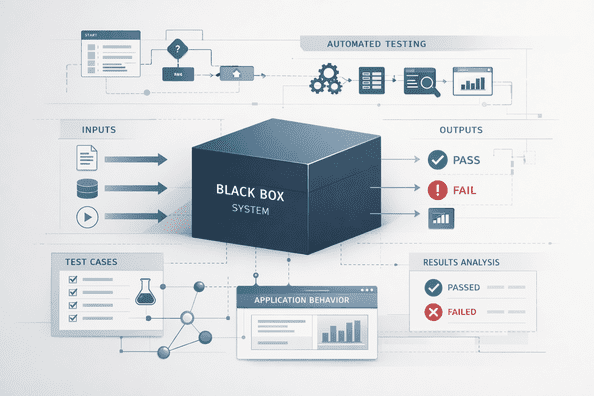
Ensuring that software behaves correctly from a user’s perspective is one of the primary objectives of quality assurance. Testers often need to validate system functionality without examining internal code structures, and this is where black box testing becomes particularly valuable. By focusing on system inputs, outputs, and expected behavior, testers can verify whether the application meets its functional requirements.
However, simply executing test cases is not enough to ensure effective results. Applying structured strategies and proven practices helps QA teams perform black box testing more efficiently and uncover defects more reliably.
Understand Functional Requirements Clearly
A strong understanding of system requirements is essential for effective testing. Since black box testing evaluates software behavior without referencing the internal code, testers must rely heavily on requirement documents, user stories, and functional specifications.
Before creating test cases, QA teams should carefully analyze these documents to understand how the application is expected to behave. Clear requirements help testers design accurate test scenarios and ensure that critical functionalities are validated during testing.
Well-defined requirements also reduce misunderstandings between development and testing teams.
Design Test Cases Around User Workflows
Effective testing should mirror how real users interact with the system. Designing test cases based on user workflows allows testers to validate the application in practical scenarios rather than isolated technical functions.
For example, instead of testing a login form as a standalone component, testers may validate the entire workflow including login, profile access, and account actions. This approach helps identify functional issues that may appear only when multiple system components interact.
Focusing on user workflows ensures that testing reflects real-world usage patterns.
Use Structured Test Design Techniques
Applying systematic test design techniques improves the effectiveness of black box testing. Methods such as equivalence partitioning, boundary value analysis, and decision table testing help testers create meaningful test cases without unnecessary duplication.
These techniques allow QA teams to cover a wide range of input scenarios while minimizing the number of test cases required. Structured test design also increases consistency across different testing cycles.
Using proven techniques ensures that testing remains thorough and efficient.
Prioritize High-Risk Areas
Not all parts of an application carry the same level of risk. Some components, such as payment systems, authentication modules, and data processing workflows, are more critical to overall system functionality.
Prioritizing these high-risk areas helps QA teams focus their testing efforts where failures could have the most significant impact. Risk-based testing ensures that critical features receive adequate validation during each testing cycle.
This approach improves testing efficiency while maintaining strong quality coverage.
Maintain Clear and Reusable Test Cases
Well-documented test cases are essential for maintaining consistency in testing processes. Test cases should clearly describe the testing steps, expected outcomes, and required test data.
Reusable test cases help teams execute regression testing more efficiently when new features or updates are introduced. Maintaining organized test documentation also simplifies collaboration between QA engineers and developers.
Consistent documentation improves long-term testing productivity.
Combine Manual and Automated Testing
While manual testing allows testers to explore application behavior and identify unexpected issues, automation can significantly improve testing efficiency for repetitive tasks.
Automated tests are particularly useful for validating common workflows, form validations, and API responses. Combining manual and automated approaches allows teams to achieve both depth and efficiency in their testing strategy.
Balancing these methods ensures comprehensive validation without slowing down development cycles.
Collaborate with Development Teams
Close collaboration between QA engineers and developers improves the overall effectiveness of testing activities. Testers can gain better insights into system behavior, potential edge cases, and design considerations when communication is strong.
Regular discussions about requirements, bug reports, and test results help teams resolve issues faster and prevent misunderstandings during development.
Strong collaboration ultimately leads to better software quality.
Use Complementary Testing Approaches
In many testing strategies, teams combine multiple testing methods to achieve deeper system validation. For example, organizations may use both black box testing and white box testing to evaluate software from different perspectives.
While black box testing verifies functional behavior from an external viewpoint, white box testing analyzes internal code logic and execution paths. Together, these approaches provide more comprehensive test coverage and improve defect detection.
Combining multiple testing methods strengthens overall quality assurance efforts.
Continuously Improve the Testing Process
Effective testing processes evolve as software systems grow and development practices change. QA teams should regularly review their testing strategies, analyze defect patterns, and update test cases when necessary.
Continuous improvement ensures that testing practices remain relevant and effective. It also allows teams to adapt to new technologies, architectures, and development workflows.
By refining testing strategies over time, organizations can maintain strong quality standards while supporting rapid software development.
Conclusion
Applying the right strategies is essential for making black box testing truly effective. By understanding requirements clearly, designing tests around user workflows, using structured techniques, and prioritizing high-risk areas, QA teams can significantly improve their testing outcomes.
When combined with automation, collaboration, and continuous improvement, black box testing becomes a powerful approach for validating software functionality and ensuring that applications deliver reliable user experiences.
 Russian
 English
 Arabic
 French
 Spanish
 Portuguese
 Deutsch
 Turkish
 Dutch
Dutch
 Italiano
 Romaian
 Portuguese (Brazil)
 Greek
Greek
