


 Pro Benefits
 Sobre
Sobre
 Termos
 Privacidade
 Child Safety & Protection
 Notificações
 Ayrush Global It Services Pvt Ltd
Next.js API Routes: Building Secure And Scalable Backends With Middleware

Introduction
Next.js is a flexible React framework with support for both backend and frontend development. It lets developers design API routes for server-side logic processing. These API routes support dynamic data retrieval, database interactions, and outside integrations. Through security, logging, and request management, middleware improves these paths by catching requests before they reach the API route, therefore boosting performance and dependability. Modern web development benefits from using Next.js API routes with middleware to create safe, scalable, and easily maintainable applications rapidly. Next Js Tutorial for Beginners helps you learn building modern web applications from scratch.
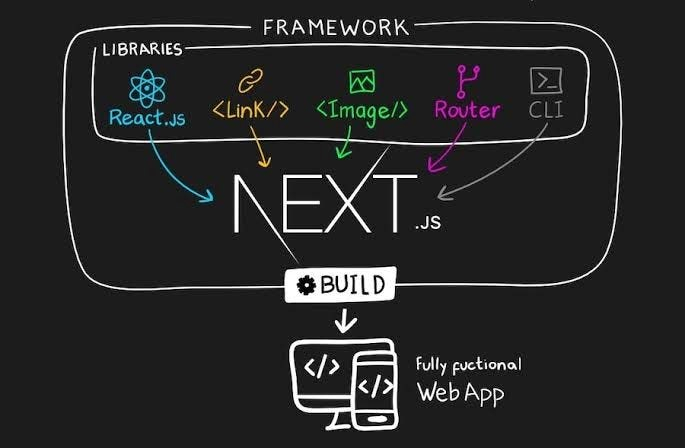
Next.js Overview
Next.js is a widely used reacting framework. It enables developers to create scalable and quick web applications. It favors static site creation and server-side rendering. With little configuration, developers can build dynamic websites. By means of optimized page loading, Next.js enhances performance. It offers integrated routing and API support as well as good compatibility with React libraries and tools. Development is made simpler by the framework for projects both big and little. Next.js also helps to provide safer coding with TypeScript support. For current online development, it is still among the most popular selections.
What Is Middleware?
Software known as middleware links several applications or systems. It makes it possible between programs for communication and data interchange. Middleware helps developers to streamline challenging operations; it effectively handles requests, responses, and workflows. Middleware can control authentication, logging, and error management. It runs in databases, API, and web servers. It boosts application dependability and performance. Developers can concentrate on core features thanks to middleware. It provides a conduit across software components. It is still very important in contemporary application development.
Next.js API Routes For Building Secure And Scalable Backends With Middleware
Next.js goes beyond only a frontend framework. Through API routes, it also offers a strong backend solution. Direct inside a Next.js project, developers can produce serverless functions. Handling HTTP is made possible via API routes. GET, POST, PUT, and DELETE requests. Without running a dedicated server, they help create flexible and scalable backends. Middleware boosts performance as well as security. It lets developers easily intercept requests and answers. Employing Next.js API routes with middleware guarantees reliable and maintainable apps.
1. Understanding Next.js API Routes
Under the pages/api directory, API routes in Next.js are files. Every file automatically becomes an endpoint. For instance, pages/api/user.js maps to /api/user. Developers can export a default function to manage requests. The function accepts res (response) and req (request) objects. It enables setting response headers, reading request data, and returning JSON or other formats. API paths are exclusively server-side. Authentication, database operations, and third-party integrations benefit from them.
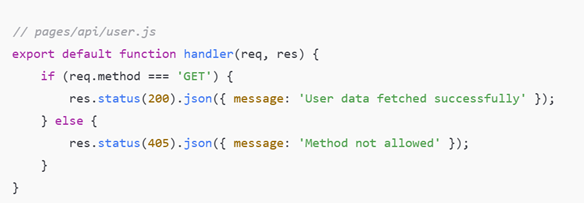
2. Middleware in Next.js
Before a request reaches an API route or page, middleware in Next.js runs. It can alter responses or queries. Developers deploy middleware for rate limiting, authentication, logging, and security checks. By default, middleware operates on the edge to give quicker response times. In either the pages directory or a dedicated API folder, you may generate a middleware.js or _middleware.js file. Modern features including NextResponse for rewriting, redirection, or header alteration are supported by middleware. Next Js Certification validates your skills and boosts your career opportunities in web development.
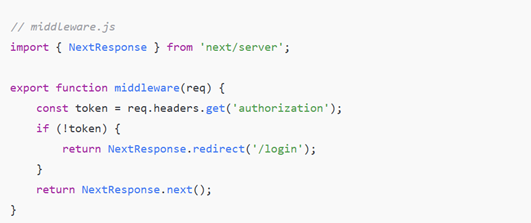
3. Securing API Routes with Middleware
Middleware guarantees that just legitimate queries arrive at API paths. Before handling data, developers can verify session cookies, API keys, or JWT tokens. This protects against illegal access and data breaches. You can also incorporate role-based access control. By using middleware, one can log security incidents and filter questionable traffic. Every API handler benefits from less repetitive security code made possible by middleware.
4. Scalability with Middleware
By means of request handling optimization, middleware enhances scalability. It may set rate limits, cache responses, and filter requests. By handling requests closer to users, edge middleware helps to lessen server load. With API routes, Next.js automatically manages serverless deployment. Middleware guarantees regular performance and security even when traffic grows. Developers can manage complicated workflows by chaining several middleware operations.
5. Advanced Features and Best Practices
Dynamic routing, streaming, and incremental static regeneration are all supported by Next.js API endpoints. Middleware can manage response modification as well as conditional redirects. Always check approaching data to thwart injection attacks. For clarity, properly apply HTTP status codes. Use environmental variables for secrets. By clustering related endpoints, construct API routes for maintainability. Proactive debugging calls for monitor logs and faults. For analytics and monitoring, integrate middleware with outside services.
Conclusion
Next.js API paths with middleware offer a strong underlying structure. They enable developers to create maintainable, scalable, and safe apps. Efficiently, middleware ensures authentication, logging, and traffic management. Node js Online Course teaches server-side programming and backend development efficiently. API routes streamline serverless deployment and backend administration. Dynamic routing, edge processing, and developer freedom are Improvements in security with middleware minimize code replication and boost application performance. Still a top choice for contemporary web development, Next.js deftly integrates frontend and backend features.
 Portuguese (Brazil)
 English
 Arabic
 French
 Spanish
 Portuguese
 Deutsch
 Turkish
 Dutch
Dutch
 Italiano
 Russian
 Romaian
 Greek
Greek
