


 Pro Benefits
 Über
Über
 Bedingungen
 Datenschutz
 Child Safety & Protection
 Benachrichtigungen
 Ayrush Global It Services Pvt Ltd
EPCG Scheme in Export: Benefits, Process & Eligibility Explained
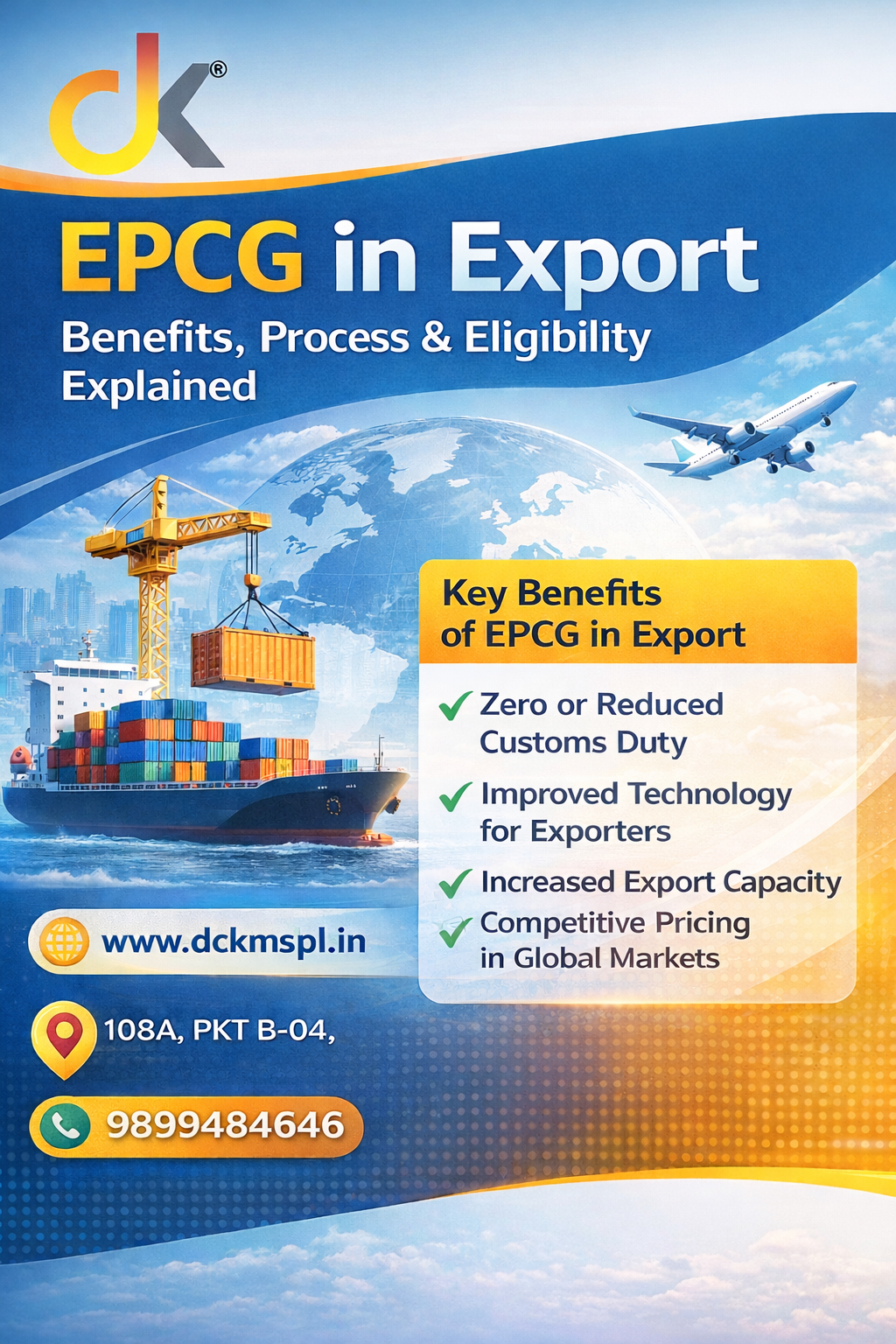
If you are involved in international trade, understanding EPCG in export is essential for reducing costs and improving global competitiveness. The EPCG scheme is one of the most beneficial export promotion schemes introduced by the Government of India to support exporters by allowing duty-free import of capital goods.
In this comprehensive guide, we will explain everything about EPCG in export, including its meaning, benefits, eligibility criteria, application process, compliance requirements, and details about the post export EPCG scheme. We will also clarify what EPCG stand for, how to obtain an EPCG licence, and how the EPCG licence scheme works in practice.
What Does EPCG Stand For?
EPCG stand for Export Promotion Capital Goods.
The EPCG scheme is a trade promotion initiative introduced under India’s Foreign Trade Policy (FTP). It enables exporters to import capital goods required for producing export goods at zero customs duty (subject to certain conditions).
The objective of the scheme is to encourage modernization and technological upgradation of Indian industries so that they can compete effectively in global markets.
What is EPCG in Export?
EPCG in export refers to the facility provided to exporters to import capital goods such as machinery, equipment, spare parts, tools, and technology at concessional or zero customs duty. In return, exporters must fulfill a specific export obligation within a prescribed time period.
Capital goods under the EPCG scheme can include:
-
Manufacturing machinery
-
Production equipment
-
Packaging machinery
-
Computer systems
-
Quality control equipment
-
Refractories, catalysts, and spare parts
The scheme significantly reduces the upfront cost of setting up or upgrading production facilities for exporters.
Objectives of the EPCG Scheme
The primary goals of the EPCG scheme include:
-
Promoting exports by reducing capital investment costs
-
Encouraging technological advancement
-
Improving product quality for global markets
-
Enhancing competitiveness of Indian exporters
-
Boosting foreign exchange earnings
By allowing duty-free imports of capital goods, the government ensures exporters have access to modern infrastructure without heavy financial burden.
Types of EPCG Scheme
There are mainly two types of EPCG facilities available:
1. Zero Duty EPCG Scheme
Under this option, capital goods can be imported at zero customs duty. However, the exporter must fulfill an export obligation equal to multiple times the duty saved within a specified period.
2. Post Export EPCG Scheme
The post export EPCG scheme is an alternative option. Under this method:
-
The exporter first pays full customs duty at the time of import.
-
After fulfilling export obligations, the duty paid is refunded in the form of duty credit scrips.
This option benefits exporters who may not want to execute bonds or bank guarantees upfront.
Key Benefits of EPCG in Export
The EPCG in export framework provides several advantages:
1. Zero or Reduced Customs Duty
Import capital goods without paying customs duty, reducing financial burden.
2. Improved Technology
Access to advanced machinery improves production efficiency and quality.
3. Increased Export Capacity
Higher production capability helps meet international demand.
4. Competitive Pricing
Reduced production cost allows exporters to offer competitive prices globally.
5. Long Export Obligation Period
Export obligations can usually be fulfilled within several years, providing flexibility.
6. Support for Service Exporters
The EPCG scheme also benefits service providers such as hotels, tour operators, and healthcare institutions engaged in foreign exchange earnings.
Eligibility Criteria for EPCG Licence
To apply under the EPCG licence scheme, the applicant must:
-
Be an exporter of goods or services
-
Hold a valid Importer Exporter Code (IEC)
-
Be registered under GST
-
Be engaged in manufacturing or service exports
-
Not be blacklisted under trade regulations
Merchant exporters can also apply, provided they have a supporting manufacturer.
What is an EPCG Licence?
An EPCG licence is an authorization issued by the Directorate General of Foreign Trade (DGFT) allowing the import of capital goods under concessional duty.
The licence specifies:
-
Description of capital goods
-
CIF value of imports
-
Duty saved amount
-
Export obligation amount
-
Time period for compliance
The licence holder must comply strictly with the terms and conditions mentioned.
How to Apply for EPCG Licence Scheme
The process to obtain an EPCG licence generally involves the following steps:
Step 1: Online Application
Apply through the DGFT portal with required documentation.
Step 2: Submit Documents
Documents typically include:
-
IEC certificate
-
GST registration
-
Company incorporation certificate
-
Chartered accountant certificate
-
Import details of capital goods
Step 3: Approval and Issuance
After verification, the EPCG authorization is issued.
Step 4: Execution of Bond
The applicant may need to execute a bond or bank guarantee for export obligation compliance.
Export Obligation Under EPCG Scheme
Export obligation (EO) is the core condition of the scheme.
Under zero duty EPCG, exporters must fulfill export obligations equivalent to a multiple of duty saved within a prescribed period (often six years).
The export obligation can be:
-
Specific export obligation
-
Average export obligation
Failure to meet the obligation may result in payment of customs duty with interest and penalties.
Read More - SCOMET Export Licence Explained: Meaning, Process & Requirements
Post Export EPCG Scheme Explained
The post export EPCG scheme offers flexibility. Instead of importing machinery duty-free, exporters:
-
Pay full customs duty at the time of import.
-
Fulfill export obligations.
-
Receive duty credit scrips equivalent to the duty paid.
This option is helpful for businesses that prefer not to block working capital in bonds or bank guarantees.
Advantages include:
-
No need for upfront bond execution
-
Easier compliance management
-
Reduced documentation at customs
Compliance Requirements Under EPCG in Export
Compliance plays a major role in the EPCG licence scheme.
Exporters must:
-
Maintain proper import documentation
-
Submit annual reports to DGFT
-
Track export performance
-
Submit export obligation discharge certificate (EODC)
-
Maintain records for audit
Non-compliance may lead to penalties and cancellation of licence.
Documents Required for EPCG Licence
Key documents include:
-
Importer Exporter Code (IEC)
-
GST registration certificate
-
Company PAN card
-
Bank certificate
-
Chartered engineer certificate (for capital goods valuation)
-
Proforma invoice of machinery
-
Export performance details
Common Mistakes to Avoid in EPCG Scheme
-
Incorrect calculation of export obligation
-
Delayed submission of compliance reports
-
Misclassification of capital goods
-
Failure to meet average export requirements
-
Ignoring time extension procedures
Careful planning ensures smooth benefits under EPCG in export.
Impact of EPCG Scheme on Indian Exporters
The EPCG scheme has significantly contributed to:
-
Industrial modernization
-
Growth in engineering exports
-
Increased foreign exchange earnings
-
Boost in MSME competitiveness
-
Development of export-oriented infrastructure
Many industries such as textiles, pharmaceuticals, automobiles, and engineering goods have benefited from the scheme.
Difference Between EPCG and Other Export Schemes
Unlike duty drawback or RoDTEP schemes that refund duties on exported goods, the EPCG scheme focuses on reducing capital investment costs by allowing duty-free import of machinery.
It is more suitable for long-term exporters planning expansion or modernization.
Who Should Opt for EPCG Licence Scheme?
The EPCG licence scheme is ideal for:
-
Manufacturers expanding production
-
Export-oriented units
-
Service providers earning foreign exchange
-
Businesses planning technology upgrades
-
MSMEs entering international markets
If your company plans large-scale exports, EPCG in export can significantly reduce capital expenditure.
Conclusion
Understanding EPCG in export is crucial for exporters seeking cost-effective expansion and global competitiveness. Since EPCG stand for Export Promotion Capital Goods, the scheme focuses on enabling exporters to import modern machinery at concessional duty rates.
Whether you choose the zero duty option or the post export EPCG scheme, both offer strong financial advantages when managed properly. Obtaining an EPCG licence under the EPCG licence scheme requires compliance with export obligations, documentation, and regulatory norms.
By leveraging the EPCG scheme wisely, exporters can modernize operations, improve quality standards, increase export volume, and contribute to India’s foreign trade growth.
FAQs
1. What does EPCG stand for in export?
EPCG stand for Export Promotion Capital Goods. It is a government scheme that allows exporters to import capital goods at zero or concessional customs duty in exchange for fulfilling export obligations.
2. What is the difference between zero duty EPCG and post export EPCG scheme?
Under zero duty EPCG, capital goods are imported without paying customs duty, and export obligations must be fulfilled later. Under the post export EPCG scheme, duty is paid first and refunded later through duty credit scrips after fulfilling export obligations.
3. Who is eligible for EPCG licence scheme?
Manufacturers, merchant exporters with supporting manufacturers, and service providers earning foreign exchange with a valid IEC and GST registration are eligible to apply for an EPCG licence under the EPCG scheme.

 English
 Arabic
 French
 Spanish
 Portuguese
 Turkish
 Dutch
Dutch
 Italiano
 Russian
 Romaian
 Portuguese (Brazil)
 Greek
Greek
