


 Pro Benefits
 About
About
 Termeni
 Confidențialitate
 Child Safety & Protection
 Notificări
 Ayrush Global It Services Pvt Ltd
Is the Export Promotion Capital Goods Scheme Right for Your Business?
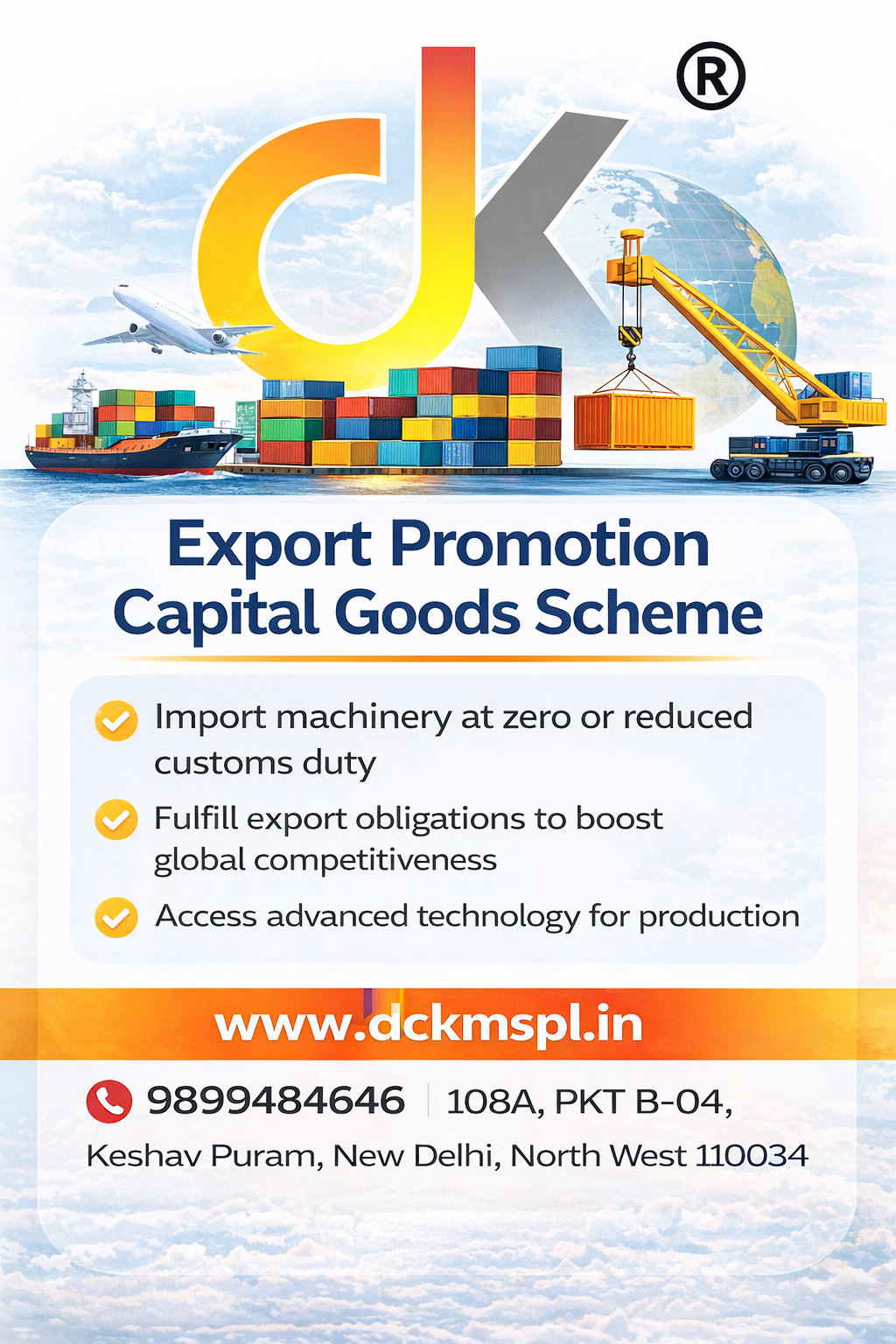
If you are planning to expand your export operations and reduce the cost of importing machinery, the Export Promotion Capital Goods Scheme could be a powerful opportunity for your business. Designed to strengthen India’s export competitiveness, this scheme allows manufacturers and service providers to import capital goods at concessional or zero customs duty—subject to fulfilling export obligations.
But is the Export Promotion Capital Goods Scheme truly the right fit for your company?
In this detailed guide, we will explain everything you need to know about the Export Promotion Capital Goods Scheme, the EPCG scheme benefits, EPCG full form, EPCG licence process, eligibility criteria, compliance requirements, and how to evaluate whether it aligns with your business goals.
What is the Export Promotion Capital Goods Scheme?
The Export Promotion Capital Goods Scheme (commonly known as the EPCG scheme) is an export incentive program introduced by the Government of India under the Foreign Trade Policy (FTP).
EPCG Full Form
The EPCG full form is Export Promotion Capital Goods.
The main objective of the Export Promotion Capital Goods Scheme is to promote exports by allowing businesses to import capital goods required for production at reduced or zero customs duty. In return, businesses must fulfill a specified export obligation within a defined time period.
Capital goods include:
-
Machinery
-
Equipment
-
Plant and production lines
-
Tools and jigs
-
Molds and dies
-
Computer systems
-
Spare parts
The scheme supports both manufacturer exporters and service exporters.
Objective of the Export Promotion Capital Goods Scheme
The primary goals of the Export Promotion Capital Goods Scheme are:
-
To modernize Indian industries
-
To improve product quality
-
To enhance global competitiveness
-
To boost export performance
-
To attract technology upgrades
By reducing the cost of importing advanced machinery, the EPCG scheme encourages businesses to invest in better infrastructure and increase export capacity.
Key Features of the EPCG Scheme
Before deciding whether the Export Promotion Capital Goods Scheme is right for your business, you must understand its core features.
1. Zero or Concessional Customs Duty
Under the EPCG scheme, capital goods can be imported at zero customs duty (subject to policy conditions).
2. Export Obligation
The importer must fulfill an export obligation equivalent to multiple times the duty saved on capital goods.
3. Validity Period
Export obligation must generally be completed within 6 years from the date of issue of the EPCG licence.
4. Domestic Procurement Allowed
Capital goods can also be sourced domestically under the EPCG scheme.
5. Applicable to Multiple Sectors
The Export Promotion Capital Goods Scheme is available to manufacturers, merchant exporters tied to supporting manufacturers, and service providers.
What is an EPCG Licence?
An EPCG licence is the authorization issued by the Directorate General of Foreign Trade (DGFT) that permits a business to import capital goods at concessional or zero customs duty under the Export Promotion Capital Goods Scheme.
The EPCG licence specifies:
-
Description of capital goods
-
CIF value of imports
-
Duty saved amount
-
Export obligation value
-
Validity period
-
Average export requirement
Without an EPCG licence, you cannot claim benefits under the EPCG scheme.
Who is Eligible for the Export Promotion Capital Goods Scheme?
You may qualify for the Export Promotion Capital Goods Scheme if:
-
You are a manufacturer exporter
-
You are a merchant exporter tied to a supporting manufacturer
-
You are a service provider exporting services
-
You have an IEC (Import Export Code)
-
You are registered under GST
Even small and medium enterprises (SMEs) can benefit from the EPCG scheme if they meet export conditions.
How Does the Export Promotion Capital Goods Scheme Work?
Here is a simplified process:
Step 1: Apply for EPCG Licence
Apply online through the DGFT portal.
Step 2: Import Capital Goods
Once the EPCG licence is issued, you can import machinery at concessional duty.
Step 3: Install and Use the Machinery
The imported goods must be installed at the declared premises.
Step 4: Fulfill Export Obligation
You must export goods/services equivalent to the required export obligation within the stipulated time.
Step 5: Submit Compliance Reports
Regular reporting to DGFT is mandatory.
Understanding Export Obligation Under the EPCG Scheme
Export obligation is the most critical aspect of the Export Promotion Capital Goods Scheme.
Typically, export obligation is calculated as a multiple of the duty saved amount. For example:
If you saved ₹10 lakh in customs duty, you may need to export goods worth ₹60 lakh within 6 years (depending on policy terms).
Export obligation includes:
-
Direct exports
-
Deemed exports (if allowed)
-
Service exports
Failure to fulfill export obligation may result in:
-
Payment of saved duty
-
Interest and penalties
-
Legal complications
So before applying for an EPCG licence, carefully assess your export capacity.
Benefits of the EPCG Scheme
The Export Promotion Capital Goods Scheme offers multiple advantages:
1. Reduced Capital Investment
Import advanced machinery at lower cost.
2. Technology Upgrade
Access to world-class technology improves production efficiency.
3. Increased Global Competitiveness
Lower production costs make exports more competitive.
4. Improved Profit Margins
Duty savings can significantly enhance profitability.
5. Expansion Opportunities
Encourages scaling up operations for international markets.
Is the Export Promotion Capital Goods Scheme Right for Your Business?
Now let’s address the core question.
The Export Promotion Capital Goods Scheme may be right for your business if:
✔ You Are Planning Expansion
If you are setting up a new production line or upgrading existing machinery.
✔ You Have Stable Export Orders
If you already have confirmed export orders or long-term buyers.
✔ You Can Meet Export Obligations
If your projected exports comfortably exceed required export obligation.
✔ You Want Long-Term Cost Savings
If you want to reduce machinery cost without immediate heavy duty burden.
It May Not Be Ideal If:
-
You are uncertain about future exports
-
Your export volumes fluctuate heavily
-
You cannot commit to 6-year export obligations
-
You prefer simpler compliance
In such cases, the EPCG scheme may create compliance pressure.
Documents Required for EPCG Licence
To apply under the Export Promotion Capital Goods Scheme, you generally need:
-
IEC certificate
-
GST registration
-
Company PAN
-
Import details of capital goods
-
Chartered Accountant certificate
-
Export performance details
-
Digital signature
Documentation must be accurate to avoid rejection.
Compliance Requirements Under the EPCG Scheme
The Export Promotion Capital Goods Scheme involves ongoing compliance:
-
Installation certificate submission
-
Annual export reporting
-
Maintenance of proper records
-
Timely fulfillment of export obligation
Non-compliance can lead to cancellation of EPCG licence benefits.
Read More - SCOMET Export Licence Explained: Meaning, Process & Requirements
Common Mistakes to Avoid
Many businesses misuse or misunderstand the EPCG scheme. Avoid these mistakes:
-
Overestimating export capacity
-
Not calculating export obligation properly
-
Ignoring compliance deadlines
-
Poor documentation
-
Applying without expert consultation
Professional guidance is highly recommended before applying for an EPCG licence.
Industries That Benefit Most from the Export Promotion Capital Goods Scheme
The EPCG scheme is especially beneficial for:
-
Engineering manufacturers
-
Textile exporters
-
Pharma companies
-
Automobile component manufacturers
-
Food processing units
-
IT and service exporters
Capital-intensive industries gain maximum advantage.
EPCG Scheme vs Other Export Incentives
Compared to other export schemes, the Export Promotion Capital Goods Scheme focuses specifically on capital goods import rather than direct export rewards.
It supports infrastructure building rather than providing immediate cash incentives.
Therefore, it is more suitable for long-term strategic exporters.
Final Verdict: Should You Apply for the Export Promotion Capital Goods Scheme?
The Export Promotion Capital Goods Scheme is a powerful tool for businesses serious about export growth and modernization.
If your company:
-
Has consistent export demand
-
Plans technology upgrades
-
Can commit to export obligations
-
Wants to reduce capital expenditure
Then the EPCG scheme can significantly improve profitability and competitiveness.
However, if export performance is uncertain, careful evaluation is necessary before applying for an EPCG licence.
Frequently Asked Questions (FAQs)
1. What is the EPCG full form?
The EPCG full form is Export Promotion Capital Goods. It is a government scheme that allows businesses to import capital goods at concessional or zero customs duty against fulfillment of export obligation.
2. What is an EPCG licence and why is it important?
An EPCG licence is an authorization issued by DGFT that permits a business to import machinery under the Export Promotion Capital Goods Scheme at reduced duty. Without an EPCG licence, you cannot claim benefits under the EPCG scheme.
3. What happens if export obligation is not fulfilled under the EPCG scheme?
If export obligation is not completed within the prescribed period, the company must pay the customs duty saved along with interest and possible penalties. Non-compliance can also impact future licensing approvals.

 English
 Arabic
 French
 Spanish
 Portuguese
 Deutsch
 Turkish
 Dutch
Dutch
 Italiano
 Russian
 Portuguese (Brazil)
 Greek
Greek
