


 Pro Benefits
 About
About
 Koşullar
 Gizlilik
 Child Safety & Protection
 Bildirimler
 Ayrush Global It Services Pvt Ltd
What Is Import Export? Meaning, Process & How It Works
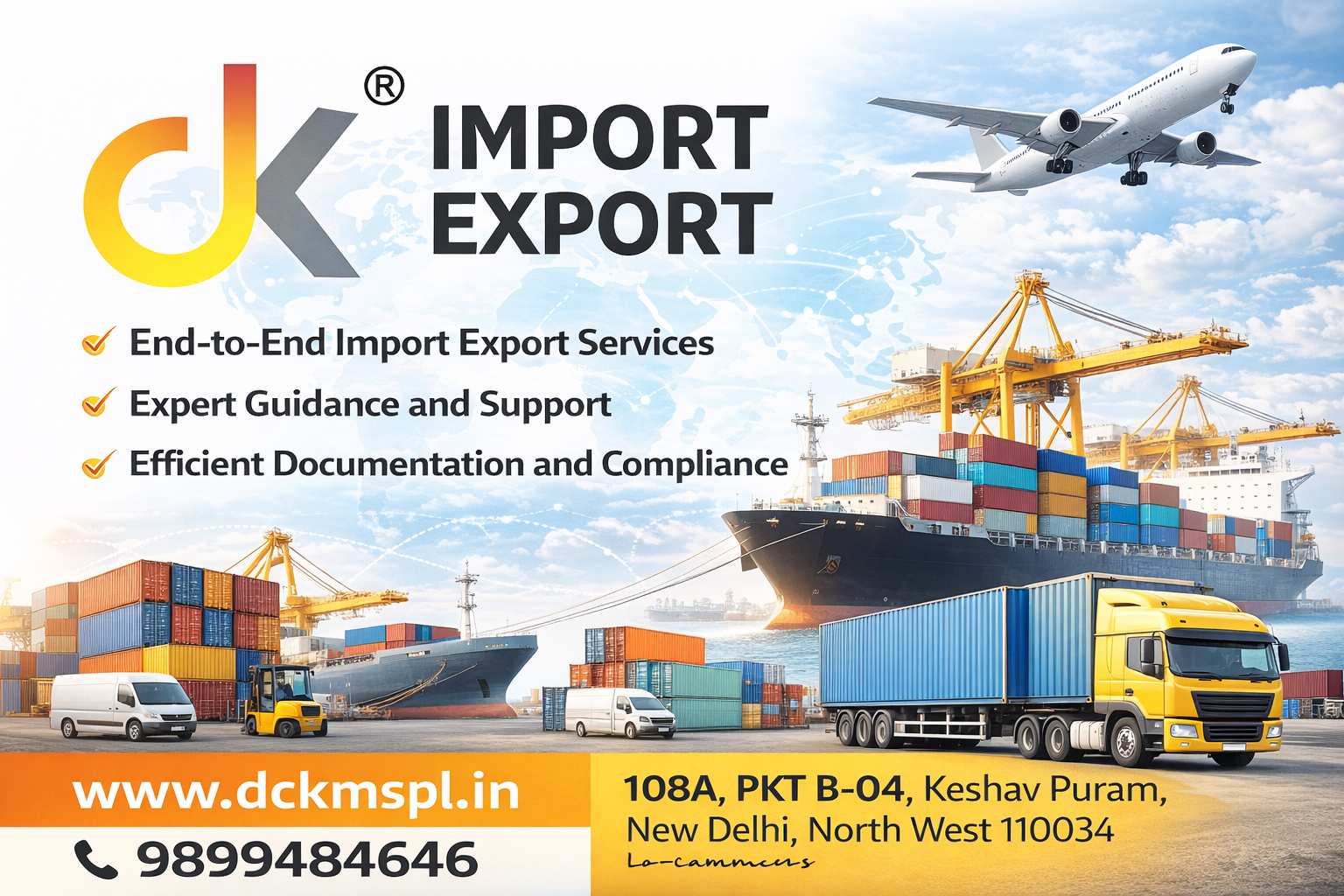
In today’s globalized economy, import export plays a vital role in connecting countries, businesses, and consumers across the world. From raw materials and machinery to electronics, clothing, and food products, international trade makes it possible for goods to move seamlessly across borders. Whether you are an aspiring entrepreneur, a student, or a business owner looking to expand globally, understanding how import export works is essential.
This comprehensive guide explains the meaning of import export, the complete process, documentation, legal requirements, challenges, and how businesses can manage operations effectively with professional support such as DCK Management and DCKMSPL.
Meaning of Import Export
The term import export refers to the international trade of goods and services between countries.
-
Import means purchasing goods or services from another country and bringing them into your own country for sale or use.
-
Export means selling goods or services produced in your country to buyers in another country.
For example:
-
If a company in India buys machinery from Germany, it is an import.
-
If a company in India sells textiles to the USA, it is an export.
Import export enables countries to access products that may not be available locally, improve quality standards, reduce costs, and increase business opportunities.
Why Import Export Is Important
The importance of import export in the global economy cannot be overstated. Here are key reasons why it matters:
1. Economic Growth
International trade contributes significantly to GDP and national income. Exporting goods increases foreign exchange earnings, while importing allows access to advanced technology and resources.
2. Business Expansion
Businesses can expand beyond local markets and reach global customers, increasing profits and brand recognition.
3. Competitive Advantage
Companies can source cheaper raw materials from other countries, reducing production costs and improving competitiveness.
4. Product Availability
Consumers gain access to a wider range of products from around the world.
5. Job Creation
Import export businesses generate employment in logistics, warehousing, documentation, customs clearance, and transportation.
How Import Export Works: Step-by-Step Process
Understanding the process of import export is crucial for smooth operations. Below is a detailed breakdown.
Step 1: Market Research
Before starting an import export business, conduct detailed market research:
-
Identify demand for products internationally.
-
Analyze competitor pricing.
-
Study trade regulations of the target country.
-
Check import duties and taxes.
Choosing the right product and market is the foundation of successful import export operations.
Step 2: Business Registration and Licensing
To legally operate an import export business, you must:
-
Register your company.
-
Obtain an Import Export Code (IEC) or equivalent license in your country.
-
Register for GST/VAT (if applicable).
-
Open a business bank account for international transactions.
Without proper registration, international trade is not permitted.
Step 3: Finding Buyers or Suppliers
For exports:
-
Use B2B platforms.
-
Attend trade fairs.
-
Connect through trade associations.
For imports:
-
Research international suppliers.
-
Request samples.
-
Compare pricing and quality.
-
Negotiate payment terms.
Building trustworthy relationships is critical in import export business.
Step 4: Pricing and Contract Agreement
After finalizing the deal:
-
Agree on pricing.
-
Decide payment terms (LC, advance payment, etc.).
-
Determine Incoterms (FOB, CIF, EXW, etc.).
-
Sign a purchase agreement.
Clear contracts reduce risks and misunderstandings.
Step 5: Documentation
Documentation is one of the most important aspects of import export. Common documents include:
-
Commercial Invoice
-
Packing List
-
Bill of Lading / Airway Bill
-
Certificate of Origin
-
Insurance Certificate
-
Customs Declaration
-
Letter of Credit (if applicable)
Incorrect documentation can delay shipments and increase costs.
Step 6: Customs Clearance
Customs authorities verify goods and documents before allowing entry or exit.
-
Pay applicable duties and taxes.
-
Ensure compliance with trade regulations.
-
Submit required forms.
Professional management services help ensure smooth customs clearance and compliance.
Step 7: Shipping and Delivery
Goods are transported via:
-
Sea Freight
-
Air Freight
-
Road Transport
-
Rail Freight
Shipping mode depends on cost, urgency, and type of product.
Step 8: Payment Settlement
Payments in import export are usually done through:
-
Letter of Credit (LC)
-
Telegraphic Transfer (TT)
-
Documents Against Payment (D/P)
-
Open Account
Secure payment methods reduce financial risk.
Types of Import Export
Import export trade can be classified into different types:
1. Direct Import Export
Businesses deal directly with foreign buyers or suppliers without intermediaries.
2. Indirect Import Export
Trade is handled through agents or trading companies.
3. Merchant Exporter
A trader purchases goods from manufacturers and exports them.
4. Manufacturer Exporter
The producer directly exports their own products.
Key Challenges in Import Export
While import export offers great opportunities, it also comes with challenges.
1. Regulatory Compliance
Different countries have different trade laws and standards.
2. Currency Fluctuations
Exchange rate changes can affect profit margins.
3. Logistics Issues
Shipping delays and port congestion can impact delivery schedules.
4. Documentation Errors
Incorrect paperwork can result in fines or shipment rejection.
5. Trade Barriers
Tariffs, quotas, and sanctions can restrict trade.
Proper planning and expert management help overcome these challenges.
Read More - SCOMET Export Licence Explained: Meaning, Process & Requirements
Role of Professional Management in Import Export
Managing international trade requires expertise in logistics, documentation, compliance, and supply chain coordination. This is where structured operational systems and professional consultancies become valuable.
Companies offering structured solutions like DCK Management provide end-to-end assistance in:
-
Trade documentation
-
Customs clearance
-
Regulatory compliance
-
Supply chain optimization
-
Risk management
-
Vendor coordination
Similarly, DCKMSPL supports businesses with strategic planning, operational guidance, and compliance management in the import export sector.
Such professional support reduces risk, improves efficiency, and ensures smooth cross-border trade operations.
Importance of DCK Management in Import Export Operations
Efficient DCK Management systems streamline import export operations by:
-
Organizing shipment tracking
-
Monitoring documentation
-
Managing supplier communication
-
Reducing compliance risks
-
Improving turnaround time
Strong management frameworks help businesses focus on growth rather than operational complications.
Benefits of Starting an Import Export Business
Starting an import export business offers several advantages:
1. Low Initial Investment
You can start as a merchant exporter without manufacturing facilities.
2. Global Market Access
You are not limited to domestic demand.
3. Scalability
Operations can expand based on demand and partnerships.
4. High Profit Potential
International price differences create margin opportunities.
5. Diverse Product Options
From agriculture to electronics, there are countless product opportunities.
How to Start Import Export Business Successfully
Here’s a practical roadmap:
-
Choose a niche product.
-
Research international demand.
-
Register your business legally.
-
Obtain required licenses.
-
Build supplier/buyer networks.
-
Partner with reliable logistics providers.
-
Implement professional management systems.
-
Focus on compliance and quality control.
Consistency and proper planning are key to long-term success in import export.
Digital Transformation in Import Export
Technology has transformed global trade. Modern import export businesses use:
-
ERP systems
-
Supply chain management software
-
Online trade platforms
-
Digital payment gateways
-
Automated compliance tools
Integrating structured management systems improves accuracy and reduces manual errors.
Risk Management in Import Export
Risk management is critical in international trade. Key strategies include:
-
Using insurance for shipments.
-
Choosing secure payment methods.
-
Verifying suppliers.
-
Hedging currency risks.
-
Keeping updated with trade regulations.
Professional advisory services help minimize these risks effectively.
Future of Import Export Business
The future of import export is promising due to:
-
Increasing globalization
-
Growth of e-commerce
-
Expansion of free trade agreements
-
Digital trade platforms
-
Improved logistics infrastructure
Businesses that adopt structured management systems and compliance-focused strategies will have a competitive edge.
Conclusion
Import export is the backbone of international trade, enabling businesses to expand globally and economies to grow stronger. Understanding the meaning, process, documentation, legal requirements, and challenges is essential before entering this field.
From market research and registration to customs clearance and payment settlement, every step in import export requires careful planning and execution. Implementing strong operational systems and professional management frameworks ensures smooth trade operations and long-term success.
Whether you are starting small or planning large-scale global expansion, mastering import export fundamentals and adopting structured management support will position your business for sustainable growth in the international marketplace.
Frequently Asked Questions (FAQs)
1. What is the main difference between import and export?
Import refers to buying goods or services from another country, while export means selling goods or services to another country. Both are essential components of international trade and global business expansion.
2. Is import export business profitable?
Yes, import export business can be highly profitable if you choose the right product, understand market demand, manage costs effectively, and ensure proper documentation and compliance. Profitability depends on pricing strategy, logistics efficiency, and risk management.
3. What documents are required for import export?
Common documents required for import export include Commercial Invoice, Packing List, Bill of Lading or Airway Bill, Certificate of Origin, Customs Declaration, and Insurance Certificate. Requirements may vary depending on country regulations and product type.
 Turkish
 English
 Arabic
 French
 Spanish
 Portuguese
 Deutsch
 Dutch
Dutch
 Italiano
 Russian
 Romaian
 Portuguese (Brazil)
 Greek
Greek
