


 Pro Benefits
 About
About
 Terms
Terms
 Privacy
 Child Safety & Protection
 Notifications
 Ayrush Global It Services Pvt Ltd
EPCG Scheme for Import of Capital Goods: Everything You Need to Know
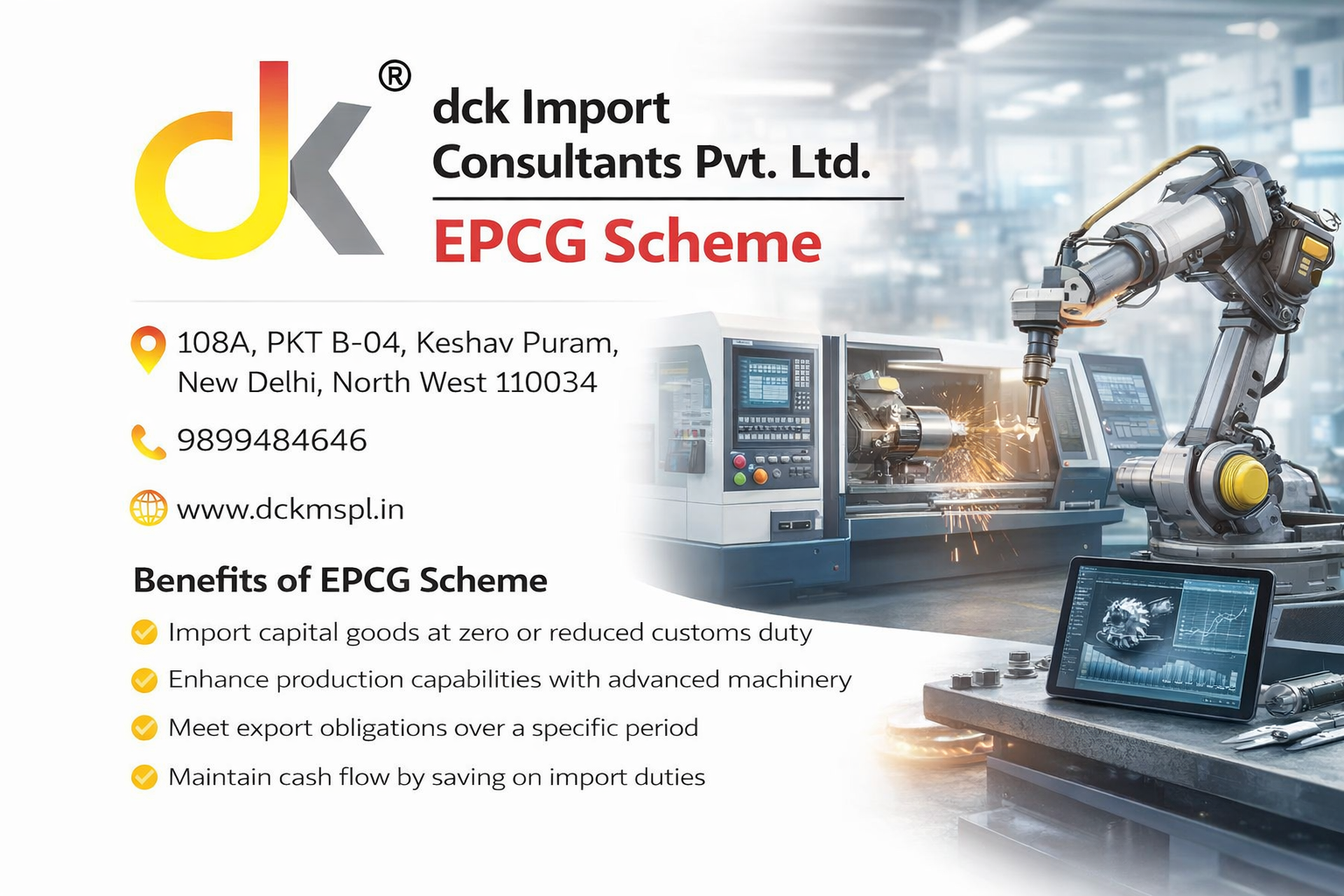
If you are planning to expand your export business or upgrade your manufacturing unit, understanding the EPCG Scheme is extremely important. The Export Promotion Capital Goods Scheme (EPCG Scheme) is a major initiative introduced by the Government of India to promote exports and strengthen the competitiveness of Indian industries.
In this detailed guide, you will learn everything about the EPCG Scheme, including the EPCG full form, eligibility criteria, export obligation, application process, compliance requirements, and the importance of obtaining an EPCG licence.
EPCG Full Form
The EPCG full form is Export Promotion Capital Goods Scheme.
The Export Promotion Capital Goods Scheme allows exporters in India to import capital goods at concessional or zero customs duty, provided they commit to fulfilling a specified export obligation within a defined period.
The scheme is administered by the Directorate General of Foreign Trade (DGFT) under the Foreign Trade Policy of India.
What Is the EPCG Scheme?
The EPCG Scheme is designed to facilitate the import of capital goods required for the production of goods and services meant for export. The main idea behind the scheme is to help Indian industries modernize their production facilities and compete effectively in international markets.
Under the EPCG Scheme:
-
Capital goods can be imported at reduced or zero customs duty.
-
The importer must fulfill an export obligation.
-
The export obligation must be completed within the prescribed time period.
This balance ensures that the country promotes exports while supporting industrial growth.
Objectives of the Export Promotion Capital Goods Scheme
The primary objectives of the Export Promotion Capital Goods Scheme are:
-
To promote exports from India
-
To encourage modernization of Indian industries
-
To enhance productivity and product quality
-
To increase global competitiveness
-
To strengthen India’s position in international trade
By allowing easier access to advanced machinery and equipment, the EPCG Scheme plays a crucial role in technological development.
What Are Capital Goods Under the EPCG Scheme?
Under the EPCG Scheme, capital goods include:
-
Plant and machinery
-
Production equipment
-
Tools and spare parts
-
Molds and dies
-
Refractories and catalysts
-
Computer software required for production
-
Packaging machinery
-
Equipment used by service providers
These goods must be used for producing goods or services meant for export.
Who Can Apply for the EPCG Scheme?
The EPCG Scheme is available to:
-
Manufacturer exporters
-
Merchant exporters tied with supporting manufacturers
-
Service providers such as hotels, healthcare institutions, logistics providers, and others
-
Small, medium, and large enterprises
To apply for an EPCG licence, the applicant must:
-
Possess a valid Import Export Code (IEC)
-
Be registered on the DGFT portal
-
Commit to fulfilling export obligations
Both new and established exporters can benefit from the scheme.
Understanding Export Obligation Under EPCG Scheme
Export obligation is the core condition of the EPCG Scheme.
When capital goods are imported under the scheme, the importer must fulfill an export obligation calculated based on the duty saved. The obligation must generally be completed within a specified number of years from the date of issuance of the EPCG licence.
Types of Export Obligation
There are mainly two components:
1. Specific Export Obligation
Exports must be made using the capital goods imported under the scheme.
2. Average Export Obligation
The exporter must maintain the average level of exports achieved in previous years.
Both conditions must be met to successfully complete the obligations under the EPCG Scheme.
What Is an EPCG Licence?
An EPCG licence is an authorization issued by DGFT that permits the import of capital goods under the Export Promotion Capital Goods Scheme.
The licence specifies:
-
Description of capital goods
-
Total value of goods
-
Export obligation
-
Validity period
-
Conditions for compliance
Importing capital goods without obtaining the EPCG licence will not allow you to claim the scheme benefits.
Step-by-Step Process to Apply for EPCG Licence
The application process for the EPCG Scheme is completely online.
Step 1: Register on DGFT Portal
Create an account on the DGFT website using your IEC.
Step 2: Submit Application
Fill in the required details regarding capital goods and export plans.
Step 3: Upload Required Documents
Attach necessary documents such as:
-
IEC certificate
-
GST registration
-
PAN details
-
Digital Signature Certificate
-
Chartered Engineer certificate
-
Proforma invoice
Step 4: Application Review
DGFT reviews the application and may seek clarification if required.
Step 5: Issuance of EPCG Licence
Once approved, the EPCG licence is issued electronically.
Read More - SCOMET Export Licence Explained: Meaning, Process & Requirements
Compliance Requirements Under EPCG Scheme
After receiving the EPCG licence, exporters must follow certain compliance procedures:
-
Install imported capital goods within the prescribed time
-
Submit installation certificate
-
Maintain proper records of production and exports
-
File regular export obligation reports
-
Apply for Export Obligation Discharge Certificate (EODC) after fulfilling obligations
Non-compliance can result in cancellation of benefits and other regulatory action.
Role of Foreign Trade Policy in EPCG Scheme
The EPCG Scheme operates under the Foreign Trade Policy issued by the Ministry of Commerce and Industry.
The policy framework ensures:
-
Transparent procedures
-
Digital filing systems
-
Time-bound approvals
-
Monitoring of export performance
Exporters should always stay updated with the latest policy provisions.
Advantages of EPCG Scheme for Exporters
The Export Promotion Capital Goods Scheme provides several advantages:
1. Access to Advanced Technology
Businesses can import modern machinery to improve product quality.
2. Increased Production Capacity
Upgraded equipment leads to higher efficiency and output.
3. Improved Export Competitiveness
Better quality products enhance global market acceptance.
4. Long-Term Growth
The scheme supports sustainable expansion of export-oriented businesses.
Important Conditions to Remember
Before applying under the EPCG Scheme, keep these points in mind:
-
Capital goods must be used for export production.
-
Export obligation must be fulfilled within the prescribed time.
-
Proper documentation must be maintained.
-
Regular reporting to DGFT is mandatory.
-
Capital goods cannot be disposed of during the obligation period without permission.
Understanding these conditions helps in smooth execution of the scheme.
Common Mistakes to Avoid
Many exporters face issues due to lack of planning. Avoid these mistakes:
-
Applying without a clear export strategy
-
Misunderstanding export obligation conditions
-
Delaying submission of compliance reports
-
Not maintaining proper documentation
Proper planning and professional guidance can help avoid complications.
Why EPCG Scheme Is Important for Indian Industry
The EPCG Scheme has significantly contributed to:
-
Modernization of Indian manufacturing
-
Growth of export-oriented industries
-
Strengthening global trade relationships
-
Promoting high-quality production standards
It supports India’s vision of becoming a major global manufacturing and export hub.
Conclusion
The EPCG Scheme (Export Promotion Capital Goods Scheme) is a powerful export promotion initiative that enables businesses to import capital goods at concessional or zero customs duty in exchange for fulfilling export obligations.
Understanding the EPCG full form, eligibility, export obligation requirements, compliance procedures, and the process of obtaining an EPCG licence is essential for any exporter planning to take advantage of this scheme.
When implemented strategically, the Export Promotion Capital Goods Scheme can help businesses upgrade technology, improve efficiency, and expand their global footprint.
FAQs
1. What is the EPCG full form?
The EPCG full form is Export Promotion Capital Goods Scheme.
2. What is an EPCG licence?
An EPCG licence is an authorization issued by DGFT that allows import of capital goods under the EPCG Scheme subject to export obligation.
3. Who is eligible for the EPCG Scheme?
Manufacturer exporters, merchant exporters, and service providers with a valid Import Export Code can apply under the EPCG Scheme.

 Arabic
 French
 Spanish
 Portuguese
 Deutsch
 Turkish
 Dutch
Dutch
 Italiano
 Russian
 Romaian
 Portuguese (Brazil)
 Greek
Greek
