


 Pro Benefits

 الشروط
 الخصوصية
 Child Safety & Protection
 الإشعارات
 Ayrush Global It Services Pvt Ltd
Why EPCG is Important for Indian Exporters?
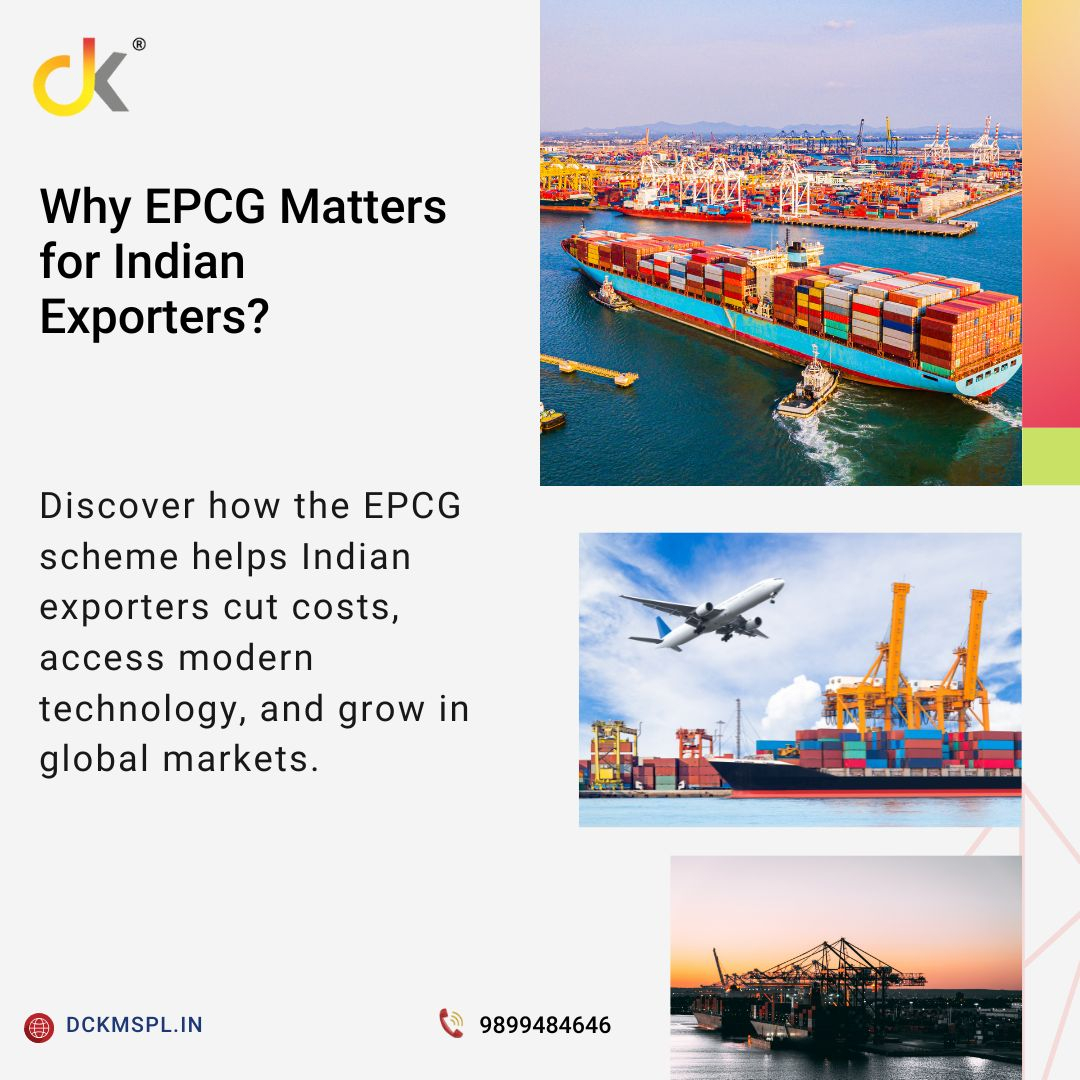
In the fast-growing global economy, Indian exporters face both opportunities and challenges. Competing in international markets requires not only high-quality products but also cost efficiency, compliance with global standards, and advanced technology. To address these needs, the Export Promotion Capital Goods (EPCG) scheme plays a critical role. Introduced by the Directorate General of Foreign Trade (DGFT), EPCG helps exporters import capital goods at reduced or zero customs duty. This scheme is a cornerstone of India’s trade policy and has empowered thousands of businesses to expand globally.
In this article, we will explore why EPCG is important for Indian exporters, how it supports growth, why DCK is considered a good option for import-export services, and the role of import export code registration and the certificate of importer exporter code in establishing a strong business foundation.
What is EPCG?
The Export Promotion Capital Goods (EPCG) scheme allows Indian exporters to import capital goods (machinery, equipment, and technology) at zero or concessional customs duty. These imports must be used for producing goods that are exported from India, ensuring that the benefits extend to the country’s trade balance.
The primary objective of the EPCG scheme is to enhance the competitiveness of Indian exporters by encouraging modernization, cost reduction, and improved production capacity. For example, a textile manufacturer may use EPCG benefits to import modern weaving machines, which increases productivity and enables them to compete with global brands.
Key Features of EPCG Scheme
-
Zero or Concessional Customs Duty – Exporters can import capital goods at zero or reduced duty, significantly lowering costs.
-
Export Obligation (EO) – Beneficiaries must fulfill a specific export obligation, generally 6 times the duty saved, within 6 years.
-
Wide Scope – Covers capital goods including machinery, equipment, software, and spares used in production.
-
Technology Access – Encourages adoption of the latest global technology for Indian industries.
-
Flexibility – Available to both direct exporters and service exporters like hotels, healthcare institutions, and logistics firms.
Why is EPCG Important for Indian Exporters?
1. Cost Reduction and Competitiveness
Global markets demand competitive pricing. Importing machinery and equipment at zero or low duty under EPCG reduces production costs, enabling Indian exporters to offer their products at competitive rates without compromising quality.
2. Modernization of Industries
Many Indian exporters struggle with outdated technology. Through EPCG, companies can access the latest global machinery, improve quality standards, and meet international compliance requirements.
3. Enhanced Export Capacity
By upgrading production lines, exporters can increase capacity and fulfill large international orders. This leads to business expansion and long-term global contracts.
4. Boost to MSMEs
Micro, Small, and Medium Enterprises (MSMEs) often face financial barriers when importing machinery. EPCG reduces upfront costs and helps these businesses expand globally.
5. Government Support for Export Growth
The EPCG scheme aligns with the Government of India’s goal to make India a global manufacturing hub. By reducing dependency on high import duties, the government indirectly supports export-led growth.
Why DCK is a Good Option for Import-Export?
When it comes to managing import-export operations, compliance, and EPCG applications, many exporters struggle with paperwork, government guidelines, and procedures. This is where DCK emerges as a reliable solution.
Key Reasons Why DCK is a Good Option:
-
Expertise in EPCG – DCK provides specialized services for EPCG license application, documentation, and compliance with DGFT rules.
-
Support in Import Export Code Registration – DCK assists exporters in obtaining their import export code registration, which is mandatory for starting an export business.
-
Guidance on Certificate of Importer Exporter Code – Proper guidance ensures exporters avoid delays and rejections in documentation.
-
End-to-End Import-Export Solutions – From EPCG license to customs clearance, DCK manages the entire process smoothly.
-
Trusted by Exporters – Many exporters prefer DCK because of its proven track record in simplifying complex procedures and ensuring compliance.
By choosing DCK as a partner, Indian exporters can focus on growing their businesses while ensuring that regulatory and procedural requirements are met.
Role of Import Export Code (IEC) in EPCG
Before applying for EPCG benefits, every exporter must have an Import Export Code (IEC) issued by DGFT. This is the first step for any business entering the global market.
Importance of IEC in EPCG:
-
Mandatory Requirement – Without import export code registration, exporters cannot apply for EPCG.
-
Certificate of Importer Exporter Code – Acts as a license to conduct import-export activities legally.
-
Smooth Customs Clearance – IEC is required for customs clearance of goods imported under EPCG.
-
Banking Transactions – IEC enables exporters to receive payments in foreign currency.
Thus, the certificate of importer exporter code is not only a compliance requirement but also a gateway to leveraging EPCG benefits.
EPCG and the Future of Indian Exporters
The EPCG scheme has already helped several sectors such as textiles, pharmaceuticals, engineering goods, agriculture, IT services, and hospitality. With increasing demand for “Made in India” products globally, EPCG is expected to play an even greater role.
By providing cost-efficient technology access, EPCG ensures Indian exporters can match international standards, increase production capacity, and build long-term partnerships. Organizations like DCK further strengthen this ecosystem by offering reliable import-export services.
Step-by-Step Guide to Apply for EPCG
-
Obtain Import Export Code (IEC): Complete your import export code registration with DGFT.
-
Prepare Documentation: Gather required documents such as company details, export history, and technical details of capital goods.
-
File EPCG Application: Submit the EPCG license application through the DGFT online portal.
-
Approval and License Issuance: Once verified, DGFT issues the EPCG license.
-
Import Capital Goods: Use the license to import machinery at zero or concessional duty.
-
Fulfill Export Obligation: Ensure that you meet the export obligation within the specified time.
Conclusion
The EPCG scheme is a lifeline for Indian exporters, enabling them to reduce costs, modernize industries, and expand globally. With access to advanced capital goods at zero or concessional duty, exporters can compete on an international level. However, navigating EPCG applications and compliance can be challenging, which is why trusted partners like DCK are invaluable.
Before applying, exporters must complete their import export code registration and secure their certificate of importer exporter code, as these are mandatory prerequisites. By combining EPCG benefits with expert support from DCK, Indian exporters can maximize growth opportunities and strengthen India’s position in global trade.
FAQs on EPCG and Import-Export
Q1. What is the EPCG scheme and who can apply?
The EPCG scheme allows exporters to import capital goods at zero or concessional customs duty. Both manufacturing and service exporters can apply, provided they have a valid certificate of importer exporter code.
Q2. Is Import Export Code Registration mandatory for EPCG?
Yes. Without import export code registration, exporters cannot apply for EPCG or conduct any import-export activity.
Q3. What is the role of DCK in EPCG?
DCK assists exporters in filing EPCG applications, completing documentation, and ensuring compliance. It is also a trusted partner for obtaining the certificate of importer exporter code and managing the overall import-export process.
Q4. What is the export obligation under EPCG?
Exporters must fulfill an obligation equal to six times the duty saved on capital goods within six years from the date of issuance of the EPCG license.
Q5. Can MSMEs benefit from EPCG?
Yes. The scheme is particularly useful for MSMEs, as it reduces capital investment costs, making global expansion more accessible.
Q6. What happens if the export obligation is not fulfilled?
If the export obligation is not met, exporters may be required to pay the saved duty along with interest and penalties.

 English
 French
 Spanish
 Portuguese
 Deutsch
 Turkish
 Dutch
Dutch
 Italiano
 Russian
 Romaian
 Portuguese (Brazil)
 Greek
Greek
