


 Pro Benefits
 Environ
 Conditions générale de vente
 Confidentialité
 Child Safety & Protection
 Notifications
 Ayrush Global It Services Pvt Ltd
Best AI Interview Assistants in 2025: Your Complete Guide to Smarter Preparation
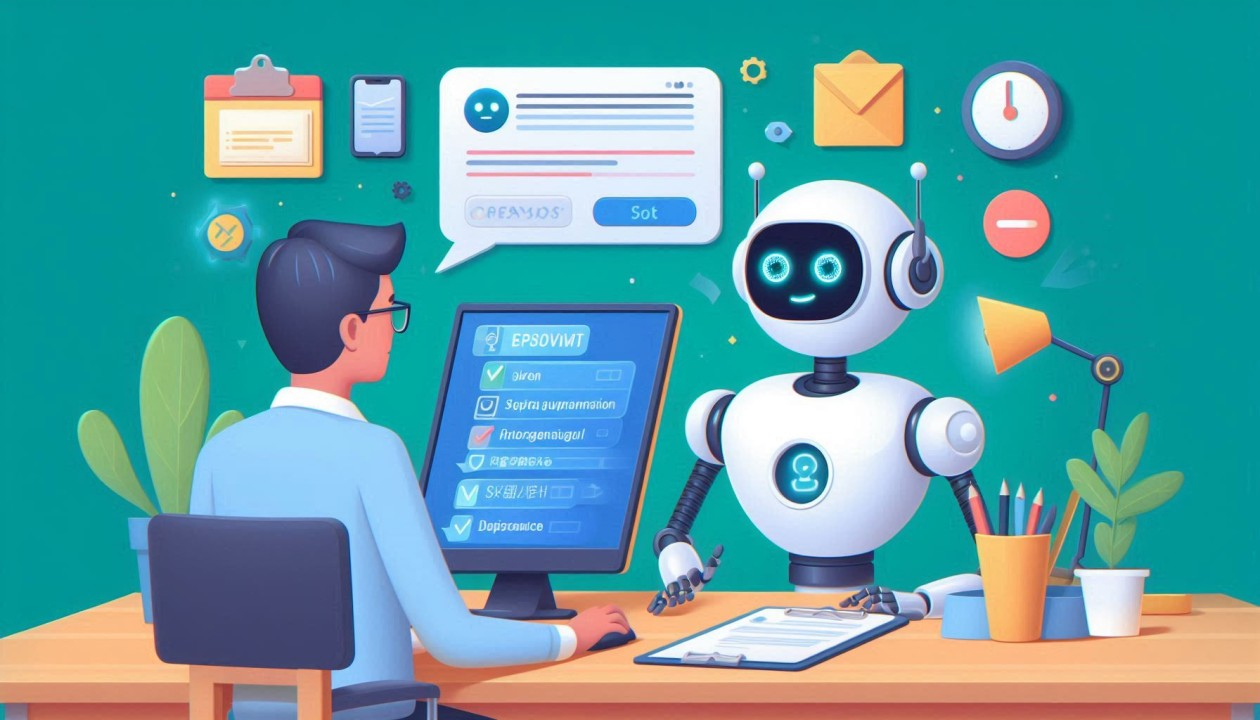
Interview preparation has evolved significantly over the past decade. Gone are the days when candidates relied solely on textbooks, coaching classes, or peer mock sessions. In 2025, AI interview assistants are transforming the way candidates practice, evaluate, and improve their interview performance.
These tools provide realistic simulations, role-specific feedback, and actionable insights, helping candidates refine both technical and behavioral skills efficiently. This guide explores the top AI interview assistants, their features, use cases, and strategies for maximizing success.
What Are AI Interview Assistants?
AI interview assistants are software platforms powered by artificial intelligence that simulate real interviews and provide structured feedback. They can:
-
Generate role-specific interview questions.
-
Assess responses for clarity, structure, and logic.
-
Evaluate tone, delivery, and confidence in spoken or video responses.
-
Track performance across multiple practice sessions.
By combining the power of AI with real-world interview scenarios, these tools help candidates prepare smarter and faster.
Why Use AI Interview Assistants?
-
Structured Practice: AI provides a systematic approach, ensuring you cover all key topics and skills.
-
Instant Feedback: Candidates get immediate insights on areas needing improvement.
-
Role-Specific Preparation: Tailored simulations for coding, product, design, analytics, sales, and behavioral roles.
-
Confidence Building: Repeated practice reduces anxiety and enhances performance.
-
Time Efficiency: Practice anytime, anywhere, without relying solely on mentors or peers.
Top AI Interview Assistants in 2025
1. Interview Sidekick
Interview Sidekick offers comprehensive mock interviews for multiple roles. The AI evaluates technical and behavioral responses and suggests improvements.
-
Best For: Software engineers, product managers, designers, and data analysts.
-
Strengths: Detailed feedback, iterative practice, and role-specific question generation.
2. Pramp
Pramp combines AI with peer-to-peer mock interviews. The platform evaluates problem-solving, communication, and technical accuracy.
-
Best For: Coding interviews, technical assessments, and behavioral questions.
-
Strengths: Realistic practice with human interaction plus AI insights.
3. Final Round AI
Final Round AI offers real-time guidance and structured prompts during mock interviews. It provides STAR method coaching and performance scoring.
-
Best For: Behavioral and soft-skills preparation.
-
Strengths: Structured guidance, feedback on clarity and time management.
4. HireVue
HireVue specializes in video-based interviews, evaluating tone, clarity, and delivery. Candidates can practice one-way video responses, a format commonly used by top employers.
-
Best For: Behavioral and soft-skills interviews.
-
Strengths: Video simulations, communication coaching, and feedback on delivery.
5. HackerRank & LeetCode
These platforms focus on technical interview preparation. They provide coding challenges, evaluate solutions, and track metrics like efficiency and correctness.
-
Best For: Software engineers and data scientists.
-
Strengths: Algorithmic problem-solving, technical evaluation, and feedback on optimization.
How AI Interview Assistants Improve Preparation
Technical Skill Enhancement
AI tools provide immediate evaluation of coding, design, or analytical exercises. Candidates can learn correct approaches, optimize solutions, and track improvement metrics.
Behavioral & Soft Skills
AI evaluates responses for structure, clarity, and emotional impact, helping candidates refine communication and storytelling.
Role-Specific Insights
Candidates receive tailored feedback based on the role, company, and level of experience. This ensures preparation is focused and effective.
Performance Tracking
AI assistants provide metrics dashboards, allowing candidates to measure improvement in clarity, accuracy, response time, and confidence over multiple sessions.
Role-Specific Strategies
Software Engineers
-
Focus on coding challenges, algorithms, and system design.
-
Explain your thought process clearly in mock interviews.
-
Track metrics like correctness, efficiency, and problem-solving approach.
Product Managers
-
Practice product design, prioritization, and metrics questions.
-
Use AI to structure answers logically and concisely.
-
Simulate stakeholder discussions and decision-making scenarios.
Data Scientists & Analysts
-
Practice SQL, Python, R, and machine learning tasks.
-
Refine analytical reasoning and explain results clearly.
-
Use AI feedback to improve both accuracy and communication.
UX/UI & Designers
-
Present portfolios and solve design challenges.
-
Receive feedback on storytelling, clarity, and usability.
-
Combine AI suggestions with mentor input for creative improvement.
Sales & Client-Facing Roles
-
Practice pitches, objection handling, and negotiation scenarios.
-
Refine persuasion, tone, and clarity using AI evaluation.
-
Record practice sessions and track improvement.
Behavioral & Leadership Roles
-
Practice STAR framework answers for common questions.
-
Use AI to assess clarity, emotional impact, and confidence.
-
Integrate human feedback to improve interpersonal skills.
How to Maximize AI Interview Assistants
-
Take a Baseline Mock: Identify your strengths and weaknesses.
-
Focus on Weak Areas: Use AI feedback to improve specific skills.
-
Simulate Real Conditions: Time your responses and practice one-way video interviews.
-
Blend With Human Practice: Peer or mentor sessions add realism and unpredictability.
-
Track Progress: Monitor metrics on clarity, accuracy, and delivery.
-
Iterate & Refine: Use AI insights to continuously improve.
Common Mistakes to Avoid
-
Over-relying on AI and sounding robotic.
-
Skipping human feedback sessions.
-
Ignoring repeated feedback and failing to track improvement.
-
Using AI unethically during live interviews.
Real-Life Candidate Experiences
-
Software Engineer: Practiced coding with HackerRank; improved problem-solving speed by 40%.
-
Product Manager: Used Interview Sidekick for PM case studies; enhanced decision-making clarity.
-
UX Designer: Practiced portfolio storytelling with AI; improved presentation confidence.
-
Sales Candidate: Used AI for role-play; improved objection handling and persuasive communication.
Future Trends
-
AI will evaluate emotional intelligence and empathy.
-
Predictive insights will estimate likelihood of candidate success.
-
Multi-role dashboards will track performance across technical, behavioral, and soft skills.
-
Virtual interview simulations will create immersive, realistic practice scenarios.
Conclusion
AI interview assistants are revolutionizing interview preparation in 2025. They provide structured practice, role-specific feedback, performance tracking, and confidence-building. When combined with human practice, they offer candidates a measurable, data-driven approach to success.
For anyone preparing for technical, product, design, sales, or behavioral interviews, AI interview assistants are no longer optional—they are essential.
 French
 English
 Arabic
 Spanish
 Portuguese
 Deutsch
 Turkish
 Dutch
Dutch
 Italiano
 Russian
 Romaian
 Portuguese (Brazil)
 Greek
Greek
