


 Pro Benefits
 About
About
 Termini e Condizioni
 Privacy
 Child Safety & Protection
 Notifiche
 Ayrush Global It Services Pvt Ltd
How Admissions Software for Private Schools Improves Enrollment Efficiency
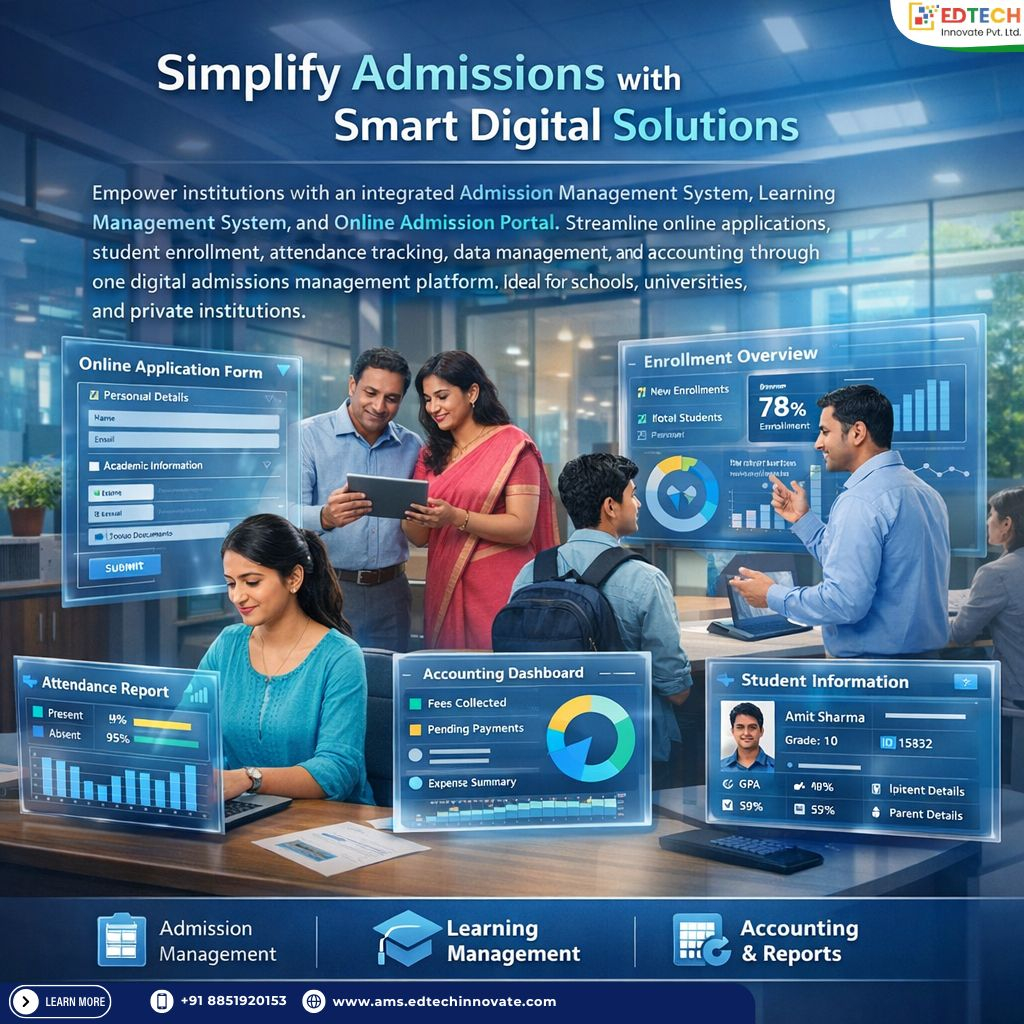
Private schools today operate within an environment defined by rising expectations, growing competition, and increasing administrative complexity. Parents expect responsive communication, convenient digital access, and clear visibility into application progress. At the same time, schools must process larger applicant pools, verify documentation accurately, and forecast capacity with precision.
Balancing these demands with traditional administrative tools is challenging. Many institutions still rely on spreadsheets, paper records, or manually updated students admission register entries. While familiar, these methods introduce inefficiencies that slow processing and limit strategic oversight.
In this evolving landscape, admissions software has become more than a digital convenience — it is a strategic operational asset that directly improves enrollment efficiency. By structuring workflows, centralizing data, and enabling transparency, modern digital platforms help private schools manage admissions pipelines with clarity and confidence.
This article examines how admissions software strengthens enrollment efficiency through workflow optimization, communication enhancement, and data-informed planning.
The Growing Pressure to Manage Enrollment Efficiently
Enrollment efficiency is no longer simply about processing applications quickly. It encompasses accuracy, responsiveness, coordination between departments, and the ability to forecast outcomes. Schools must align admissions with academic planning, staffing, and budgeting decisions, all while maintaining positive relationships with prospective families.
Manual systems create friction in this process. Paper forms, fragmented email communication, and unstructured tracking tools result in:
-
Slower application processing cycles
-
Repetitive data entry across departments
-
Limited visibility into application status
-
Miscommunication or delayed responses
-
Inconsistent document handling
As expectations for digital interaction increase, these limitations become more visible. Families accustomed to seamless online services elsewhere may perceive administrative delays as a sign of institutional inefficiency.
Modern school admission software environments address these issues by restructuring how information flows through the admissions lifecycle. Rather than reacting to incoming applications, institutions gain the capacity to manage them proactively.
Understanding Enrollment Efficiency Challenges
To appreciate the impact of digital transformation, it is important to examine the operational obstacles commonly encountered in traditional admissions environments.
Processing Delays
Manual review workflows often lead to slow turnaround times. Applications may sit pending verification or data entry, creating bottlenecks that affect overall student enrollment planning.
Data Duplication
Information collected during admissions frequently needs to be transferred into academic or financial systems. Without integration, staff manually replicate data across platforms such as Student Information System or School Accounting Software tools, increasing the risk of errors.
Communication Gaps
Parents may struggle to obtain updates regarding application progress. Fragmented communication channels lead to repeated inquiries and increased administrative workload.
Document Verification Bottlenecks
Reviewing supporting documentation manually introduces inconsistencies and delays. Tracking missing files or validating records without centralized oversight consumes valuable staff time.
Limited Forecasting Visibility
Without structured analytics, leadership teams lack insight into pipeline trends. Estimating enrollment numbers or evaluating outreach effectiveness becomes speculative rather than data-driven.
These challenges illustrate why institutions transitioning toward modern education admissions software solutions are prioritizing workflow structure and data visibility.
How Admissions Software Optimizes Enrollment Workflows
Digital platforms enhance efficiency by transforming admissions from a collection of individual tasks into a coordinated system.
Centralized Application Management
A comprehensive Admission Management System consolidates applicant information into a unified environment. Administrators no longer need to navigate multiple storage locations or communication channels to track progress.
Standardized Online Application Handling
Through structured Online application form processes, data entry becomes consistent and organized. Applicants provide information directly into the system, reducing transcription errors and ensuring uniform records.
Portal Accessibility
An accessible Online Admission Portal enables families to submit materials, track updates, and respond to requests without relying on manual intervention. This approach strengthens convenience and supports continuous engagement.
Automation of Notifications and Validation
Automated reminders, confirmations, and status updates streamline the Online Admission Process. Staff can focus on decision-making rather than administrative follow-ups.
Coordinated Workflow Oversight
Robust Admission Management Software integrates task assignments, deadlines, and approvals into a structured pipeline. This coordination allows institutions to develop practical admission ideas that enhance throughput while maintaining governance standards.
Collectively, these features transform admissions into an admission made easy environment where operational efficiency aligns with user experience.
Communication and Engagement Improvements
Efficiency gains extend beyond internal processes. Transparent communication strengthens relationships with applicants and reduces administrative strain.
Modern Online Admission systems provide centralized messaging and status visibility, enabling parents to:
-
Monitor application progress
-
Receive timely notifications
-
Submit requested documents
-
Access guidance resources
This clarity minimizes uncertainty and reduces repetitive inquiries directed toward admissions staff.
Internally, communication also improves. Coordinators, administrators, and decision-makers can access shared dashboards, ensuring consistent information across teams. The resulting alignment supports quicker responses and better-informed decisions.
Such communication infrastructure often connects with broader platforms such as Learning Management System environments, allowing accepted students to transition smoothly into academic onboarding stages.
read more: Overcoming Challenges in University Admissions
Enabling Data-Driven Enrollment Planning
One of the most significant contributions of admissions software lies in analytics and reporting capabilities. Structured data collection allows institutions to move beyond intuition when planning enrollment strategies.
Visibility into Pipeline Trends
Schools can track application volume, acceptance ratios, and demographic patterns. This insight supports proactive adjustments to recruitment initiatives.
Forecasting Enrollment Outcomes
Integrated online enrollment management system tools allow administrators to estimate intake levels accurately, supporting staffing and facility planning.
Strategic Institutional Coordination
When admissions data connects with enterprise platforms — sometimes integrated into the best business management software ecosystem — leadership can align admissions outcomes with operational objectives.
Record Accuracy and Accessibility
Digital systems maintain precise students admission register records, ensuring accessible historical data for reporting or compliance purposes.
These capabilities illustrate how digital admissions management elevates admissions from administrative processing to strategic planning.
Integration Across Institutional Systems
Enrollment efficiency is strengthened when admissions software functions as part of a larger digital infrastructure rather than a standalone tool.
Integration with data management software ensures secure information handling and accessibility across departments. Connectivity with attendance software india solutions supports readiness for academic operations, while links to finance modules streamline fee structuring and payment coordination.
Such interoperability reduces administrative duplication and ensures that departments work with consistent datasets. The resulting coordination improves overall institutional responsiveness and reduces operational friction.
Supporting Scalable Institutional Growth
Private schools aiming to expand enrollment or diversify programs require systems capable of handling increased complexity. Manual processes rarely scale effectively, often resulting in staffing strain and process inconsistency.
Modern admissions software for schools offers scalability through:
-
Configurable workflows
-
Multi-campus support
-
Centralized oversight
-
Standardized reporting
This flexibility ensures that growth does not compromise process integrity. Instead, expansion occurs within a structured operational framework that maintains efficiency and transparency.
Reinforcing Governance and Accountability
Institutional leadership and governing boards prioritize accountability and traceability in admissions decision-making. Structured Admission management solution platforms provide audit trails, standardized workflows, and clear documentation records.
Such features enhance oversight, ensuring that policies are followed consistently and decisions are recorded systematically. These governance benefits strengthen stakeholder confidence and support institutional credibility.
Conclusion
Enrollment efficiency has become a defining operational priority for private schools navigating growing application volumes and heightened expectations for digital accessibility. Manual tracking, fragmented communication, and disconnected data environments limit institutional agility and create barriers to coordinated planning. By contrast, modern admissions software enables structured workflows, transparent communication, and integrated data visibility — strengthening the foundation for accurate forecasting and responsive decision-making.
Adopting a comprehensive digital approach allows admissions to connect seamlessly with academic, financial, and operational systems, reducing administrative burden while improving institutional alignment. Solutions developed by EdTech Innovate illustrate how purpose-built platforms can help private schools transition toward scalable, efficient, and governance-aware enrollment environments. For leadership teams seeking to modernize infrastructure and enhance coordination, evaluating admissions technology tailored to education workflows represents a practical step toward long-term operational resilience.
Frequently Asked Questions
What is admissions software and why is it important for private schools?
Admissions software is a digital platform that manages application workflows, document tracking, and communication. It improves efficiency, accuracy, and visibility into enrollment pipelines, supporting informed planning and streamlined operations.
How does an Admission Management System improve enrollment efficiency?
An Admission Management System centralizes applicant data, automates routine tasks, and standardizes workflows. This reduces duplication, accelerates processing, and improves coordination between departments.
Can Online Admission systems replace paper-based application processes?
Yes. Online Admission platforms enable digital form submission, document uploads, and real-time status tracking through an Online Admission Portal, significantly reducing manual paperwork and delays.
How does admissions software improve communication with parents?
Integrated messaging and notification features provide timely updates and transparency, reducing uncertainty for families and lowering inquiry volume for admissions teams.
Is admissions software scalable for growing institutions?
Modern education admissions software is designed to scale with institutional needs, supporting multi-campus operations, configurable workflows, and increasing application volumes.
How does digital admissions management support strategic planning?
Digital admissions management provides analytics and reporting on application trends, acceptance rates, and enrollment projections, enabling data-driven planning and resource allocation.
Does admissions software integrate with other school systems?
Yes. Platforms often integrate with Student Information System tools, Learning Management System environments, School Accounting Software, and attendance software india solutions to ensure coordinated data flow.
What should schools consider before adopting admissions software?
Institutions should assess usability, integration capability, scalability, reporting features, and alignment with operational goals when selecting an Admission management solution.
How can EdTech Innovate support private school enrollment modernization?
EdTech Innovate provides digital admissions infrastructure designed for education environments, helping institutions streamline workflows, improve visibility, and align enrollment management with broader operational systems.
Is admissions software relevant beyond private schools?
Absolutely. Similar solutions power online enrollment management system frameworks across higher education and training institutions, demonstrating broad applicability and scalability.
For institutional leaders and planners, the value of digital admissions infrastructure lies not merely in digitization, but in coordination — enabling departments to align efforts, anticipate outcomes, and respond strategically. In an education landscape driven by accessibility and responsiveness, admissions software serves as a cornerstone for efficient enrollment management and long-term institutional resilience.

 English
 Arabic
 French
 Spanish
 Portuguese
 Deutsch
 Turkish
 Dutch
Dutch
 Russian
 Romaian
 Portuguese (Brazil)
 Greek
Greek
