


 Pro Benefits
 About
About
 Terms
Terms
 Privacy
 Child Safety & Protection
 Notifications
 Ayrush Global It Services Pvt Ltd
The Ultimate Guide to a Stress-Free Tritygunarayan Temple Wedding
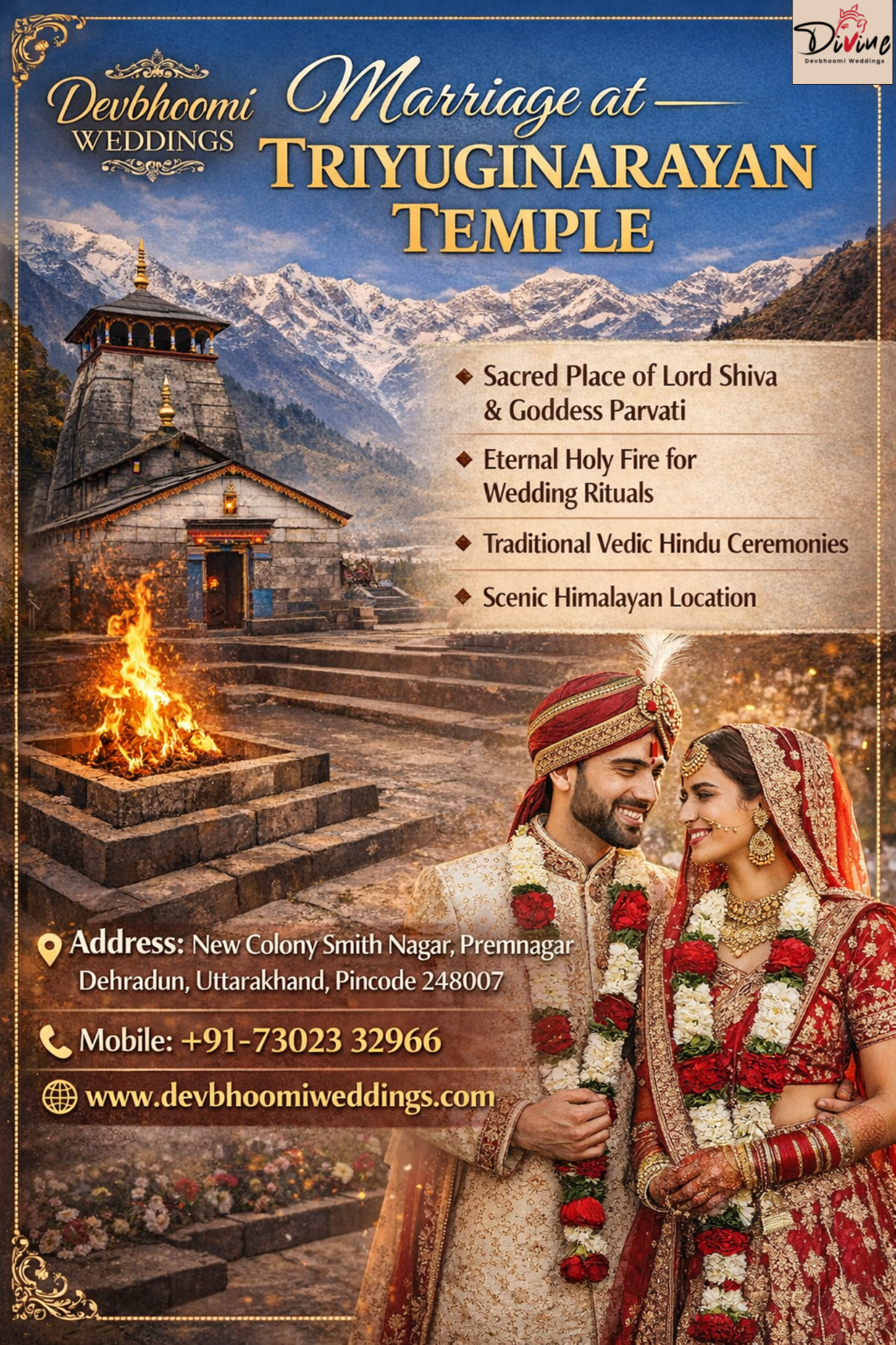
India is a land where weddings are not just personal celebrations but sacred rituals rooted deeply in history, mythology, and faith. Among the many holy places associated with divine marriages, Triyuginarayan holds a unique and timeless significance. A triyuginarayan wedding is not simply a destination wedding; it is a spiritual journey that connects couples to an ancient tradition believed to be thousands of years old.
Nestled in the serene Garhwal Himalayas of Uttarakhand, Triyuginarayan is revered as the sacred site where Lord Shiva and Goddess Parvati were married. Even today, the rituals performed here follow the same traditions described in Hindu scriptures, making it one of the most spiritually powerful wedding locations in India.
This blog explores the history, rituals, cultural importance, and growing popularity of the triyuginarayan wedding ceremony, where ancient customs are still alive in the modern era.
The Mythological Significance of Triyuginarayan
Triyuginarayan is closely linked to Hindu mythology, especially the divine wedding of Lord Shiva and Goddess Parvati. According to ancient texts, Lord Vishnu himself played the role of Parvati’s brother and hosted the wedding. The sacred fire that witnessed this celestial union is believed to have been burning continuously since that time.
This eternal flame, known as the Akhand Dhuni, is the heart of the triyuginarayan wedding ceremony. Couples who marry here take their vows around this holy fire, believing it brings lifelong harmony, devotion, and blessings from the divine.
The name “Triyuginarayan” symbolizes the belief that this sacred fire has been burning since three yugas—Satya Yuga, Treta Yuga, and Dwapar Yuga—making it a timeless witness to love and commitment.
Why Triyuginarayan Is a Sacred Wedding Destination
A triyuginarayan wedding stands apart from modern destination weddings because of its deep spiritual essence. Unlike luxury resorts or royal palaces, this sacred village offers purity, simplicity, and divine energy.
Key reasons couples choose Triyuginarayan include:
-
Strong mythological and religious importance
-
Authentic Vedic wedding rituals
-
Peaceful Himalayan surroundings
-
Blessings associated with Lord Shiva and Goddess Parvati
-
A belief in long-lasting marital harmony
For couples who value tradition and spirituality over extravagance, Triyuginarayan offers an experience that is both profound and unforgettable.
Ancient Wedding Rituals Still Practiced Today
One of the most remarkable aspects of a triyuginarayan wedding is that the rituals have remained largely unchanged for centuries. Priests follow Vedic scriptures carefully, ensuring that every ceremony is performed with accuracy and devotion.
Ganesh Puja and Pre-Wedding Rituals
The wedding begins with prayers to Lord Ganesha, seeking removal of obstacles and blessings for a smooth ceremony. Traditional chants fill the air, setting a sacred tone for the day.
Sacred Bath at Nearby Kunds
Before the wedding, the bride and groom often take ritual baths in nearby sacred water kunds. These kunds are believed to purify the soul and prepare individuals spiritually for marriage.
The Akhand Dhuni Ritual
The most powerful moment of the triyuginarayan wedding is the pheras around the eternal fire. Unlike modern weddings where the fire is newly lit, here couples walk around the same flame believed to have witnessed the divine marriage of Shiva and Parvati.
This ritual symbolizes eternal commitment, purity, and divine blessing.
Vedic Mantras and Blessings
Throughout the ceremony, Vedic mantras are recited by learned priests. These chants emphasize duty, love, loyalty, and mutual respect, forming the foundation of married life.
Read More - Why Is Triyuginarayan Temple Considered the Wedding Place of Lord Shiva and Parvati?
Cultural Simplicity and Spiritual Depth
A triyuginarayan wedding is known for its simplicity. There is minimal decoration, traditional attire, and a strong focus on rituals rather than display. This simplicity allows couples and guests to remain fully immersed in the spiritual atmosphere.
Traditional Garhwali customs are often included, adding cultural richness to the ceremony. Local priests, villagers, and elders play a role in maintaining the authenticity of the rituals.
Modern Couples and the Revival of Triyuginarayan Weddings
In recent years, many modern couples have shown renewed interest in spiritually meaningful weddings. The triyuginarayan wedding has gained popularity among couples who want their marriage to begin with divine blessings rather than luxury and show.
Despite its ancient roots, Triyuginarayan welcomes contemporary couples while preserving tradition. Basic arrangements such as priest coordination, ritual planning, and guest accommodation are available nearby, allowing couples to experience a sacred wedding without compromising comfort.
This balance of tradition and practicality has made triyuginarayan wedding ceremonies increasingly popular.
Spiritual Benefits of a Triyuginarayan Wedding
Many believe that marrying at Triyuginarayan brings special spiritual advantages. These beliefs have been passed down through generations and are deeply respected by devotees.
Spiritual benefits often associated with a triyuginarayan wedding include:
-
Strong marital bond and mutual understanding
-
Blessings for long-lasting love and harmony
-
Removal of negative planetary influences
-
Spiritual growth for both partners
For devotees of Lord Shiva, this sacred wedding site holds extraordinary emotional and religious value.
The Natural Beauty Surrounding Triyuginarayan
Apart from its religious importance, Triyuginarayan is surrounded by breathtaking Himalayan landscapes. Snow-capped peaks, lush forests, and calm mountain air create a serene environment perfect for a sacred union.
The peaceful atmosphere allows couples to disconnect from worldly distractions and focus entirely on the sanctity of marriage.
Important Things to Know Before Planning a Triyuginarayan Wedding
While the ceremony is deeply spiritual, planning a triyuginarayan wedding requires respect for local customs and traditions.
Some important considerations include:
-
Limited guest list due to village size
-
Simple traditional clothing preferred
-
Respect for temple rules and rituals
-
Advance coordination with priests
Understanding these aspects ensures that the wedding remains authentic and respectful to the sacred site.
Timeless Relevance of Triyuginarayan Wedding Traditions
In an era where weddings are often influenced by trends and social media, the triyuginarayan wedding stands as a reminder of timeless values—commitment, faith, and divine connection.
The continued practice of ancient rituals proves that traditions, when rooted in spirituality, never lose relevance. Triyuginarayan remains a living example of how the past and present can coexist beautifully.
Explore More - The Significance of Marriage in Our Lives as Per Hindu Rituals
Conclusion
The Triyuginarayan Wedding Ceremony is not just an event; it is a sacred experience that connects couples to divine love and ancient tradition. With rituals unchanged for centuries, the presence of the eternal sacred fire, and the blessings of Lord Shiva and Goddess Parvati, a triyuginarayan wedding offers unmatched spiritual depth.
For couples seeking meaning, purity, and divine grace in their union, Triyuginarayan continues to stand as one of India’s most powerful and sacred wedding destinations.
FAQs
Q1. Why is Triyuginarayan famous for weddings?
Triyuginarayan is believed to be the site of Lord Shiva and Goddess Parvati’s marriage, making it sacred for traditional Hindu weddings.
Q2. Is the eternal fire still used in the wedding ceremony?
Yes, couples perform pheras around the Akhand Dhuni, the sacred fire believed to be burning since ancient times.
Q3. Can modern couples have a triyuginarayan wedding?
Yes, modern couples can marry here while following traditional Vedic rituals and temple guidelines.

 Arabic
 French
 Spanish
 Portuguese
 Deutsch
 Turkish
 Dutch
Dutch
 Italiano
 Russian
 Romaian
 Portuguese (Brazil)
 Greek
Greek
