


 Pro Benefits
 About
About
 Termeni
 Confidențialitate
 Child Safety & Protection
 Notificări
 Ayrush Global It Services Pvt Ltd
Building a Transparent Admission Process with Education Admissions Software
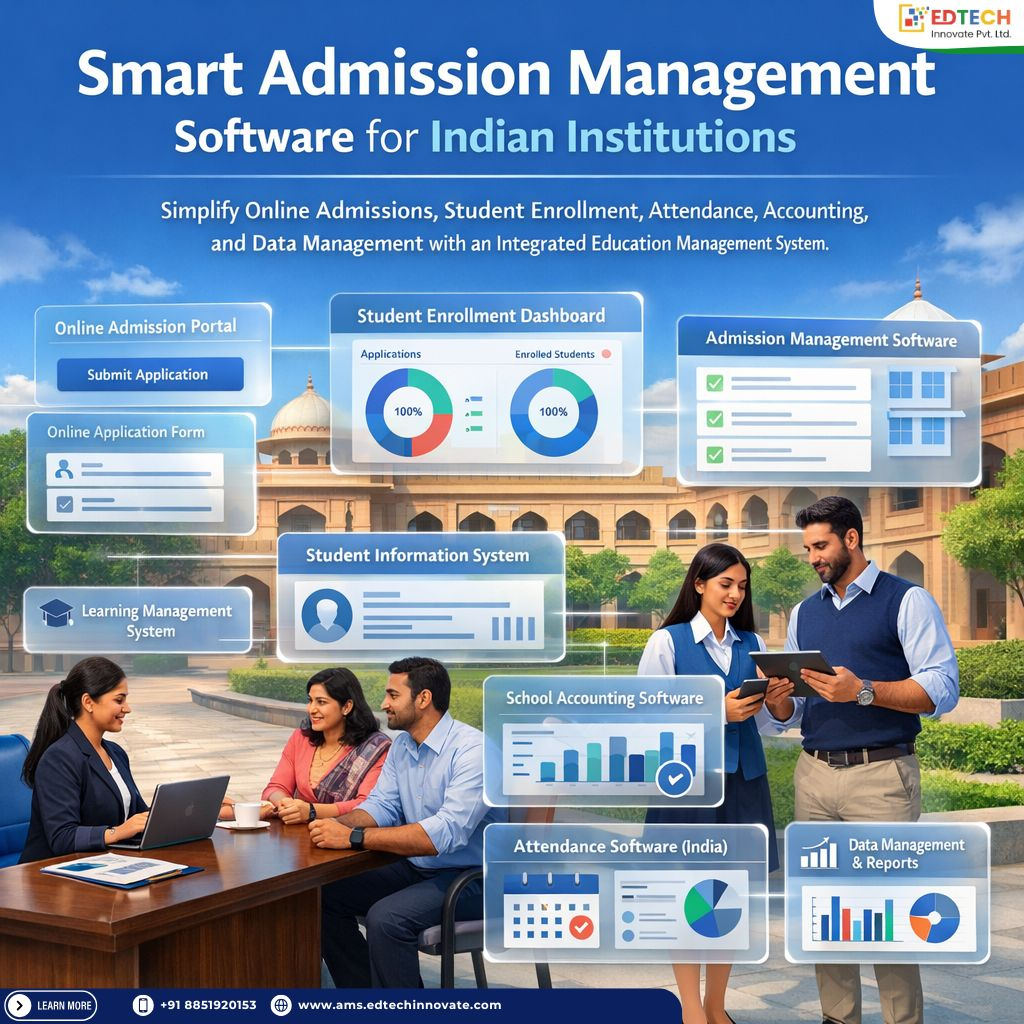
Transparency in admissions is no longer a desirable attribute for educational institutions—it is a governance requirement. Schools and universities today operate under increased scrutiny from parents, students, regulators, and governing bodies. Admission decisions are expected to be fair, well-documented, policy-driven, and auditable. Yet many institutions continue to rely on legacy processes built around manual student admission registers, disconnected spreadsheets, and informal approval mechanisms. These systems make it difficult to explain decisions clearly, track accountability, or build long-term trust.
Education admissions software has emerged as a critical enabler for institutions seeking to modernize admissions with transparency at the core. By standardizing workflows, centralizing data, and creating end-to-end visibility, it allows institutions to move from opaque, people-dependent processes to structured, policy-aligned admission frameworks.
The Transparency Gap in Traditional Admission Processes
In traditional admission environments, lack of transparency often stems from fragmentation. Application forms are collected across multiple channels, eligibility criteria may be interpreted differently by staff, and decision-making authority is not always clearly documented. When records are maintained manually or across disconnected systems, reconstructing the rationale behind an admission decision becomes difficult—particularly during audits or grievance reviews.
This opacity affects not only compliance but also institutional credibility. Parents and applicants expect clarity around timelines, criteria, and outcomes. Governing bodies and compliance officers require assurance that admissions follow approved policies without bias or inconsistency. Without a centralized admission management solution, institutions struggle to provide this assurance at scale.
Standardizing Entry Through Digital Applications
Transparency begins at the first point of interaction. Structured online application forms ensure that every applicant submits information in a consistent format, aligned with institutional requirements. Mandatory fields, validation rules, and document checklists eliminate ambiguity and reduce discretionary interpretation at the data collection stage.
When these forms are delivered through a centralized online admission portal, applicants clearly understand what information is required, what documents are needed, and how their application will be assessed. This standardization replaces informal or incomplete submissions with a uniform data foundation, making the admission process more predictable and defensible.
For institutions managing both school-level and higher education intakes, this approach mirrors the discipline of a university admission management system, adapted for broader education contexts.
Policy-Driven Workflows with an Admission Management System
Once applications are submitted, transparency depends on how decisions are processed internally. A modern Admission Management System ensures that every application follows predefined workflows based on institutional policy. Eligibility checks, shortlisting criteria, and approval stages are embedded into the system rather than relying on individual judgment or memory.
This structured approach transforms admission management software into a governance tool. Roles and responsibilities are clearly defined, approval hierarchies are enforced digitally, and exceptions are documented rather than handled informally. As a result, institutions can demonstrate that admissions decisions are consistent, rule-based, and aligned with approved frameworks.
For leadership teams and trustees, this visibility is essential. It ensures that growth in student enrollment does not compromise fairness or compliance.
Real-Time Visibility and Accountability
One of the most significant contributions of education admissions software is real-time visibility. Dashboards provide admission heads and registrars with up-to-date insights into application volumes, acceptance rates, and pending approvals. This visibility allows institutions to monitor adherence to timelines and identify bottlenecks before they affect applicant experience.
Equally important are audit trails. Every action—data updates, document reviews, approvals, or rejections—is logged within the system. This creates a clear record that supports internal audits, external inspections, and grievance resolution. When questions arise, institutions can trace decisions back to documented actions rather than relying on recollection or incomplete records.
For applicants, transparency is reflected through clear status updates within the online admission process. Knowing where an application stands reduces uncertainty and reinforces trust in institutional processes.
Supporting Compliance and Grievance Resolution
Admissions-related disputes often arise from perceived inconsistency or lack of explanation. With centralized records and traceable workflows, institutions can respond to grievances with evidence rather than assumptions. Admissions software allows compliance officers to verify that decisions followed policy, criteria were applied uniformly, and timelines were respected.
This capability is particularly valuable in regulated environments where admissions are subject to external review. Whether responding to board inquiries or regulatory audits, institutions benefit from having a single, reliable source of truth.
Read more: How School Admission Software Is Transforming Education Enrollment
Integration Across the Institutional Ecosystem
Transparency does not end with admission confirmation. Once a student is enrolled, admission data must align seamlessly with downstream systems. Integration with the Student Information System ensures that personal and academic records remain consistent. Connections with the Learning Management System allow academic access to be provisioned without delay, while integration with School Accounting Software ensures accurate fee mapping and financial compliance.
For institutions in India, linkage with attendance software India supports continuity from enrollment to daily operations. Centralized data management software further ensures that reporting across departments draws from consistent datasets, eliminating discrepancies that can undermine trust.
When admissions operate as part of a unified administrative ecosystem, transparency extends across the student lifecycle rather than stopping at entry.
Enabling Ethical and Scalable Admission Practices
As institutions expand, transparency becomes harder to maintain without digital support. Manual systems may work for limited volumes but fail under scale. An online enrollment management system enables institutions to handle higher application volumes while preserving clarity and control.
This scalability supports progressive admission ideas such as multiple intakes, rolling admissions, and digital communication—without introducing inconsistency. Automated notifications, standardized documentation, and system-enforced workflows ensure that admission made easy does not come at the cost of governance.
From a strategic perspective, transparent admissions also strengthen institutional reputation. Trust built at the admission stage influences long-term relationships with students, parents, alumni, and regulators.
Admissions Software as a Governance Investment
For boards and leadership teams, adopting education admissions software is not merely a technology upgrade—it is a governance decision. Transparent admissions protect institutions from reputational risk, ensure policy compliance, and support sustainable growth in student enrollment.
When integrated with academic, financial, and operational platforms, admissions systems become a foundational element of the institution’s best business management software environment. This alignment enables leadership to govern with data, confidence, and accountability.
Conclusion
Transparency in admissions is fundamental to institutional integrity. As educational environments grow more complex and regulated, manual processes and fragmented systems can no longer support the level of accountability stakeholders expect. Education admissions software provides the structure institutions need to standardize workflows, centralize data, and ensure every admission decision is traceable, fair, and policy-driven.
By integrating admissions with student records, learning platforms, accounting, attendance, and enterprise data systems, institutions create a unified framework where transparency is embedded rather than enforced after the fact. Solutions such as EdTech Innovate’s Admission Management System demonstrate how governance-focused technology can simplify complexity while strengthening trust.
For schools and universities committed to ethical admissions, regulatory compliance, and long-term credibility, adopting education admissions software is a strategic step toward making admission made easy, fair, and transparent—at scale.
Frequently Asked Questions
How does education admissions software improve admission transparency?
It standardizes data collection, enforces policy-driven workflows, and creates audit trails that make every decision traceable and explainable.
Can education admissions software reduce disputes and grievances?
Yes. Centralized records and documented approval processes allow institutions to resolve grievances with clear evidence.
How does an online admission portal support audit and compliance?
It provides real-time status visibility, consistent documentation, and logged actions that support internal and external audits.
Is admission data traceable and secure in digital systems?
Modern systems use role-based access, secure storage, and audit logs to ensure data integrity and security.
Can education admissions software support both schools and universities?
Yes. Scalable platforms are designed to handle diverse admission models across school and higher education environments.

 English
 Arabic
 French
 Spanish
 Portuguese
 Deutsch
 Turkish
 Dutch
Dutch
 Italiano
 Russian
 Portuguese (Brazil)
 Greek
Greek
