


 Pro Benefits
 Sobre
Sobre
 Termos
 Privacidade
 Child Safety & Protection
 Notificações
 Ayrush Global It Services Pvt Ltd
Can the conversation in the meeting soundproof office pod be heard by the outside world?
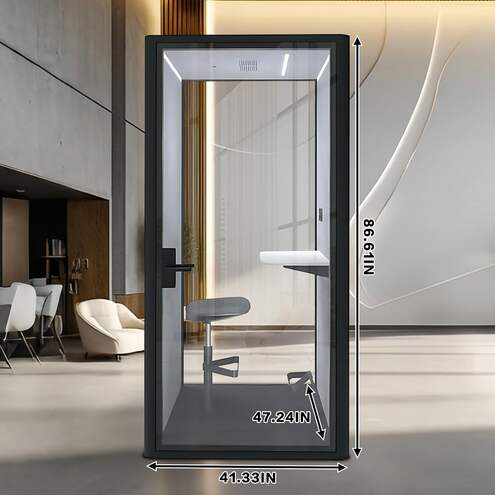
Meeting soundproof office pods have become common facilities in modern workplaces, providing private space for employees to discuss and collaborate. However, an important question often arises: can the conversations in these compartments be heard by the outside world? Because privacy is a major consideration in the workplace, it is very important to know the sound propagation in these compartments to ensure privacy. In this paper, we will discuss the factors that affect sound propagation, the effectiveness of office cubicle design, and how to improve privacy in these spaces.
Understand the design of a soundproof office pod.
To evaluate whether conversations in office meeting cubicles can be heard by people outside the cubicles, it is necessary to understand the typical design of these cubicles first. Meeting cubicles are usually built with sound insulation or sound-absorbing materials, such as sound-absorbing panels, foam fillers or double glazing. These materials are designed to reduce sound transmission and create a quiet and private meeting or call environment.
However, although these materials are effective in reducing noise, they do not always achieve 100% sound insulation. The effectiveness of these sound insulation measures depends on many factors, including the quality of materials used, construction technology and the overall design of the sound insulation room. For example, although a glass wall can create an open feeling, it may make the sound leak more easily than a solid wall. Therefore, the design and materials used will greatly affect the sound leakage in the sound insulation room.
Factors affecting sound propagation
Several key factors determine how much sound can be heard outside the meeting soundproof office pod. These factors include the type of building materials, the thickness of the wall and the acoustic characteristics of the surrounding space.
1. Material quality: The quality of sound insulation materials is very important. High-density materials such as heavy sound-absorbing foam or solid panels are more effective in absorbing and blocking sound. Materials of lower quality, such as lightweight panels or thin glass, may not perform well in blocking sound.
2. Wall thickness: The thicker the wall of the booth, the less sound leakage. Thin walls are easier to spread sounds, especially low-frequency sounds like human speech. In contrast, thicker walls help to confine the sound inside the booth.
3. Acoustic design: Acoustic treatment is a crucial factor. Well-designed conference room compartments should not only have sound insulation materials, but also have characteristics that help to absorb internal sounds, such as carpeted floors, sound-absorbing ceiling tiles and wall decoration. If these factors are not considered, the sound will reverberate around the compartment, thus increasing the possibility of leakage.
The role of glass in sound insulation
Many office meeting compartments use glass panels as part of their design, which not only ensures visibility but also maintains transparency. Although this helps to create an open and pleasant environment, it will also weaken the sound insulation effect of the compartment. Glass, especially single-layer glass, is not as effective as a solid wall in sound insulation. Sound travels more easily through glass, especially in the frequency range where people usually communicate with each other.
In order to solve this problem, some sound-insulated rooms use double glass or laminated glass, which can provide a better sound insulation effect. Double glazing consists of two layers of glass with a gap between them, thus reducing the sound transmission. However, even double glazing may not be able to achieve complete sound insulation, and noise may still leak out, especially in noisy office environments.
Noise leakage in office cubicles
Even in a well-designed meeting soundproof office pod, noise may leak out in many ways. Sound may leak from gaps around doors, ventilation systems and joints in compartments. Although the materials used in the compartment construction may be effective in reducing noise, any tiny opening or flaw may allow noise to leak out.
1. Door: The door leading to the soundproof room is usually one of the most prone places for sound leakage. If the edge of the door is not tightly sealed, the sound will easily leak out. Some soundproof rooms are equipped with special door sealing devices, but the lower-priced models may not have these functions, which makes the soundproof room ineffective in controlling sound.
2. Ventilation: Another common way of sound leakage is the ventilation system. Many modern office cubicles are equipped with built-in ventilation devices to maintain air quality, but these vents may become channels for sound leakage. In order to reduce this situation, some compartments will use soundproof vents or adopt independent ventilation systems that are not directly connected to the main office area.
3. Joints and joints: The place where the wall meets the ground or ceiling is also an area prone to problems in sound insulation. If these areas are not properly sealed, sound will come in through the gaps, thus making the internal dialogue easier to hear by the outside world.
Practical methods to improve privacy protection
If you are worried that the sound in the meeting soundproof office pod will leak out, you can take some measures to improve the level of privacy protection and reduce the risk of the outside world hearing the meeting content.
1. Upgrading materials: One of the most effective ways to improve the sound insulation effect is to replace the materials used in the sound insulation room. You can consider using thicker walls, denser sound-absorbing boards or better quality glass to reduce sound leakage. You can also add sound-absorbing materials to the wall to enhance the sound-absorbing effect.
2. Seal gaps and cracks: ensure that there are no gaps or cracks around the doors and windows and at the joints to avoid sound leakage. Install sealing strips around the door and seal any small openings, which can prevent sound from leaking out.
3. Adopt sound insulation measures: Adding additional sound insulation materials inside the studio helps to absorb sound and reduce noise transmission. This can include laying carpets, hanging wall decorations, or laying carpets to help absorb sound. In addition, soundproof ceiling panels can be installed to reduce noise leakage at the top of the studio.
4. Control the volume: Finally, controlling the conversation volume in the meeting room will bring remarkable results. If the volume is kept at a low level, it is unlikely that the outside world will hear the internal sound. Encourage employees to talk in a softer tone when using the conference room to reduce the possibility of sound leakage.
Conclusion: To achieve a proper balance between privacy and openness.
Although meeting soundproof office pods can provide a considerable degree of privacy protection, it should be noted that they are not completely soundproof. The material used, the design of the compartment and the existence of small gaps or defects will all affect the degree of sound leakage. Understanding these factors will help you make wise decisions to improve the sound insulation effect of office meeting compartments.
 Portuguese (Brazil)
 English
 Arabic
 French
 Spanish
 Portuguese
 Deutsch
 Turkish
 Dutch
Dutch
 Italiano
 Russian
 Romaian
 Greek
Greek
