Introduction to Omakase Sauce
Omakase sauce is inspired by the Japanese dining concept of omakase, which means “I leave it up to you.” This sauce reflects trust in the chef’s balance of flavors, ingredients, and technique. Typically rich, umami-forward, and deeply layered, omakase sauce combines sweet, salty, tangy, and savory notes in perfect harmony. It is not a single fixed recipe but a flexible sauce style used to enhance sushi, grilled meats, seafood, and vegetables. Its adaptability makes omakase sauce increasingly popular in modern kitchens and fusion cuisine worldwide.
What Makes Omakase Sauce Unique
What truly sets omakase sauce apart is its emphasis on umami and balance rather than overpowering spice or sweetness. Ingredients like soy sauce, mirin, rice vinegar, miso, dashi, and sesame oil are carefully blended to create depth. Many chefs customize their omakase sauce depending on the dish, season, or protein used. This personalized approach mirrors the omakase philosophy itself, where no two experiences are exactly the same, making the sauce feel exclusive, refined, and thoughtfully crafted.
Key Ingredients Used in Omakase Sauce
The foundation of omakase sauce usually starts with high-quality soy sauce for saltiness and umami. Mirin or sugar adds gentle sweetness, while rice vinegar or citrus provides acidity. Dashi or kombu deepens the savory profile, and miso can add body and complexity. Optional ingredients like garlic, ginger, sesame oil, chili oil, or yuzu elevate the flavor further. Each ingredient is chosen to complement rather than dominate, ensuring a smooth, well-rounded taste experience.
How Omakase Sauce Is Traditionally Used
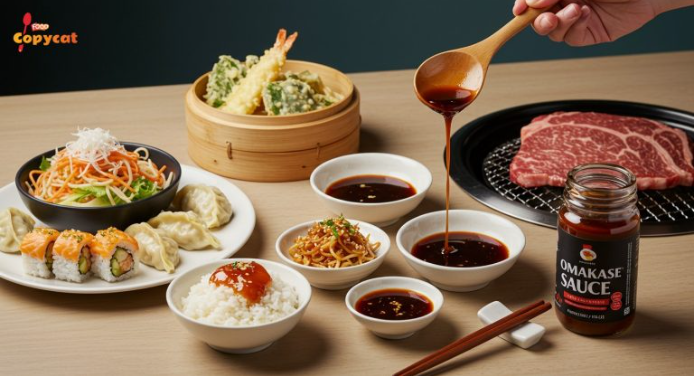
Omakase sauce is most commonly used in Japanese cuisine as a finishing or brushing sauce rather than a heavy dip. Sushi chefs often glaze nigiri with a light layer to enhance the fish’s natural flavor. It is also used for yakitori, grilled beef, seared scallops, and roasted vegetables. Because the sauce is already balanced, it reduces the need for additional seasoning, allowing the main ingredient to remain the star of the dish.
Modern and Fusion Uses of Omakase Sauce
In contemporary cooking, omakase sauce has moved beyond traditional Japanese dishes. Chefs now use it in fusion recipes such as omakase-style burgers, tacos, rice bowls, and pasta. It works beautifully as a marinade, stir-fry sauce, or drizzle over roasted potatoes. Its versatility allows home cooks to experiment freely while still achieving a restaurant-quality flavor. This adaptability has helped omakase sauce gain global popularity.
Health and Nutritional Benefits
When prepared with natural ingredients, omakase sauce can be a healthier alternative to heavily processed sauces. Ingredients like miso and fermented soy sauce contain probiotics and amino acids that support digestion. Using small amounts delivers big flavor, helping reduce excess salt or sugar in meals. By controlling ingredients at home, you can make a cleaner, preservative-free version that aligns with balanced eating without sacrificing taste.
How to Make Omakase Sauce at Home
Making omakase sauce at home is simple and rewarding. Start by gently heating soy sauce, mirin, and dashi, then adjust sweetness and acidity to taste. Add ginger, garlic, or sesame oil for personal flair. Simmer briefly to blend flavors, then cool before use. Homemade omakase sauce allows complete customization, letting you tailor it for seafood, meat, or vegetables while staying true to the omakase spirit.
Why Omakase Sauce Is Worth Trying
Omakase sauce is more than just a condiment—it’s a philosophy of flavor. Its balance, versatility, and depth make it suitable for both traditional Japanese dishes and modern fusion meals. Whether you are a professional chef or a home cook, this sauce elevates simple ingredients into something memorable. Trying omakase sauce means embracing creativity, trust, and the art of letting great flavors speak for themselves.



 Pro Benefits
 Σχετικά
 Όρους
Όρους
 Ιδιωτικότητα
 Child Safety & Protection
 Ειδοποιήσεις
 Ayrush Global It Services Pvt Ltd

 English
 Arabic
 French
 Spanish
 Portuguese
 Deutsch
 Turkish
 Dutch
Dutch
 Italiano
 Russian
 Romaian
 Portuguese (Brazil)
