


 Pro Benefits
 About
About
 Términos
 Privacidad
 Child Safety & Protection
 Notificaciones
 Ayrush Global It Services Pvt Ltd
Scenario Testing in Software Testing: A Complete Overview
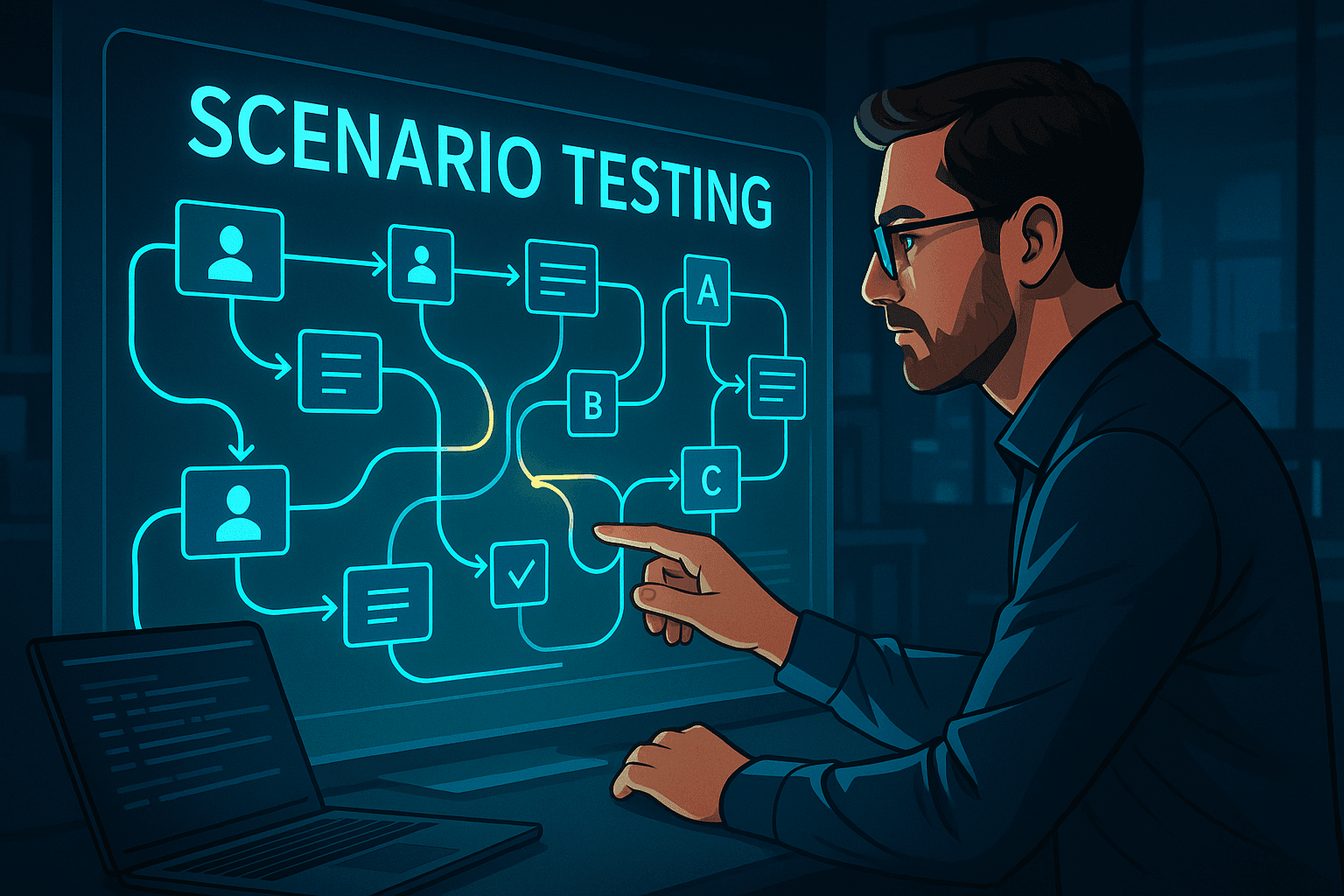
Scenario Testing is a software testing approach that focuses on validating application behavior using real-world user scenarios. Instead of testing individual functions in isolation, scenario testing evaluates complete workflows to ensure the system performs correctly from start to finish under realistic conditions.
This method helps teams understand how the application behaves when users interact with multiple features together, making it especially effective for identifying integration issues and business-logic gaps.
Why Scenario Testing Is Important
Scenario testing ensures broader test coverage by focusing on end-to-end use cases rather than isolated components. It helps uncover defects that may not appear during unit or functional testing, such as data flow issues, dependency failures, or unexpected user behavior.
By testing real scenarios, teams gain better confidence that the software will perform reliably in production environments.
How Scenario Testing Works
In scenario testing, testers first identify critical user journeys such as account creation, login, payments, or API workflows. Each scenario represents a high-level requirement that reflects how users or systems interact with the application. These scenarios are then validated using multiple test cases to ensure every possible outcome is covered.
This approach is commonly used in system testing, acceptance testing, and regression testing cycles.
Scenario Testing vs Test Case Testing
Scenario testing focuses on what to test at a high level, while test case testing defines how to test with detailed steps and expected results. A single scenario can include several test cases, making scenario testing ideal for planning and coverage analysis, while test cases are better suited for execution and automation.
Scenario Testing in Modern Development
With agile and DevOps practices, scenario testing plays a crucial role in ensuring application stability during frequent releases. Modern tools now support generating and maintaining scenario-based tests automatically using real user traffic. Resources like Scenario Testing explain how this approach improves accuracy, reduces maintenance effort, and aligns testing with real production behavior.
Final Thoughts
Scenario testing is a powerful technique for validating software from a user’s perspective. By focusing on real-world workflows, it helps teams detect critical issues early, improve software quality, and deliver reliable applications with confidence.
 Spanish
 English
 Arabic
 French
 Portuguese
 Deutsch
 Turkish
 Dutch
Dutch
 Italiano
 Russian
 Romaian
 Portuguese (Brazil)
 Greek
Greek
