


 Pro Benefits
 About
About
 Termeni
 Confidențialitate
 Child Safety & Protection
 Notificări
All You Need to Know About the Transport and Marketing Assistance (TMA) Scheme
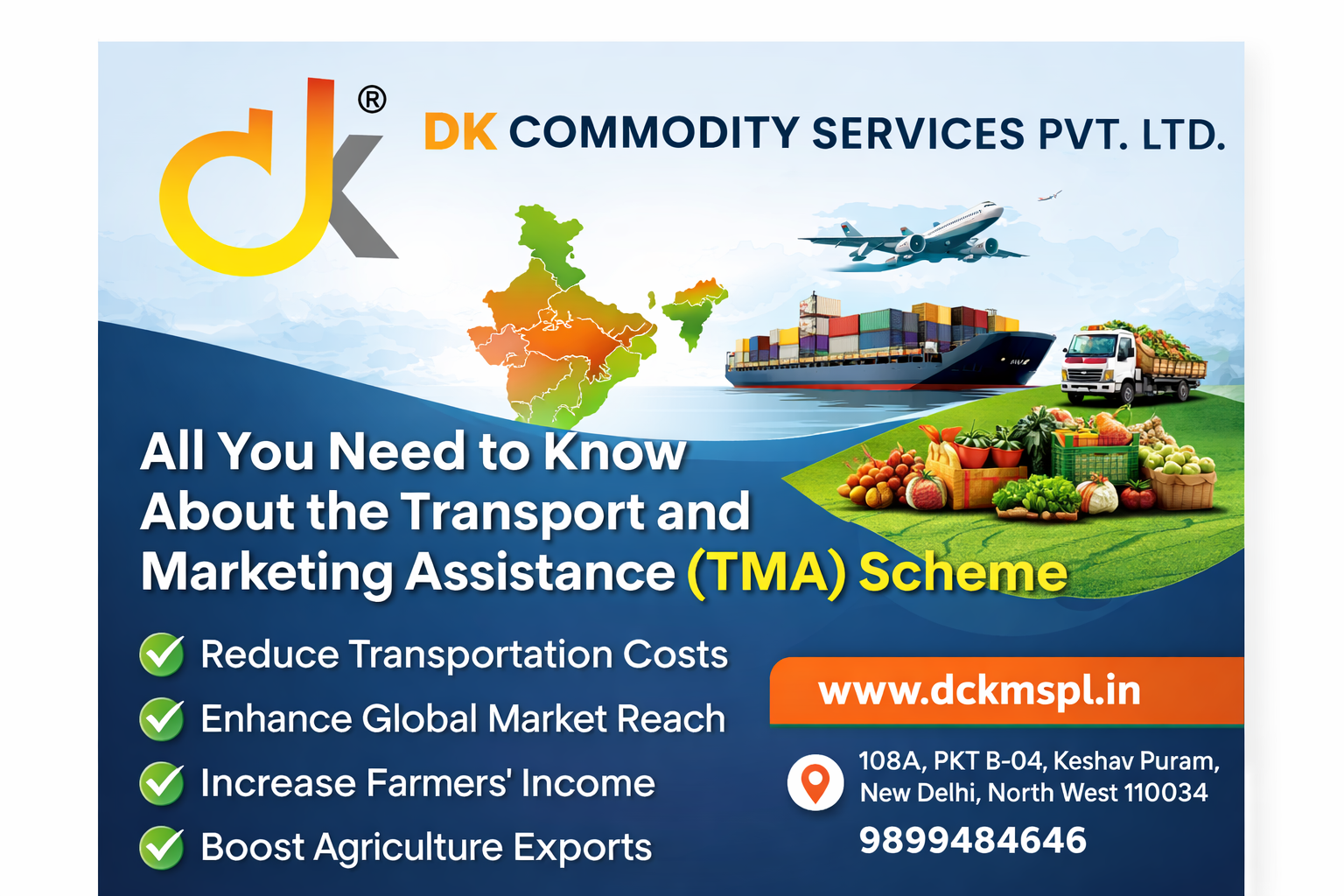
Agriculture is the backbone of the Indian economy, contributing significantly to employment and GDP. However, farmers often face challenges in transporting and marketing their produce, especially when it comes to international exports. To address these challenges, the Government of India introduced the Transport and Marketing Assistance (TMA) Scheme, aiming to support the transport and marketing of agricultural produce. In this blog, we will cover everything you need to know about the TMA Scheme, its objectives, benefits, eligibility, process, and its impact on Indian agricultural products export.
What is the TMA Scheme?
The Transport and Marketing Assistance (TMA) Scheme is a government initiative under the Department of Agriculture and Cooperation to facilitate the export of agricultural products from India. It is primarily designed to provide financial support to exporters to offset the freight and marketing costs of transporting agricultural produce to international markets.
The scheme focuses on enhancing the competitiveness of Indian agricultural products in the global market, promoting efficient agriculture marketing, and improving the income of farmers by creating better market access.
Objectives of the TMA Scheme
The main objectives of the TMA Scheme are:
-
Facilitate Agricultural Exports: Reduce transportation and marketing costs for exporters, making Indian agricultural products export competitive in global markets.
-
Support Farmers’ Income: By assisting exporters, the scheme indirectly benefits farmers by enabling better pricing and reducing losses due to high marketing costs.
-
Promote Agriculture Marketing: Improve the overall agriculture and marketing ecosystem in India.
-
Encourage International Market Access: Help Indian agricultural products reach newer and distant international markets efficiently.
-
Reduce Post-Harvest Losses: Efficient transport mechanisms prevent spoilage and wastage, ensuring high-quality produce reaches global buyers.
Importance of the TMA Scheme in Agriculture
India produces a wide variety of agricultural commodities, including cereals, pulses, fruits, vegetables, spices, and horticultural products. While production is high, exporting these products often faces challenges such as:
-
High transportation costs
-
Inefficient storage and handling
-
Lack of global marketing infrastructure
-
Competition from international producers
The TMA Scheme addresses these challenges by providing subsidies for transport and marketing, thereby making transportation and agriculture logistics more viable.
This support ensures that exporters can maintain competitive pricing in international markets while ensuring farmers get better returns. In a country where agriculture is a key sector, such initiatives play a vital role in boosting exports and strengthening the agriculture sector in India.
Who Can Benefit From the TMA Scheme?
The TMA Scheme primarily targets:
-
Exporters of Agricultural Products: Those involved in exporting fresh, processed, or semi-processed agricultural commodities.
-
Agri-based Companies: Enterprises engaged in agriculture marketing and trade of Indian agricultural products.
-
Farmers’ Cooperatives and Associations: Groups involved in bulk export of farm produce.
The scheme is particularly beneficial for exporters of products like rice, wheat, maize, fruits, vegetables, spices, and horticultural products, as these often face high international transportation costs.
Key Features of the TMA Scheme
The TMA Scheme offers a range of benefits and has specific features:
-
Freight Subsidy: Provides financial assistance to offset the difference in international freight charges.
-
Marketing Assistance: Supports participation in international trade fairs, buyer-seller meets, and promotional activities abroad.
-
Coverage: Includes both air and sea transport, making it flexible for different export requirements.
-
Eligible Commodities: Focuses on agriculture and marketing of selected foodgrains, horticulture products, spices, and other notified commodities.
-
Administered By: The scheme is implemented by the Department of Agriculture, in collaboration with the Export Promotion Council for Agricultural Products (EPCH).
TMA Scheme Eligibility Criteria
To apply for benefits under the TMA Scheme, applicants must meet certain eligibility requirements:
-
Exporter Registration: Exporters must be registered with the Export Promotion Council for Agricultural Products or other relevant authorities.
-
Eligible Commodities: The scheme is applicable for Indian agricultural products export as notified by the government from time to time.
-
Mode of Transport: Freight support is available for air and sea transportation only.
-
Export Documentation: Exporters must provide proper invoices, shipping bills, and proof of payment for transport and marketing costs.
-
Compliance: Exporters must comply with all export regulations and quality standards set by the government.
TMA Scheme Coverage and Validity
The TMA Scheme is operational across all states of India and covers both fresh and processed agricultural commodities. Its main focus is on enhancing the global reach of agriculture sector India products.
-
Validity Period: The scheme is generally renewed on an annual basis, and the government notifies eligible commodities and rates each fiscal year. For 2026, the scheme continues to provide assistance to exporters of eligible products.
-
Export Support: It covers cost differences in transportation and agriculture marketing, ensuring Indian products remain price-competitive abroad.
How to Apply for the TMA Scheme
Applying for the TMA Scheme is a straightforward process:
-
Step 1 – Registration: Exporters must be registered with the Export Promotion Council for Agricultural Products or other relevant authorities.
-
Step 2 – Export Documentation: Prepare export documents, including invoices, shipping bills, and proof of transportation.
-
Step 3 – Submit Application: Apply online through the official portal of the Department of Agriculture or submit offline applications if required.
-
Step 4 – Verification: The application is verified by the concerned authority, ensuring eligibility and compliance.
-
Step 5 – Financial Assistance: Upon approval, exporters receive subsidies to offset freight and marketing costs.
This process ensures transparency and effective implementation of the scheme.
Read More - 🌟 DCK Management: Everything You Need to Know in 2026 🌟
Benefits of the TMA Scheme
The TMA Scheme provides multiple benefits to the agriculture sector:
-
Reduced Freight Costs: Exporters save significantly on international shipping charges.
-
Enhanced Global Market Reach: Supports Indian agricultural products export to newer markets.
-
Increased Farmers’ Income: Efficient marketing ensures better returns for farmers.
-
Boost to Agriculture Marketing: Encourages systematic and professional approaches in agriculture and marketing.
-
Reduced Post-Harvest Losses: Timely transport reduces spoilage and wastage.
-
Promotion of Value-Added Products: Helps exporters of processed and semi-processed agricultural commodities to reach global markets.
Role of the Department of Agriculture
The Department of Agriculture plays a critical role in the success of the TMA Scheme:
-
Policy Formulation: Designs the framework and guidelines for the scheme.
-
Monitoring & Implementation: Ensures smooth execution and compliance of the scheme.
-
Coordination with Export Councils: Works with the Export Promotion Council for Agricultural Products to identify eligible commodities and exporters.
-
Promotion of Exports: Supports international marketing and trade activities.
The department ensures that the scheme aligns with the larger goal of promoting transport and marketing of agricultural produce from India.
Role of Export Promotion Councils
Export Promotion Councils, particularly the Export Promotion Council for Agricultural Products, are crucial in facilitating the TMA Scheme:
-
Guidance to Exporters: Helps exporters understand eligibility and procedures.
-
Documentation Support: Assists in preparing necessary export documents.
-
Promotional Activities: Supports participation in trade fairs and marketing campaigns abroad.
-
Monitoring Exports: Ensures that exports under the scheme comply with international standards.
This collaboration ensures that agriculture sector India gains a competitive edge globally.
Impact of the TMA Scheme on Indian Agriculture
Since its implementation, the TMA Scheme has had a positive impact on the agriculture and marketing ecosystem:
-
Higher Export Volume: India has seen increased exports of rice, wheat, spices, and horticultural products.
-
Better Farmer Income: By reducing intermediary costs, farmers get fairer prices.
-
Global Competitiveness: Indian agricultural products have become more price-competitive in international markets.
-
Reduced Logistics Bottlenecks: Efficient freight and transport subsidies encourage timely delivery.
Overall, the scheme strengthens India’s position as a reliable supplier of agricultural commodities worldwide.
TMA Scheme and the Future of Agriculture in India
The TMA Scheme is a vital component in the roadmap for modernizing Indian agriculture. By promoting transportation and agriculture marketing, it not only enhances exports but also:
-
Encourages adoption of modern logistics and supply chain management.
-
Promotes value addition in agricultural products.
-
Creates employment opportunities in transport, logistics, and marketing sectors.
-
Strengthens India’s overall agriculture sector by improving global trade competitiveness.
Conclusion
The Transport and Marketing Assistance (TMA) Scheme is a game-changer for India’s agricultural export sector. By reducing transportation costs, enhancing agriculture marketing, and supporting exporters, it strengthens the agriculture sector India and ensures better returns for farmers.
Through the collaborative efforts of the Department of Agriculture and Export Promotion Councils, the scheme not only promotes Indian agricultural products export but also ensures sustainable growth for the agriculture economy.
For anyone involved in exporting agricultural produce, understanding and leveraging the TMA Scheme is essential for global competitiveness and success.
Frequently Asked Questions (FAQ)
1. What products are eligible under the TMA Scheme?
Eligible products include foodgrains, spices, fruits, vegetables, and horticultural products notified by the government for export.
2. Who administers the TMA Scheme?
The Department of Agriculture, in coordination with the Export Promotion Council for Agricultural Products, administers the scheme.
3. How long is the TMA Scheme valid?
The scheme is usually valid for a financial year, with annual updates on eligible commodities and assistance rates.

 English
 Arabic
 French
 Spanish
 Portuguese
 Deutsch
 Turkish
 Dutch
Dutch
 Italiano
 Russian
 Portuguese (Brazil)
 Greek
Greek
