


 Pro Benefits
 About
About
 Términos
 Privacidad
 Child Safety Standards & Protection Policy
 Notificaciones
Resistance Spot Welding: Principles, Applications, and Best Practices
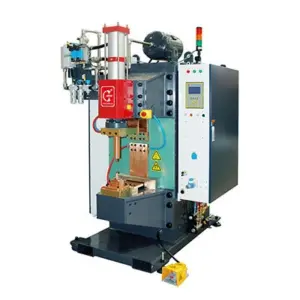
In modern manufacturing, efficiency, precision, and consistency are non-negotiable. Resistance spot welding (RSW) is a cornerstone technology in industries ranging from automotive to aerospace, offering high-speed metal joining with minimal material distortion. For manufacturers, OEMs, and automation integrators seeking reliable, high-performance welding solutions, understanding the principles, applications, and best practices of resistance spot welding is essential.
At Heron Welder, we specialize in advanced resistance welding machines, automation lines, and metal-joining solutions designed to meet the demanding needs of today’s industrial production.
What is Resistance Spot Welding?
Resistance spot welding is a type of resistance welding where metal sheets are joined by applying pressure and passing an electrical current through the contact area. The heat generated by the resistance of the metal to the electrical flow melts the material, forming a weld nugget that solidifies under pressure.
Key advantages of resistance spot welding include:
-
Fast cycle times suitable for high-volume production
-
Minimal material distortion compared to other welding methods
-
Energy efficiency and precise control
-
Strong, repeatable welds with consistent quality
At Heron, our spot welding machines are engineered for robust performance across multiple metal types, including steel, stainless steel, and aluminum alloys.
How Resistance Spot Welding Works
The resistance spot welding process involves four essential steps:
-
Clamping: Metal sheets are securely held between two copper electrodes. Proper alignment ensures consistent heat distribution.
-
Current Application: A high electric current is passed through the electrodes. The electrical resistance at the interface of the sheets generates heat.
-
Welding: The localized melting of the metal forms a weld nugget. The welding time is precisely controlled to prevent over- or under-welding.
-
Cooling and Solidification: The current stops while the electrodes maintain pressure, allowing the molten nugget to solidify and create a strong joint.
Heron’s MFDC and capacitor discharge spot welding systems provide advanced control over current, timing, and electrode force, ensuring high-quality welds even on thin or complex materials.
Applications of Resistance Spot Welding
Resistance spot welding is widely used across multiple sectors where speed, reliability, and precision are critical:
1. Automotive Industry
RSW is the primary method for joining automotive body panels, chassis components, and structural assemblies. Heron’s automated spot welding lines enable high-volume production with consistent weld quality.
2. Aerospace and Aviation
Lightweight alloys and high-strength steels in aerospace components benefit from precise spot welding, minimizing distortion while maintaining structural integrity.
3. Electrical Appliances and Consumer Goods
From refrigerators to air conditioners, RSW provides clean, repeatable joins in sheet metal housings and frames, improving durability and reducing assembly time.
4. Industrial Manufacturing
Heavy machinery, metal cabinets, and construction equipment often rely on resistance spot welding for strong, long-lasting connections in high-stress applications.
Advantages of Resistance Spot Welding Over Other Techniques
Comparing resistance spot welding with other welding methods highlights its suitability for automated, high-speed production:
| Feature | Resistance Spot Welding | MIG Welding | TIG Welding | Laser Welding |
|---|---|---|---|---|
| Speed | High | Moderate | Low | High |
| Automation Friendly | Excellent | Moderate | Low | High |
| Material Distortion | Low | Moderate | Low | Very Low |
| Energy Efficiency | High | Moderate | Moderate | Moderate |
| Operator Skill | Moderate | High | Very High | High |
Heron’s integrated welding controllers optimize electrode force, current, and timing, outperforming conventional systems in speed and repeatability, particularly in high-volume production environments.
Best Practices for Resistance Spot Welding
To ensure consistent, high-quality welds, manufacturers should follow these key practices:
-
Electrode Maintenance: Proper cleaning and dressing of copper electrodes prevent overheating and ensure uniform welds.
-
Material Preparation: Sheets should be clean, aligned, and free of coatings that interfere with electrical contact.
-
Optimized Welding Parameters: Adjust current, pressure, and weld time according to material type and thickness. Heron’s programmable spot welding systems allow real-time parameter optimization.
-
Regular Quality Checks: Inspect weld nugget size and penetration depth to maintain consistent quality and structural integrity.
-
Automation Integration: Utilize robotic arms and PLC systems to enhance accuracy, throughput, and operator safety. Heron’s turnkey automated welding lines deliver fully integrated solutions for industrial production.
Choosing the Right Resistance Spot Welding Equipment
Selecting the right equipment depends on production volume, material types, and automation requirements. Heron offers a full range of resistance spot welding machines, including:
-
MFDC spot welders: Ideal for thin metals and mixed materials.
-
Capacitor discharge welders: For fast, high-energy welding with minimal distortion.
-
Robotic welding systems: Automated spot welding solutions for high-volume and complex assembly tasks.
Our expert team can customize systems to match your manufacturing workflow, ensuring maximum efficiency, repeatability, and ROI.
FAQs About Resistance Spot Welding
1. What metals can be joined with resistance spot welding?
Primarily steel, stainless steel, and aluminum, but specialized machines can handle copper alloys and coated materials.
2. How long does a resistance spot weld take?
Typical weld cycles range from 0.1 to 1 second, depending on material thickness and machine capacity.
3. Can resistance spot welding be automated?
Yes. Automated robotic spot welding lines increase throughput, consistency, and safety, reducing operator dependency.
4. How do I know if my welds are strong enough?
Weld quality can be assessed using destructive tests (peel, tensile) or non-destructive inspection methods like ultrasonic testing.
5. Why choose Heron for resistance spot welding?
Heron combines high-precision machines, advanced controllers, and turnkey automation solutions, backed by decades of industrial expertise.
Partner with Heron for Advanced Resistance Spot Welding Solutions
For manufacturers, OEMs, and integrators looking to maximize productivity, quality, and efficiency, Heron Welder provides the technology, expertise, and support to meet modern industrial challenges.
Request a quote today or consult our team to design a customized resistance spot welding solution tailored to your production needs. From standalone machines to fully automated production lines, Heron is your trusted partner for precision metal joining and welding automation.

 English
 Arabic
 French
 Portuguese
 Deutsch
 Turkish
 Dutch
Dutch
 Italiano
 Russian
 Romaian
 Portuguese (Brazil)
 Greek
Greek
