


 Pro Benefits
 Sobre
Sobre
 Termos
 Privacidade
 Child Safety Standards & Protection Policy
 Notificações
Cross Roller Bearing for Precision Motion Systems
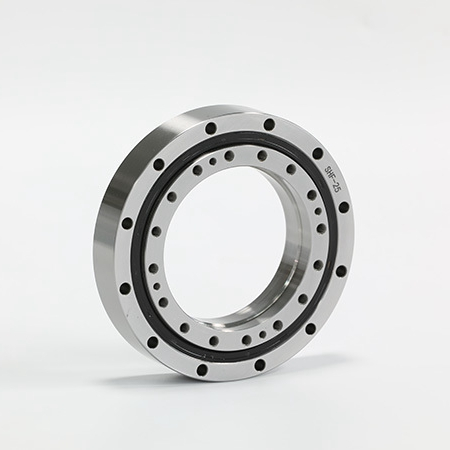
In precision-driven industries, even a small rotational error can lead to product defects, machine wear, and rejected components. Many positioning and motion problems begin at the bearing level. If a bearing cannot maintain rigidity under combined loads, the entire system loses accuracy.
Limits of Traditional Bearing Arrangements
Conventional designs often rely on multiple bearings to manage radial and axial loads separately. This approach increases assembly complexity and requires more installation space. Misalignment between bearings can also reduce accuracy and shorten service life.
Warning Signs of Poor Rotational Stability
Engineers often notice issues such as:
-
Inconsistent rotational accuracy
-
Increased vibration during operation
-
Structural deflection under load
-
Reduced repeatability in positioning systems
These signs indicate that the bearing system may not be rigid enough for the application.
The Compact Precision Solution: Cross Roller Bearing
A cross roller bearing is designed specifically for applications requiring high rigidity, compact size, and multi-directional load support.
What a Cross Roller Bearing Is
This bearing uses cylindrical rollers arranged in a crossed pattern, with each roller positioned at a 90-degree angle to the next. This configuration allows a single bearing to support radial loads, axial loads, and moment loads simultaneously.
How It Handles Multi-Directional Loads
Because the rollers are oriented alternately, loads from different directions are distributed evenly. This structure reduces elastic deformation and improves rotational precision. The result is smooth motion and consistent positioning accuracy.
Key Features That Improve Machine Accuracy
Structural Benefits for Rigidity and Stability
Cross roller bearings provide:
-
High rotational accuracy
-
Excellent rigidity under moment loads
-
Reduced internal clearance
-
Stable performance in varying load directions
These features help machines maintain precise motion even under changing operating conditions.
Space-Saving Design for Compact Systems
Instead of using separate radial and thrust bearings, a single cross roller bearing can perform both roles. This reduces the overall size and weight of the assembly, which is critical in compact systems like robots and inspection devices.
Comparison with Conventional Bearing Solutions
| Feature | Conventional Bearing Setup | Cross Roller Bearing |
|---|---|---|
| Load Handling | Separate bearings required | Handles multi-directional loads |
| Installation Space | Larger | Compact design |
| Rigidity | Moderate | High rigidity |
| Rotational Accuracy | Lower | High precision |
| Assembly Complexity | Higher | Simplified |
This comparison shows why engineers select cross roller bearings when precision and space efficiency are priorities.
Industrial Applications That Rely on Cross Roller Bearings
Robotics and Automation Systems
Robotic joints require compact bearings that can handle loads from multiple directions while maintaining positioning accuracy.
Machine Tool Turntables and Index Tables
These systems depend on smooth, precise rotation. High rigidity prevents deflection during cutting or machining operations.
Medical and Inspection Equipment
Imaging and measurement devices demand stable motion without vibration. Precision bearings ensure reliable results.
For these demanding industries, cross roller bearing solutions provide the performance needed for accurate and repeatable motion.
Why Manufacturers Prefer This Bearing Type
Manufacturers benefit from improved machine performance and simplified designs. Using a single bearing instead of multiple units reduces assembly time and alignment challenges. Higher rigidity also leads to better product quality and less maintenance.
Operational advantages include:
-
Reduced component count
-
Improved system stability
-
Longer service intervals
-
Lower total maintenance costs
How to Select the Right Bearing for Your Application
Load Ratings, Accuracy Classes, and Mounting
When choosing a cross roller bearing, engineers evaluate:
-
Expected radial, axial, and moment loads
-
Required rotational accuracy
-
Mounting method and available space
-
Operating environment and temperature
Supplier Quality and Customization Support
Reliable suppliers offer precision manufacturing, strict quality inspection, and customization options. This ensures the bearing fits the specific performance and dimensional requirements of the application.
Conclusion
High-precision machines depend on stable, rigid, and compact bearing solutions. Cross roller bearings provide multi-directional load support, high accuracy, and space-saving benefits that traditional setups cannot match. For engineers and manufacturers, choosing the right bearing is a key step toward better performance, improved product quality, and long-term operational reliability.

 English
 Arabic
 French
 Spanish
 Deutsch
 Turkish
 Dutch
Dutch
 Italiano
 Russian
 Romaian
 Portuguese (Brazil)
 Greek
Greek
