


 Pro Benefits
 About
About
 Termini e Condizioni
 Privacy
 Child Safety Standards & Protection Policy
 Notifiche
Step-by-Step Guide to Obtaining a Certificate of Origin for Export 📦🌍
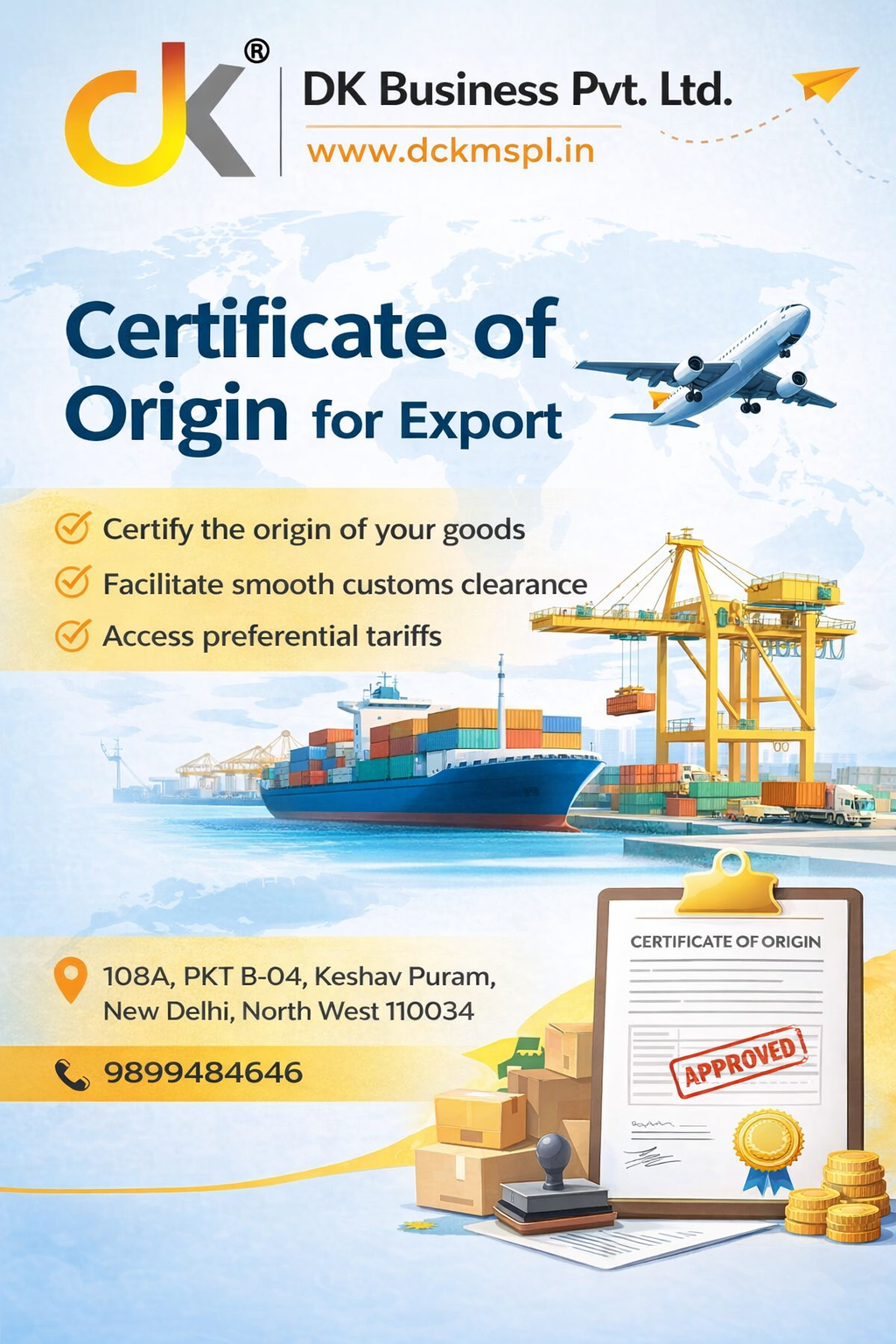
In international trade, documentation plays a crucial role in ensuring smooth and legal movement of goods across borders. One of the most important documents required during export is the Certificate of Origin. 🧾✨
A Certificate of Origin confirms the country in which the goods were manufactured, produced, or processed. For exporters, this document is not just a formality but a vital requirement that helps in customs clearance, tariff benefits, and trade compliance.
This detailed guide explains everything about Certificate of Origin, Certificate of Origin Form, and Certificate of Origin for Export, along with a clear step-by-step process to obtain it. 😊
What Is a Certificate of Origin? 🧐📄
A Certificate of Origin (COO) is an official trade document that certifies the country where the exported goods originate. 🌐
It is issued by an authorized body and serves as proof that the goods being exported are manufactured or produced in a specific country.
Customs authorities in the importing country rely on this document to:
-
Determine applicable customs duties 💰
-
Apply trade agreements 🌍
-
Verify product origin 📦
-
Ensure compliance with import regulations 📜
Simply put, a Certificate of Origin answers one key question:
Where were the goods made? 🇮🇳➡️🌎
Why Is a Certificate of Origin for Export Important? 🚢📦
A Certificate of Origin for Export is essential for several reasons:
-
🌍 Required by customs authorities in many countries
-
💰 Helps in claiming reduced or zero customs duty
-
📜 Ensures compliance with international trade laws
-
🚫 Prevents shipment delays or rejection
-
🤝 Builds trust with overseas buyers
Without a valid Certificate of Origin, exporters may face shipment holds, penalties, or additional costs. 😟
Types of Certificate of Origin 🏷️📑
There are two main types of Certificates of Origin used in export transactions:
1. Non-Preferential Certificate of Origin 📄
This type certifies the origin of goods without offering any special tariff benefits. It is mainly used for general trade purposes.
2. Preferential Certificate of Origin 🌟
This certificate allows exporters to claim duty concessions under trade agreements between countries.
Understanding the correct type of Certificate of Origin is important before applying. ✅
What Is a Certificate of Origin Form? 📝📋
The Certificate of Origin Form is a structured document that exporters must complete while applying for the certificate.
This form contains essential details such as:
-
Exporter name and address 🏢
-
Importer name and address 🌍
-
Description of goods 📦
-
HS code 🔢
-
Quantity and weight ⚖️
-
Country of origin 🇮🇳
-
Declaration and signature ✍️
Accurate completion of the Certificate of Origin Form is critical to avoid rejection or delays. ⚠️
Who Needs a Certificate of Origin for Export? 👤🌍
A Certificate of Origin for Export is required by:
-
Manufacturers exporting goods 🏭
-
Traders involved in international shipments 📦
-
Exporters claiming tariff benefits 💰
-
Businesses shipping goods to regulated markets 📜
Any exporter involved in cross-border trade should understand the importance of this document.
Step-by-Step Guide to Obtaining a Certificate of Origin for Export 🪜✅
Below is a clear and detailed step-by-step process to obtain a Certificate of Origin for Export 👇
Step 1: Exporter Registration 🏢📝
Before applying for a Certificate of Origin, exporters must complete their registration with the relevant export authority.
This registration includes:
-
Business details
-
Exporter identification information
-
Authorized signatory details
Registration ensures that only genuine exporters can apply for a Certificate of Origin. ✔️
Step 2: Filling the Certificate of Origin Form 📋✍️
Once registered, exporters must carefully fill out the Certificate of Origin Form.
Key points to remember while filling the form:
-
Product description must match the invoice
-
HS code should be accurate
-
Country of origin must be clearly stated
-
No spelling or data errors
Even a small mistake can lead to application rejection. ❌
Step 3: Submitting Supporting Documents 📎📄
Along with the Certificate of Origin Form, exporters must submit supporting documents such as:
-
Commercial invoice 🧾
-
Packing list 📦
-
Shipping bill 🚢
-
Exporter declaration ✍️
These documents help authorities verify the origin of the goods. 🔍
Step 4: Verification of Details 🔍✅
The submitted application undergoes a verification process where authorities check:
-
Accuracy of information
-
Consistency between documents
-
Compliance with export rules
If discrepancies are found, exporters may be asked to correct or resubmit the application. ⚠️
Step 5: Issuance of Certificate of Origin 🧾🎉
After successful verification, the Certificate of Origin for Export is issued.
The certificate includes:
-
Official stamp
-
Authorized signature
-
Unique certificate number
This document is then sent along with export shipment documents to the importing country. 🚚🌍
Common Mistakes to Avoid 🚫⚠️
Exporters often make mistakes that can delay the Certificate of Origin process:
-
Incorrect HS codes
-
Mismatch between invoice and form
-
Incomplete Certificate of Origin Form
-
Wrong country of origin declaration
-
Missing supporting documents
Avoiding these errors ensures faster approval. 👍
Benefits of Certificate of Origin for Export 🌟📈
Having a valid Certificate of Origin offers multiple benefits:
-
Faster customs clearance 🚀
-
Reduced import duty 💰
-
Better compliance with trade laws 📜
-
Increased buyer confidence 🤝
-
Smooth international transactions 🌍
It acts as a bridge of trust between exporter, importer, and customs authorities.
Read More - Understanding Free Sale and Commerce Certificates for Export 🌏✈️
Role of Certificate of Origin in Global Trade 🌐📊
The Certificate of Origin plays a vital role in international commerce by:
-
Supporting trade agreements
-
Preventing illegal trade
-
Ensuring transparency
-
Promoting fair trade practices
For exporters aiming to expand globally, understanding this document is essential. 🌍✨
Certificate of Origin Export Process Summary 🧠📌
To summarize:
-
Certificate of Origin proves product origin
-
Certificate of Origin Form must be accurately filled
-
Supporting documents are mandatory
-
Verification ensures compliance
-
Certificate is issued after approval
Following this process ensures hassle-free exports. 😊
Conclusion 🏁✨
The Certificate of Origin for Export is a cornerstone of international trade documentation. It validates the origin of goods, supports tariff benefits, and ensures compliance with global trade regulations.
By correctly filling the Certificate of Origin Form, submitting proper documents, and following the step-by-step process, exporters can avoid delays and smoothly expand their business in global markets. 🌍🚀
A well-managed Certificate of Origin process not only saves time and money but also strengthens exporter credibility worldwide. 🤝✨
Frequently Asked Questions (FAQs) ❓📘
FAQ 1: Is a Certificate of Origin mandatory for all exports? 🤔
Not all exports require a Certificate of Origin, but many importing countries demand it for customs clearance and duty determination.
FAQ 2: What happens if the Certificate of Origin Form is incorrect? 📝
Incorrect information can lead to rejection, shipment delays, or additional customs charges.
FAQ 3: Can one Certificate of Origin be used for multiple shipments? 📦
No, a Certificate of Origin is usually issued for a specific shipment and invoice.

 English
 Arabic
 French
 Spanish
 Portuguese
 Deutsch
 Turkish
 Dutch
Dutch
 Russian
 Romaian
 Portuguese (Brazil)
 Greek
Greek
