


 Pro Benefits
 Sobre
Sobre
 Termos
 Privacidade
 Child Safety & Protection
 Notificações
 Ayrush Global It Services Pvt Ltd
Why Distance Learning Is a Smart Choice for Higher Education | IGNOU Information
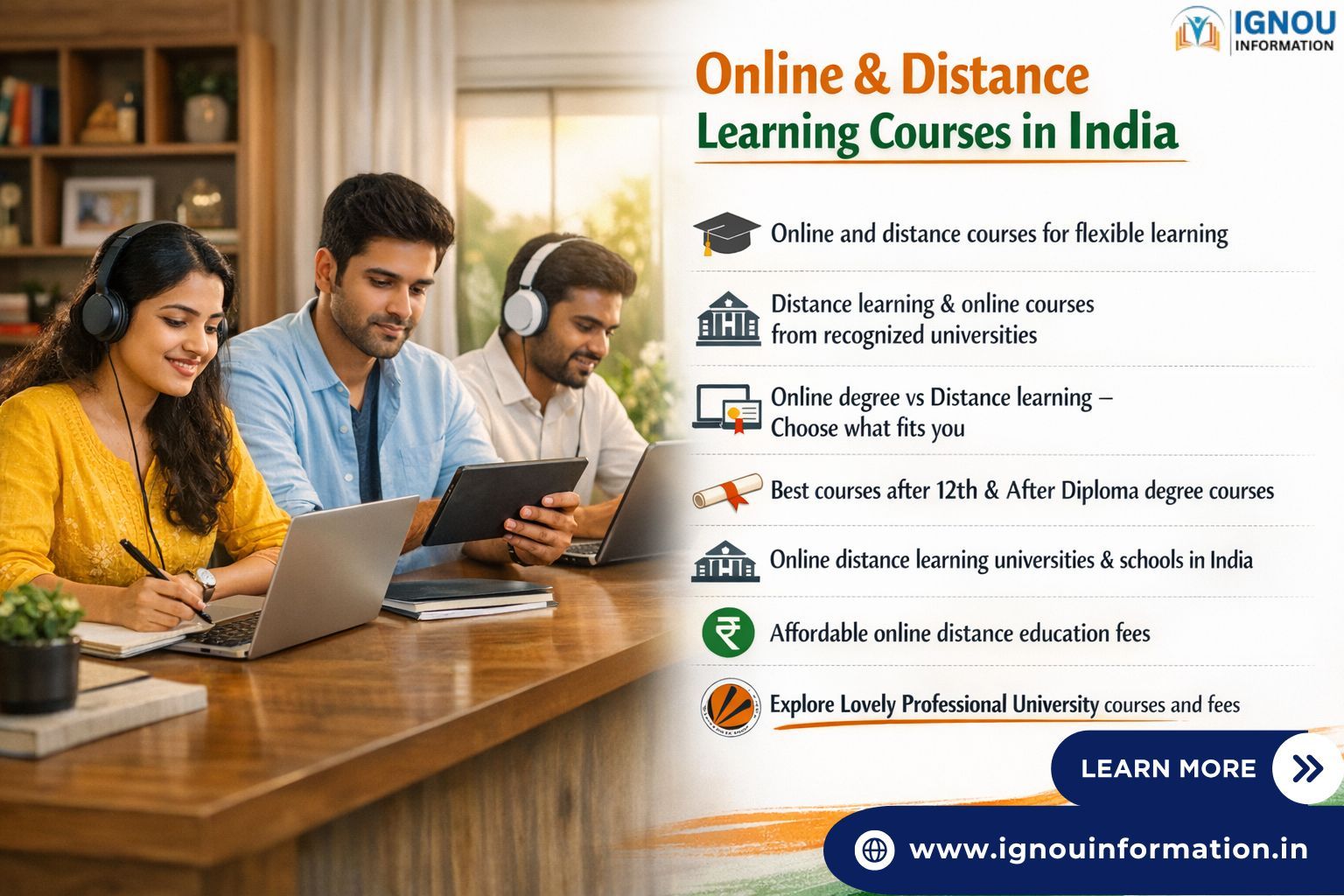
Higher education needs in India are changing rapidly. Today’s students and professionals look for education that is affordable, flexible, and recognised, without compromising on quality. Traditional college education, while valuable, often comes with high fees, limited seats, fixed schedules, and relocation challenges. These barriers make it difficult for many learners to continue their academic journey.
At the same time, the demand for flexible and career-oriented education has grown. Students after 12th, diploma holders, working professionals, and even career switchers now seek options that allow them to balance studies with personal and professional responsibilities. This is where distance learning education has emerged as a smart and practical choice for higher education in India.
What Is Distance Learning?
Distance learning is a mode of education where students pursue their degree or diploma without attending regular classroom sessions. Instead of daily campus visits, learners study through a combination of self-learning materials, online resources, academic support, and scheduled examinations.
How distance learning works:
-
Universities provide printed or digital study material
-
Online lectures, recorded sessions, and academic portals support learning
-
Assignments and term-end exams assess student progress
-
Student support centres assist with guidance and queries
Distance learning vs regular education:
-
Regular education requires fixed schedules and physical attendance
-
Distance learning offers flexibility in time, pace, and location
This mode is suitable for students who cannot attend full-time college but still want to earn a recognised qualification.
Growth of Distance Learning in India
Distance learning in India has seen significant growth over the past two decades. Recognised universities and institutions now offer a wide range of undergraduate, postgraduate, diploma, and certificate programs through distance mode.
Key factors driving this growth include:
-
Expansion of approved distance education universities
-
Improved digital access and online learning platforms
-
Growing acceptance of non-traditional education pathways
-
Rising participation from working professionals and rural learners
With regulatory oversight and structured evaluation systems, distance learning has become an established part of India’s higher education ecosystem.
Key Benefits of Distance Learning for Higher Education
Distance learning offers several practical advantages, making it an attractive option for diverse learners.
Flexibility in study schedules
Students can study at their own pace and choose learning hours that suit their routine. This flexibility is especially useful for those managing jobs or family responsibilities.
Cost-effective education
Distance learning degree courses are generally more affordable than regular college programs. Savings on travel, accommodation, and campus expenses make higher education accessible to a larger population.
Learn while working
Learners can continue their job, internship, or business while pursuing a degree. This allows them to gain academic qualifications alongside real-world experience.
Location-independent access
Students can access higher education from any part of the country, eliminating the need to relocate to urban centres.
Recognised degrees
Most established distance education universities follow structured curricula and evaluation processes, ensuring degree validity and academic credibility.
Distance Learning for Working Professionals
Distance learning for working professionals has become one of the most popular education pathways in India. Many individuals want to upgrade qualifications for promotions, role changes, or career growth but cannot afford to leave their jobs.
This mode supports:
-
Career advancement without employment gaps
-
Skill enhancement alongside practical experience
-
Balanced management of work, education, and family life
By studying while working, professionals strengthen both academic credentials and workplace competence.
Career Scope After Distance Learning
The career scope of distance learning depends on the chosen field, university recognition, and the learner’s skills. Graduates from distance learning programs find opportunities across multiple domains.
Management and business administration
Programs in management support careers in marketing, HR, operations, and entrepreneurship.
Arts, humanities, and social sciences
These courses open pathways in education, content development, research, social work, and civil services preparation.
Commerce, accounting, and finance
Graduates can pursue roles in accounting, finance, taxation, and business services.
Government exams and public-sector roles
Recognised distance learning degrees are often eligible for competitive exams, subject to notification guidelines.
Skill-based growth
Distance learning can be combined with certifications and professional training to enhance employability.
Read more: Is Online B.Tech the right choice for aspiring engineers in 2026?
Employer Acceptance and Degree Validity
One common concern among students is employer acceptance. Today, many private sector employers focus more on skills, experience, and job readiness than the mode of education.
Important considerations include:
-
Choosing recognised and approved universities
-
Aligning education with relevant skills
-
Demonstrating practical knowledge and work experience
For government jobs and higher studies, degree validity depends on regulatory approvals and specific eligibility criteria. Understanding these aspects before enrolling is essential.
How to Choose the Right Distance Learning Program
Selecting the right program is a crucial step in higher education through distance learning.
Key points to evaluate:
-
Clear alignment with long-term career goals
-
University recognition and regulatory approvals
-
Course structure, duration, and evaluation system
-
Availability of academic and student support
Strategic planning ensures that the chosen program adds real value to future opportunities.
Role of IGNOU Information
IGNOU Information serves as a trusted education guidance platform for students and working professionals. It helps learners understand course options, eligibility criteria, and career scope across various distance learning programs.
The platform supports:
-
Simplified information on distance learning courses
-
Comparison of universities and programs
-
Student-focused, research-driven education guidance
By offering clear and unbiased insights, IGNOU Information helps students make informed higher education decisions.
Conclusion
Distance learning has become a smart and practical solution for modern higher education needs in India. It offers flexibility, affordability, accessibility, and recognised qualifications for students from diverse backgrounds. Whether you are a fresher, a working professional, or a career switcher, this mode of education can support your academic and professional goals.
With the right planning and guidance, learners can confidently pursue higher education through distance learning and build a strong future. IGNOU Information continues to support students with reliable insights and clarity, helping them make informed and confident education decisions.
Frequently Asked Questions (FAQs)
Q- Is distance learning valid for higher education in India?
Yes, distance learning programs offered by recognised institutions are valid for higher education, subject to regulatory approvals.
Q- Who should choose distance learning programs?
Students after 12th, diploma holders, working professionals, and learners needing flexible study options can benefit from distance learning.
Q- Are distance learning degrees accepted for jobs?
Many private employers accept distance learning degrees, especially when combined with relevant skills and experience.
Q- Can working professionals study through distance learning?
Yes, distance learning is designed to support professionals who want to study without leaving their jobs.
Q- Which distance learning courses have good career scope?
Courses in management, commerce, humanities, and skill-oriented fields often offer strong career opportunities.
 Portuguese
 English
 Arabic
 French
 Spanish
 Deutsch
 Turkish
 Dutch
Dutch
 Italiano
 Russian
 Romaian
 Portuguese (Brazil)
 Greek
Greek
