


 Pro Benefits
 Environ
 Conditions générale de vente
 Confidentialité
 Notifications
Aluminum Spot Welder: The Ultimate Solution for High-Quality Aluminum Welding
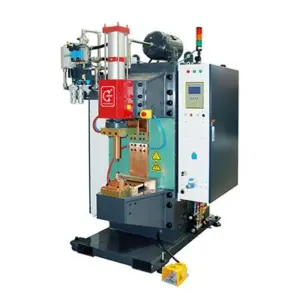
Aluminum has become a cornerstone material across automotive, aerospace, electronics, and industrial manufacturing due to its lightweight, corrosion resistance, and excellent conductivity. However, welding aluminum presents unique challenges that require precision, consistency, and specialized equipment. This is where an aluminum spot welder becomes indispensable.
In this guide, we will explain the principles of aluminum spot welding, its applications, and best practices, while demonstrating why Heron Welder stands out as a global leader in resistance welding solutions.
Understanding Aluminum Spot Welding
Spot welding is a resistance-based welding process that joins metal sheets by applying pressure and passing a high current through the material at localized points. Unlike steel, aluminum has higher thermal conductivity and lower electrical resistance, making it more challenging to weld.
An aluminum spot welder compensates for these material characteristics by:
-
Delivering precise, high-amperage pulses to achieve optimal weld nuggets
-
Controlling electrode force to prevent surface damage and ensure consistent penetration
-
Incorporating advanced control systems for repeatability in high-volume production
Heron’s range of aluminum spot welders, including MFDC (Medium-Frequency Direct Current) spot welding machines, provides engineers with consistent, high-quality welds while minimizing energy consumption and material distortion.
Key Applications of Aluminum Spot Welders
Aluminum spot welders are widely used in industries where lightweight and durable structures are critical. Common applications include:
1. Automotive Manufacturing
Modern electric and conventional vehicles rely on aluminum body panels, battery trays, and chassis components. Aluminum spot welding ensures strong, corrosion-resistant joints while maintaining production efficiency.
2. Aerospace Components
Aluminum alloys are preferred in aerospace for structural frames, fuselage panels, and internal components. Precise spot welding maintains structural integrity without compromising the lightweight nature of the material.
3. Electronics & Electrical Equipment
Aluminum is extensively used in heat sinks, housings, and conductors. Spot welding provides clean, repeatable connections without damaging sensitive components.
4. Industrial & Consumer Goods
From appliances to machinery, aluminum spot welding enables efficient assembly of lightweight, durable products, ensuring longevity and high-quality finishes.
Advantages of Using a Heron Aluminum Spot Welder
Choosing the right spot welding solution can drastically impact production quality and efficiency. Heron aluminum spot welders provide several key advantages:
-
Precision Control: Advanced MFDC technology enables accurate weld timing, current, and electrode force adjustment, critical for aluminum’s thermal properties.
-
Consistent Weld Quality: Automatic monitoring ensures uniform weld nuggets, reducing scrap and rework.
-
Energy Efficiency: Optimized current delivery minimizes energy waste while maintaining weld integrity.
-
Integration with Automation: Heron welders seamlessly integrate with robotic arms and automated production lines for high-volume manufacturing.
-
Flexibility: Suitable for different aluminum alloys, thicknesses, and production environments.
Best Practices for Aluminum Spot Welding
To maximize performance and longevity of aluminum spot welds, manufacturers should follow these guidelines:
1. Proper Electrode Selection and Maintenance
Copper alloy electrodes are preferred for aluminum due to their conductivity and durability. Regular electrode dressing ensures consistent weld quality.
2. Correct Welding Parameters
Adjusting current, weld time, and electrode force for specific aluminum alloys prevents burn-through, cracking, or weak welds. Heron’s digital controllers provide programmable profiles for repeatability.
3. Surface Preparation
Aluminum naturally forms an oxide layer that can affect weld quality. Cleaning and removing surface oxides before welding ensures strong and reliable joints.
4. Cooling and Cycle Management
Proper cooling intervals prevent overheating and electrode wear, maintaining weld consistency in high-speed production environments.
5. Integration with Quality Monitoring
Using sensors and inspection systems helps detect defects in real-time, ensuring only compliant welds are delivered to the next production stage.
Heron Spot Welders vs. Traditional Welding Methods
While other welding methods like TIG or MIG are suitable for aluminum, spot welding offers unique advantages:
| Feature | Aluminum Spot Welding | TIG/MIG Welding |
|---|---|---|
| Speed | High-speed repetitive welds | Slower, manual or semi-automatic |
| Precision | Localized welds with minimal distortion | Wider heat-affected zone |
| Automation | Easily integrated with production lines | More complex automation |
| Energy Efficiency | Low energy consumption per weld | Higher energy and filler metal usage |
| Repeatability | Highly consistent | Operator-dependent |
Heron’s resistance-based spot welding technology combines precision, repeatability, and automation compatibility, making it ideal for modern high-volume aluminum manufacturing.
Frequently Asked Questions (FAQs)
Q1: Can all aluminum alloys be spot welded?
A: Most aluminum alloys can be spot welded, but parameters like current, force, and pulse duration need adjustment. Heron welders provide programmable settings for various alloys.
Q2: How does MFDC technology improve aluminum welding?
A: MFDC delivers rapid, high-frequency pulses with precise control over weld current, enabling strong welds without overheating or distortion.
Q3: What is the typical thickness range for aluminum spot welding?
A: Aluminum sheets from 0.5 mm up to 6 mm are commonly welded, depending on the machine capacity and electrode design.
Q4: Can aluminum spot welders be automated for large-scale production?
A: Yes, Heron welders integrate seamlessly with robotic arms and automated lines for high-speed, high-volume operations.
Q5: How does electrode maintenance impact weld quality?
A: Worn or dirty electrodes can lead to inconsistent welds, spatter, or burn-through. Regular dressing and cleaning are essential for consistent performance.
Why Choose Heron for Aluminum Spot Welding Solutions
Heron Welder has over a decade of experience supplying industrial resistance welding solutions worldwide. Our aluminum spot welders are engineered for precision, reliability, and seamless integration with automated production lines. Whether you’re an OEM, automation integrator, or factory decision-maker, Heron provides:
-
Customized machine configurations for specific aluminum alloys and thicknesses
-
Integration support with robotic and automated lines
-
Advanced MFDC and capacitor discharge technology for efficient, repeatable welds
-
Global technical support and training for operators and engineers
Ready to Elevate Your Aluminum Welding Process?
Partner with Heron Welder for high-performance aluminum spot welding solutions tailored to your production needs. Request a quote or consult our experts today to discover how Heron can optimize your welding process and automate your manufacturing workflow.

 English
 Arabic
 Spanish
 Portuguese
 Deutsch
 Turkish
 Dutch
Dutch
 Italiano
 Russian
 Romaian
 Portuguese (Brazil)
 Greek
Greek
