


 Pro Benefits
 About
About
 Koşullar
 Gizlilik
 Child Safety & Protection
 Bildirimler
 Ayrush Global It Services Pvt Ltd
High-Performance ACSR Cable Solutions for Modern Power Transmission
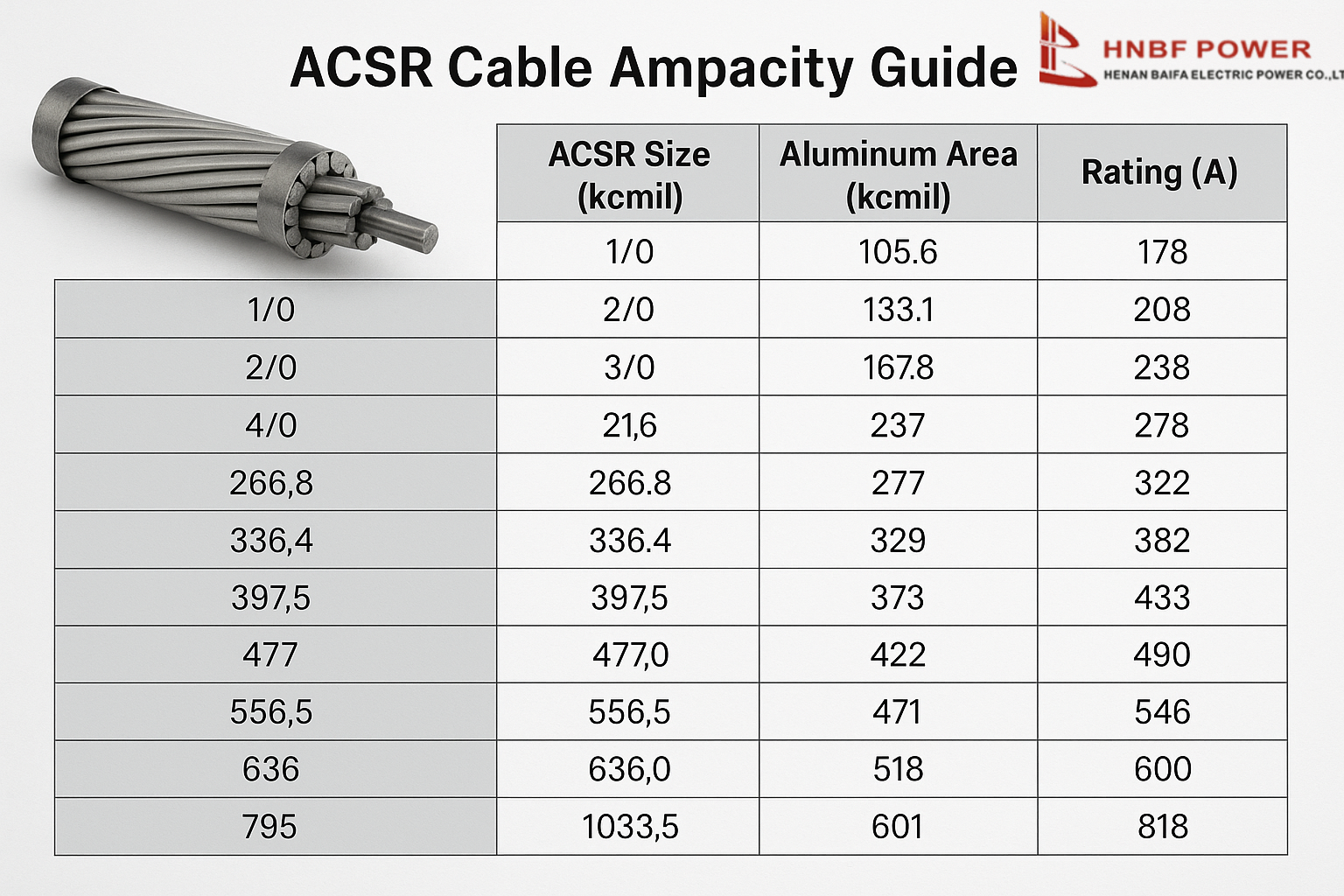
In today’s rapidly evolving energy sector, ensuring reliable and efficient power transmission is more critical than ever. One of the most trusted solutions for overhead power lines is ACSR cable (Aluminum Conductor Steel Reinforced). Known for its unique combination of lightweight aluminum and high-strength steel core, ACSR cable offers the perfect balance of conductivity, durability, and mechanical strength making it an ideal choice for long-span and high-voltage applications.
At HNBF Power, we specialize in manufacturing high-quality ACSR cables that meet international standards and the stringent demands of modern power utilities. With a global footprint, our products are designed to deliver exceptional performance, reliability, and longevity in a wide range of transmission and distribution projects.
In this guide, we will explain the key features, applications, and advantages of ACSR cables and why HNBF Power is a trusted partner for utilities, EPC contractors, and procurement professionals worldwide.
What is ACSR Cable?
ACSR cable, or Aluminum Conductor Steel Reinforced cable, is an overhead conductor composed of a central steel core surrounded by layers of aluminum strands. This design leverages the high tensile strength of steel to withstand mechanical stress while maintaining excellent electrical conductivity through aluminum.
The steel core ensures that the conductor can resist sagging under high temperatures and heavy loads, while the aluminum layers keep the cable lightweight and cost-effective. This makes ACSR cable particularly suitable for long-distance power transmission, high-voltage lines, and areas with challenging environmental conditions such as high winds or ice loading.
Key Advantages of ACSR Cable
1. High Mechanical Strength
The steel core of ACSR cables provides exceptional tensile strength, enabling longer spans between towers without excessive sagging. This is crucial for minimizing maintenance costs and ensuring uninterrupted power supply.
2. Excellent Electrical Conductivity
Aluminum is an excellent conductor of electricity and, when combined with steel reinforcement, offers a perfect blend of efficiency and reliability. This reduces energy losses during transmission and optimizes overall system performance.
3. Lightweight and Cost-Effective
Compared to pure copper conductors, ACSR cables are lighter, easier to handle, and more cost-effective for large-scale transmission networks. Their lightweight nature reduces the load on towers and supporting structures.
4. Durable in Harsh Environments
ACSR cables are engineered to withstand extreme weather conditions, including ice, wind, and temperature fluctuations. This durability ensures longevity and reliability in outdoor applications.
Applications of ACSR Cable
ACSR cables are widely used in overhead power transmission and distribution systems, especially in areas where both mechanical strength and electrical performance are critical. Typical applications include:
-
High-voltage transmission lines
-
Long-distance power distribution networks
-
Industrial and urban electrical grids
-
Renewable energy projects, such as solar and wind farms
HNBF Power’s ACSR cables are designed to meet specific project requirements, whether for urban infrastructure, industrial utilities, or large-scale transmission networks.
Why Choose HNBF Power for ACSR Cable?
At HNBF Power, we are committed to delivering premium ACSR cables that align with global quality standards. Here’s why engineers and procurement professionals trust us:
-
Global Manufacturing Expertise: We combine cutting-edge technology with rigorous quality control to produce cables that perform reliably in all conditions.
-
Customized Solutions: From conductor size to alloy composition, HNBF Power provides tailored solutions to match project specifications.
-
Compliance with Standards: All our ACSR cables meet IEC, ASTM, and national standards, ensuring safety, durability, and regulatory compliance.
-
Technical Support: Our experienced team offers guidance on conductor selection, installation, and maintenance, ensuring optimal system performance.
FAQs About ACSR Cable
1. What is the difference between ACSR and AAC cable?
ACSR cables have a steel core for mechanical strength, while AAC (All Aluminum Conductor) cables are entirely aluminum and better suited for low-load or short-span applications.
2. Can ACSR cable withstand extreme weather conditions?
Yes, the combination of steel and aluminum makes ACSR cables highly durable in high winds, ice, and temperature fluctuations.
3. What are common sizes of ACSR cable?
ACSR cables come in various sizes, including 30/3, 54/7, and 54/19, among others. Selection depends on the voltage level, current capacity, and span requirements.
4. Is ACSR cable suitable for urban installations?
Absolutely. ACSR cable is widely used in urban and industrial grids due to its balance of strength, conductivity, and lightweight design.
5. How long can ACSR cable last?
With proper installation and maintenance, ACSR cables can last over 30 years in most transmission and distribution systems.
Contact HNBF Power for Customized ACSR Cable Solutions
Whether you are planning a large-scale transmission project, upgrading an industrial grid, or designing a renewable energy network, HNBF Power is your trusted partner for premium ACSR cable solutions. Our global experience, technical expertise, and commitment to quality ensure that you get a product tailored to your specific requirements.
Contact HNBF Power today to discuss your project needs and receive a custom ACSR cable solution designed for maximum performance and reliability.
 Turkish
 English
 Arabic
 French
 Spanish
 Portuguese
 Deutsch
 Dutch
Dutch
 Italiano
 Russian
 Romaian
 Portuguese (Brazil)
 Greek
Greek
