


 Pro Benefits
 About
About
 Términos
 Privacidad
 Child Safety & Protection
 Notificaciones
 Ayrush Global It Services Pvt Ltd
How Education Admissions Software Is Changing Institutional Workflows
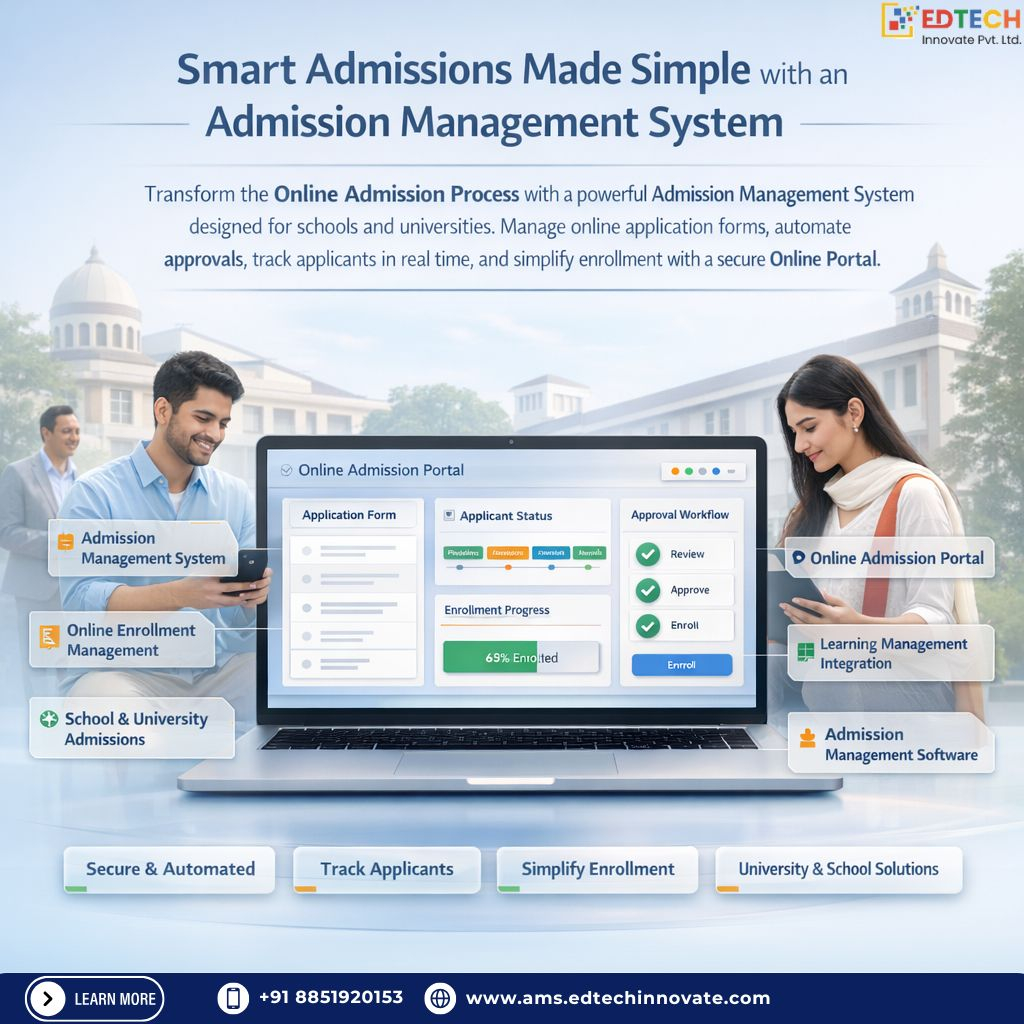
Admission operations in schools and universities have traditionally been built around manual coordination. Spreadsheets track applicant details, emails move documents between departments, paper files circulate for approvals, and staff rely on experience rather than systems to keep processes moving. While this approach may have worked when application volumes were low, it struggles under today’s realities of increased demand, tighter compliance requirements, and expectations for transparency.
Education admissions software is changing this landscape—not simply by digitizing forms, but by fundamentally reshaping how admission workflows are designed, executed, and monitored. Instead of being a collection of disconnected tasks, admissions become a structured, traceable, and collaborative institutional process.
Traditional Admission Workflows: Where Institutions Struggle
In many institutions, the admission journey begins with fragmented systems. Application data may be captured in one format, documents stored in another location, and approval notes exchanged over email. This fragmentation leads to repeated data entry, inconsistencies, and delays that compound as applications move through the system.
Ownership of tasks is often unclear. Admission officers may not know whether academic teams have reviewed an application, finance departments may be waiting for fee confirmation, and administrators may lack visibility into bottlenecks. Approvals depend heavily on individuals rather than defined processes, making timelines unpredictable.
Another major challenge is the absence of real-time visibility. Leadership teams typically receive updates only through manual reports, often after delays. By the time issues are identified, admission cycles are already under pressure. These inefficiencies are not just operational inconveniences—they directly affect applicant experience, institutional credibility, and compliance readiness.
How Education Admissions Software Redesigns Admission Workflows
Education admissions software rethinks admissions as an end-to-end workflow rather than a series of isolated actions. The process begins with a standardized online application form, where applicant data is captured once and stored centrally. This eliminates duplication and ensures consistency from submission to enrollment.
Centralized data repositories mean that all stakeholders—admissions, academics, finance, and administration—work from the same information. Workflow automation guides applications through predefined stages of the online admission process, triggering reviews, approvals, or notifications based on institutional rules rather than manual follow-ups.
Instead of staff tracking progress through spreadsheets or inboxes, the system provides a live view of application status. This shift from reactive coordination to proactive workflow management is one of the most significant changes education admissions software introduces.
Role of Admission Management Systems in Workflow Standardization
An Admission Management System plays a critical role in enforcing consistency across admissions. It formalizes processes that were previously informal or person-dependent. Role-based access ensures that each stakeholder sees only what is relevant to their responsibilities, reducing confusion and errors.
Approval hierarchies define who reviews, who approves, and at what stage. This clarity removes ambiguity and prevents delays caused by unclear decision-making authority. Audit trails record every action taken on an application, supporting compliance and internal accountability.
By standardizing workflows, admission management software reduces reliance on institutional memory. Processes become repeatable and scalable, making admissions less vulnerable to staff turnover or seasonal workload spikes.
Cross-Department Coordination and Communication
One of the most visible workflow improvements comes from enhanced cross-department collaboration. Admissions rarely operate in isolation—they intersect with academics, finance, compliance, and administration. Education admissions software creates a shared operational environment where all teams stay aligned.
Shared dashboards provide real-time insights into application volumes, pending approvals, and processing timelines. Automated alerts notify teams when action is required, reducing the need for follow-up emails or meetings. Status tracking ensures that everyone understands where an application stands and what the next step is.
This level of coordination transforms admissions from a series of handoffs into a synchronized institutional process, reducing friction and improving turnaround times.
Read more: How Universities Use Admission Management Systems to Scale Admissions
Workflow Impact Across Institution Types
The workflow impact of education admissions software differs by institution type but delivers value across the spectrum.
For schools, school admission software simplifies annual intake cycles that are often time-bound and parent-driven. Digital applications, centralized document handling, and automated communication reduce administrative workload during peak periods. Admissions teams can focus on seat allocation and policy compliance rather than paperwork management.
Universities, on the other hand, face far greater complexity. A university admission management system supports multiple programs, eligibility criteria, entrance exams, and approval layers. Education admissions software allows universities to manage high application volumes without losing control over academic standards or timelines. Workflows adapt to program-specific requirements while maintaining institutional consistency.
In both cases, the shift is from manual coordination to system-driven execution.
Long-Term Institutional Workflow Outcomes
Over time, improved workflows lead to predictable admission timelines and more resilient operations. Institutions gain the ability to plan resources accurately, manage peak loads efficiently, and respond to regulatory audits with confidence.
Education admissions software also supports scalable online enrollment management systems, allowing institutions to grow without proportionally increasing administrative staff. Data-driven reporting enables leadership to evaluate performance, identify bottlenecks, and make informed policy decisions.
Perhaps most importantly, standardized workflows reduce operational risk. Admissions become less dependent on individuals and more aligned with institutional governance, ensuring continuity and long-term efficiency.
Conclusion
Admissions are no longer just administrative tasks—they are critical institutional workflows that influence efficiency, compliance, and stakeholder trust. Education admissions software fundamentally changes how these workflows operate by introducing structure, transparency, and automation at every stage.
By moving away from informal, manual processes and toward standardized, system-driven workflows, institutions gain control, scalability, and resilience. Solutions like EdTech Innovate support this transformation by enabling schools and universities to manage admissions as a cohesive, workflow-driven operation aligned with modern institutional needs.
Frequently Asked Questions
What is education admissions software?
Education admissions software is a digital platform that manages and structures the complete admission workflow, from application submission to enrollment, across schools and universities.
How does education admissions software change admission workflows?
It replaces fragmented, manual coordination with centralized data, automated workflows, and real-time visibility, making admissions predictable and scalable.
Can it replace manual approvals and spreadsheets?
Yes. Admission management software formalizes approvals and tracking within the system, reducing reliance on spreadsheets, emails, and paper files.
Does it support collaboration across departments?
Education admissions software enables shared dashboards, automated alerts, and centralized data access, improving coordination between admissions, academics, finance, and administration.
Is education admissions software suitable for both schools and universities?
Modern systems are configurable and support both simple school workflows and complex university admission structures.
 Spanish
 English
 Arabic
 French
 Portuguese
 Deutsch
 Turkish
 Dutch
Dutch
 Italiano
 Russian
 Romaian
 Portuguese (Brazil)
 Greek
Greek
