


 Pro Benefits
 О нас
О нас
 Условия использования
 Конфиденциальность
 Оповещения
How Admission Management Solutions Reduce Manual Errors and Delays
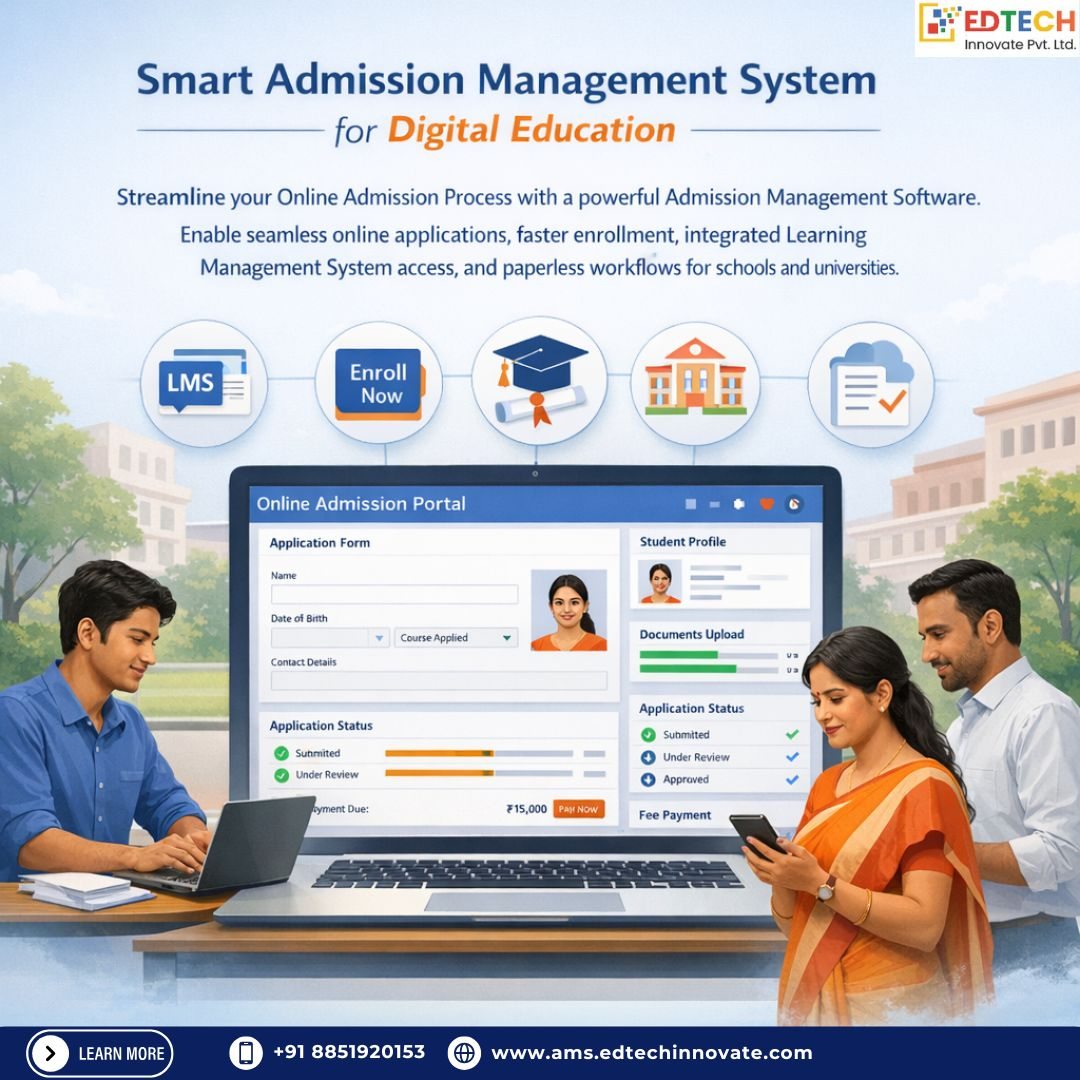
For many schools and universities, admissions are the first and most critical touchpoint with prospective students. Yet, despite its importance, the admission process in many institutions still relies heavily on manual work—paper forms, spreadsheets, emails, and disconnected systems. These traditional methods often lead to errors, delays, and unnecessary stress for both staff and applicants.
As application volumes grow and expectations for faster responses increase, institutions are realizing that manual processes are no longer sustainable. This is where a modern Admission Management System plays a transformative role. By digitizing and standardizing workflows, admission management solutions help institutions reduce errors, eliminate delays, and improve overall operational efficiency—without adding complexity.
Common Manual Errors in Traditional Admission Processes
Manual admission workflows are prone to several recurring issues that impact accuracy and reliability:
-
Data entry mistakes: Handwritten forms and repeated data entry across systems often result in incorrect student details.
-
Misplaced or missing documents: Physical files and email attachments can be easily lost or overlooked.
-
Duplicate records: Multiple applications or updates from the same applicant can create confusion without a centralized system.
-
Inconsistent data formats: Different departments may maintain separate records, leading to mismatches and reconciliation issues.
-
Communication gaps: Applicants may not receive timely updates, leading to repeated follow-ups and frustration.
These errors not only slow down the Online Admission Process but also increase the administrative burden on admission teams.
Causes of Admission Delays
Delays in admissions are rarely caused by a single issue. More often, they result from a combination of outdated practices:
-
Paper-based workflows: Physical forms must be collected, sorted, verified, and stored manually.
-
Disconnected tools: Using separate systems for applications, fees, and communication leads to repeated work.
-
Manual approvals: Applications wait in queues for reviews and signatures, especially during peak admission periods.
-
Lack of real-time visibility: Admission officers struggle to track application status accurately.
These challenges directly affect decision timelines and create a poor experience for applicants expecting faster responses.
How Admission Management Solutions Reduce Errors
A well-designed Admission management solution addresses accuracy issues at their root. By centralizing and digitizing data, institutions can significantly reduce manual intervention.
Key ways errors are minimized include:
-
Single source of truth: All applicant data is stored in one centralized system.
-
Automated data validation: Mandatory fields and format checks reduce incomplete or incorrect submissions.
-
Standardized workflows: Every application follows the same structured process, ensuring consistency.
-
Controlled access: Role-based permissions prevent unauthorized or accidental changes.
Modern Education admissions software ensures that data remains accurate, traceable, and easy to manage throughout the admission cycle.
Eliminating Delays Through Automation
Automation is one of the strongest advantages of an Admission Management System. Instead of relying on manual follow-ups and approvals, institutions can streamline each step.
Automation helps by:
-
Instantly routing applications to the right reviewers
-
Triggering notifications for document verification and approvals
-
Sending automated updates to applicants at each stage
-
Reducing turnaround time for decision-making
As a result, admission teams can process applications faster without compromising accuracy or compliance.
Role of Online Application Forms and Portals
Structured Online application forms play a crucial role in reducing both errors and delays. Unlike paper forms, digital forms guide applicants through each required step.
Benefits include:
-
Clear instructions and mandatory fields
-
Reduced incomplete or incorrect submissions
-
Easy document uploads with standardized formats
-
Real-time application tracking through an Online Admission Portal
A centralized Online Admission portal also minimizes repetitive queries, as applicants can check their status anytime.
Improving Coordination Across Departments
Admissions rarely operate in isolation. Finance, academics, and administration all play a role. A unified Admission Management System improves coordination by:
-
Sharing real-time applicant data across departments
-
Linking admissions with fee collection and verification
-
Ensuring academic teams receive accurate enrollment information
-
Reducing internal emails and manual handoffs
This level of integration improves decision speed and reduces dependency on individual staff members.
Impact on Student Experience
From an applicant’s perspective, admissions are about clarity, speed, and trust. Errors and delays can damage an institution’s reputation.
With a reliable Admissions software, institutions deliver:
-
Faster acknowledgments and responses
-
Fewer requests for repeated information
-
Transparent communication at every stage
-
A smoother, more professional admission journey
This positive experience builds confidence and improves enrollment conversion rates.
Read more: Why Schools Need Modern Admission Management Software
Use Cases for Schools and Universities
School admission software often focuses on managing high volumes of applications within tight timelines. Digital workflows help schools:
-
Handle seasonal admission peaks
-
Reduce manual workload for administrative staff
-
Maintain accurate student records from day one
For higher education, a University admission management system supports:
-
Complex eligibility criteria
-
Multi-stage approvals
-
Integration with academic and learning systems
-
Scalable processing for large applicant pools
In both cases, reduced errors and faster processing lead to better operational outcomes.
Scalability and Long-Term Efficiency
As institutions grow, manual processes become harder to manage. An Online enrollment management system scales easily by:
-
Handling increased applicant volumes without extra staff
-
Maintaining consistency across campuses or programs
-
Providing data insights for future planning
-
Supporting long-term digital transformation goals
This scalability ensures that efficiency gains are sustained year after year.
Real-World Admission Workflow Example
A typical digital admission workflow may look like this:
-
Applicant submits an online application form
-
System validates data and documents automatically
-
Admission team reviews and approves digitally
-
Finance verifies fees within the same system
-
Applicant receives real-time status updates
Each step is tracked, reducing delays and eliminating manual errors.
Conclusion
Manual admission processes are no longer equipped to meet today’s expectations for accuracy, speed, and reliability. By adopting a modern Admission Management System, institutions can eliminate common errors, reduce delays, and deliver a smoother experience for both staff and applicants.
As education continues to evolve, future-ready institutions are choosing structured, automated admission workflows. Platforms such as the Admission Management System by EdTech Innovate reflect this shift—helping schools and universities build efficient, transparent, and student-friendly admission processes that are ready for growth.
FAQs
Q: Is an Admission Management System suitable for small institutions?
Yes. Even smaller schools benefit from reduced manual work and better accuracy.
Q: Does digital admission require technical expertise?
Most modern systems are designed to be user-friendly and non-technical.
Q: Can it handle both online and offline applicants?
Yes, many solutions support hybrid admission models.

 English
 Arabic
 French
 Spanish
 Portuguese
 Deutsch
 Turkish
 Dutch
Dutch
 Italiano
 Romaian
 Portuguese (Brazil)
 Greek
Greek
