


 Pro Benefits
 About
About
 Voorwaarden
 Privacy
 Meldingen
Step-by-Step Process of Obtaining a BIS FMCS License
Introduction
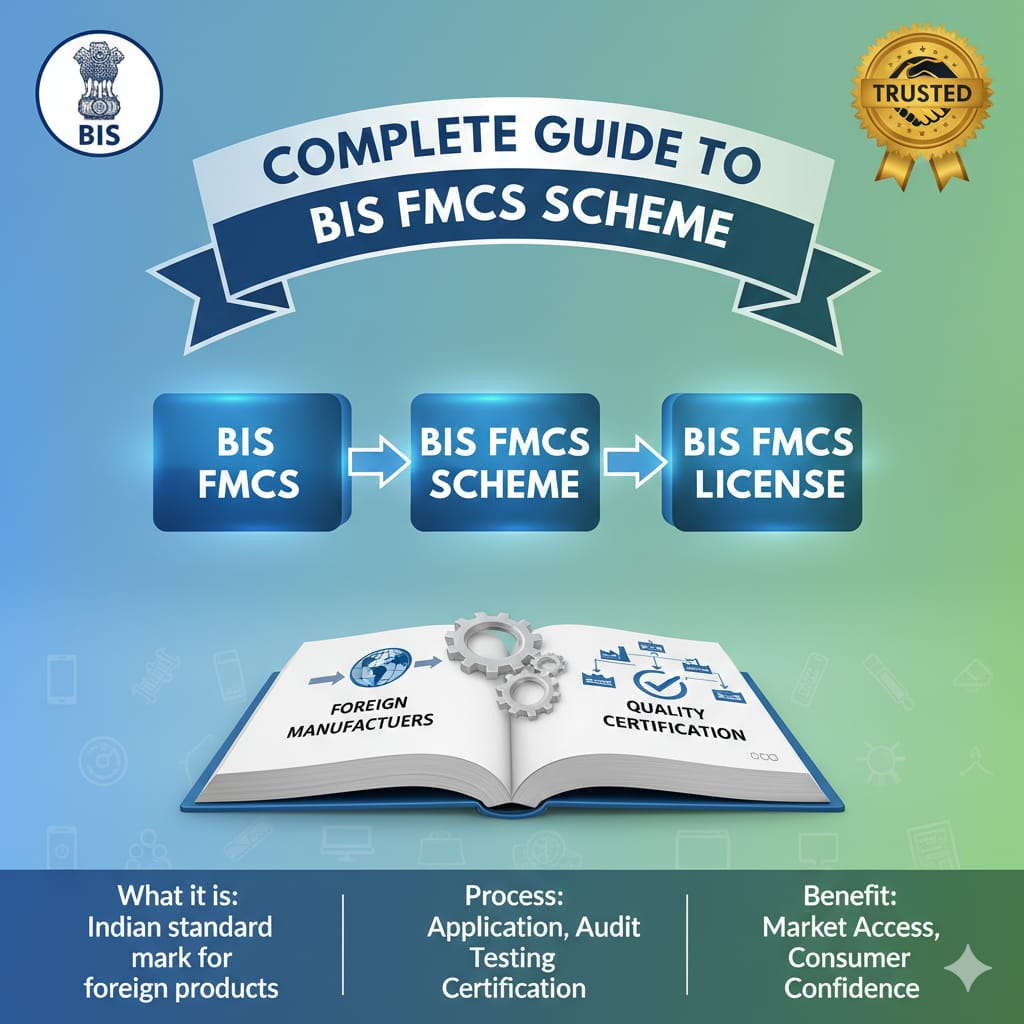
For foreign manufacturers planning to export regulated products to India, compliance with national quality standards is mandatory. The BIS FMCS License, issued under the Foreign Manufacturers Certification Scheme (FMCS) by the Bureau of Indian Standards (BIS), is a legal requirement for products listed under mandatory BIS certification. India is one of the fastest-growing consumer markets in the world, and BIS compliance ensures that imported products meet Indian safety, quality, and performance benchmarks. Understanding the BIS FMCS certification process in a step-by-step manner helps foreign companies avoid delays, rejections, and compliance risks.
Who Needs a BIS FMCS License?
A BIS FMCS License is mandatory for all foreign manufacturers whose products fall under India’s mandatory certification list. This requirement applies regardless of whether the manufacturer already holds international certifications such as ISO, CE, IEC, or UL. Even globally recognized approvals do not replace the need for BIS FMCS certification. Any overseas factory intending to supply certified products to India must obtain this license before shipment or sale.
Step-by-Step Application Process for BIS FMCS Certification
1. Appointment of Authorized Indian Representative (AIR)
The first and most critical step in the BIS FMCS process is appointing an Authorized Indian Representative (AIR). As per BIS guidelines, every foreign manufacturer must nominate an AIR who is based in India. The AIR acts as the official liaison between the manufacturer and the Bureau of Indian Standards, handling application submission, coordination during testing and inspection, and post-certification compliance obligations.
2. Submission of BIS FMCS Application
Once the AIR is appointed, the manufacturer must submit the prescribed BIS FMCS application form. This application includes detailed factory information, manufacturing flowcharts, quality control procedures, and complete product specifications aligned with the relevant Indian Standard (IS). Accurate documentation at this stage significantly reduces processing time and the likelihood of queries from BIS.
3. Scrutiny of Documents by BIS
After submission, BIS conducts an in-depth document scrutiny. During this stage, BIS officials review technical documents, quality manuals, test equipment details, and compliance records. The purpose of this review is to ensure that the manufacturing system and product design fully comply with BIS FMCS certification requirements. Any discrepancies or missing information may lead to clarification requests or delays.
4. Product Testing in BIS-Approved Laboratories
Product testing is a core requirement of BIS FMCS certification. Product samples must be sent to BIS-recognized Indian laboratories for testing according to the applicable Indian Standards. The testing verifies product safety, performance, and reliability. Only products that successfully pass BIS product testing are eligible to proceed to the factory inspection stage.
5. Factory Inspection and Audit
Once testing is completed, BIS schedules a factory inspection at the overseas manufacturing facility. BIS officers visit the factory to assess production capability, quality control systems, testing infrastructure, and manufacturing consistency. This on-site BIS FMCS audit ensures that mass production matches the tested samples and meets ongoing compliance requirements.
6. Grant of BIS FMCS License
After successful completion of document review, product testing, and factory inspection, BIS grants the BIS FMCS License. The manufacturer is then authorized to use the ISI Mark on certified products. This license legally permits the export and sale of the certified goods in the Indian market and enhances brand credibility among Indian consumers and regulators.
BIS FMCS License Processing Time
The average BIS FMCS License processing time ranges from 4 to 6 months. Timelines may vary depending on documentation accuracy, laboratory testing duration, inspection scheduling, and overall preparedness of the manufacturing facility.
Conclusion
Obtaining a BIS FMCS License is a structured yet detailed regulatory process designed to protect Indian consumers and ensure product quality. For foreign manufacturers, successful BIS FMCS certification opens access to India’s vast and rapidly expanding market while ensuring full legal compliance. With proper planning, documentation, and expert guidance, the BIS FMCS process can be completed efficiently and without unnecessary delays.

 English
 Arabic
 French
 Spanish
 Portuguese
 Deutsch
 Turkish
 Italiano
 Russian
 Romaian
 Portuguese (Brazil)
 Greek
Greek
