


 Pro Benefits
 Über
Über
 Bedingungen
 Datenschutz
 Child Safety & Protection
 Benachrichtigungen
 Ayrush Global It Services Pvt Ltd
How Digital Tools Are Reshaping Mathematics Education
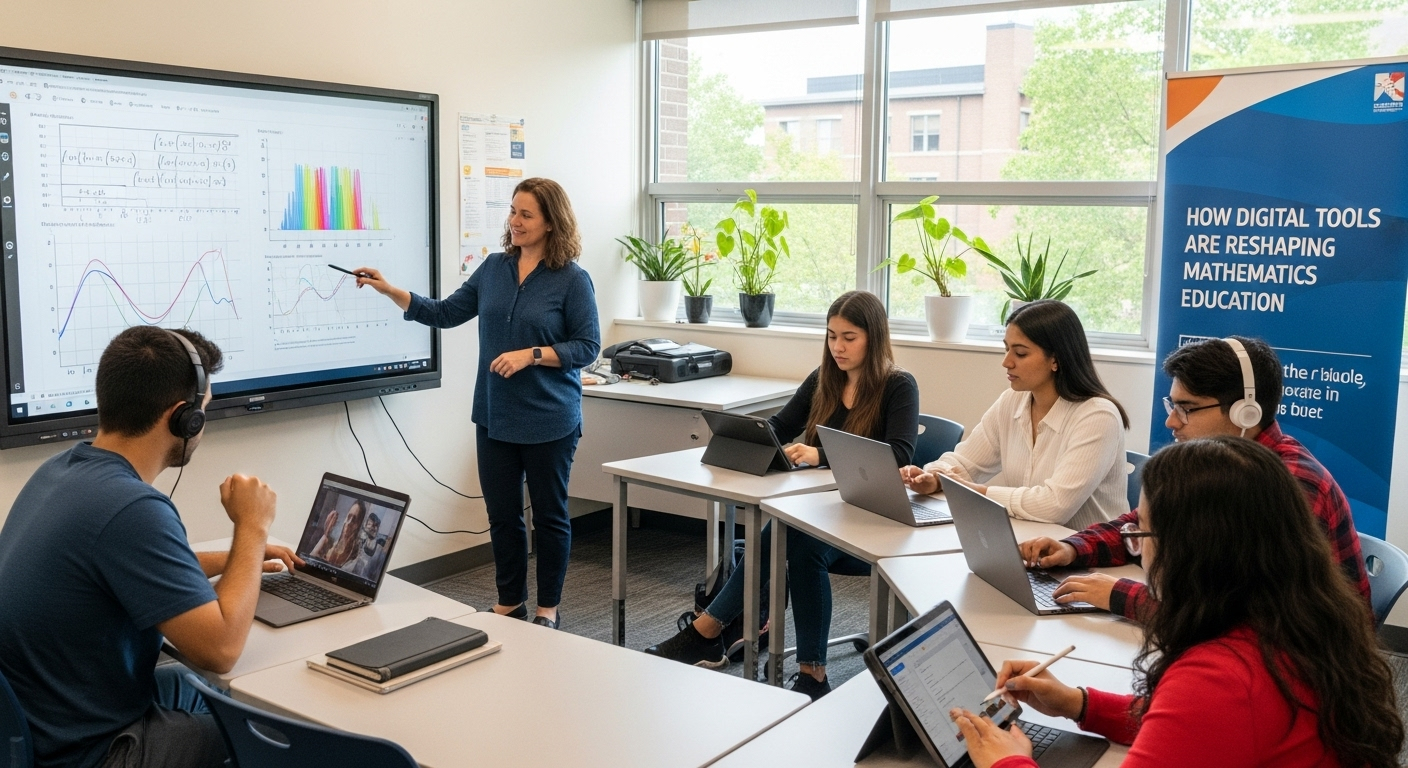
Mathematics has always been considered a subject of both challenge and importance. It is the foundation of logic, problem-solving, and analytical skills, all of which are essential in academic and professional life. However, despite its importance, many students struggle with math, particularly when faced with complex operations such as long division, fractions, or algebraic equations.
Over the past decade, the introduction of digital learning tools has significantly transformed how students approach math. Among these tools, advanced calculators stand out as some of the most effective. They are no longer limited to producing quick answers but now serve as interactive learning companions that break down each step of the process, making mathematics more accessible, engaging, and easier to understand.
The Evolution of Calculators
The story of calculators is one of constant progress. Early devices, such as the abacus, were mechanical and required manual skill. By the mid-20th century, electronic calculators made computation faster and more precise. With the rise of digital technology, calculators moved beyond handheld devices and into online platforms and mobile applications.
This evolution has fundamentally changed their role in education. Calculators have gone from being purely computational tools to interactive guides that not only display results but also explain methods. This development has turned them into valuable educational assets, ensuring that students learn both the “what” and the “how” of mathematics.
Why Modern Calculators Matter in Education
The needs of students today go beyond quick answers. They require tools that help them build understanding, improve confidence, and reduce anxiety. Educators also need supportive technologies that save time while reinforcing lessons.
Modern calculators address these needs through:
-
Step-by-step explanations of solutions
-
Visualizations of mathematical processes
-
Interactive error detection and guidance
-
Accessibility across multiple devices
-
Adaptability for different levels of difficulty
These capabilities make calculators essential in classrooms and at home, helping to build an environment where learning is more effective and less intimidating.
Digital Platforms and Accessibility
Another major factor in the rise of modern calculators is accessibility. In the past, high-function scientific or graphing calculators were expensive and sometimes out of reach for students from low-income backgrounds. Now, advanced calculators are widely available online at no cost or at very low prices.
This accessibility reduces educational inequality, ensuring that more learners have access to high-quality resources. With just a smartphone or a computer, students can practice math anywhere and anytime. For parents and teachers, this creates more opportunities to support children’s education without heavy financial investment.
The Importance of Interactive Learning
Traditional teaching methods often relied on repetition and memorization. While these approaches can be effective for building speed, they do not always foster deep understanding. Digital calculators improve this by encouraging interaction. Instead of just pressing buttons for results, students can see step-by-step reasoning, review mistakes, and try alternative methods.
This interactive element motivates learners to experiment, ask questions, and gain confidence. It also helps teachers by offering resources that complement classroom instruction and reduce time spent on routine calculations.
Practical Applications Beyond Schools
While calculators are crucial in education, their role extends far beyond classrooms. Professionals in fields like engineering, science, finance, and architecture rely on them daily.
For engineers, calculators verify structural calculations with precision. For financial analysts, they support complex investment models. Scientists use them for data simulations, while architects benefit from accurate measurement conversions.
These practical applications show that calculators are not only academic tools but also essential instruments in professional settings.
Specialized Calculators for Specific Needs
A growing trend in digital education is the creation of specialized calculators tailored to particular mathematical functions. Instead of generic problem-solving, these calculators focus on specific areas such as algebra, trigonometry, or fractions.
This specialization allows users to tackle their unique challenges more effectively. A clear example of this innovation is the calculadora de alicia mejorada, which highlights how targeted digital tools are being designed to make specific mathematical processes easier to understand and apply. By offering precision and step-by-step guidance, such calculators represent the future of personalized education.
Benefits for Students and Educators
Advanced calculators benefit both students and teachers in unique ways.
For Students:
-
Reduce fear and frustration when dealing with difficult problems
-
Provide clear explanations that support self-study
-
Allow independent practice, making learners less dependent on external help
For Teachers:
-
Save time during lessons by automating routine steps
-
Offer detailed solutions to explain challenging concepts
-
Support differentiated instruction for students with varying skill levels
Together, these benefits create a balanced learning environment where students are empowered and teachers are better supported.
Responsible Use of Technology
Despite their advantages, calculators should be used responsibly. Overreliance can weaken basic arithmetic and problem-solving skills. For this reason, it is important that students attempt problems manually before turning to calculators for confirmation or deeper understanding.
Educators and parents must encourage this balance, ensuring that calculators supplement rather than replace fundamental learning. This approach maximizes the benefits of technology while preserving essential cognitive skills.
The Future of Educational Calculators
Looking ahead, calculators will continue to integrate with advanced technologies. Artificial intelligence will allow them to adapt to individual learning styles, while voice recognition will make them easier to use. Augmented reality could even allow students to see three-dimensional graphs projected into their environments.
These innovations will move calculators from being simple problem solvers to intelligent, interactive learning assistants capable of personalizing education in ways never seen before.
Conclusion
The evolution of calculators mirrors the evolution of education itself. From simple devices that produced quick answers, they have become advanced tools that guide learners through each step of the process. Their importance spans from classrooms to professional fields, making them versatile and indispensable.
By embracing these innovations responsibly, we can ensure that mathematics becomes not only more accessible but also more engaging and effective for learners of all ages.
 Deutsch
 English
 Arabic
 French
 Spanish
 Portuguese
 Turkish
 Dutch
Dutch
 Italiano
 Russian
 Romaian
 Portuguese (Brazil)
 Greek
Greek
