


 Pro Benefits
 Sobre
Sobre
 Termos
 Privacidade
 Child Safety & Protection
 Notificações
 Ayrush Global It Services Pvt Ltd
“Customer Service Automation: AI, Chatbots & Support Best Practices”
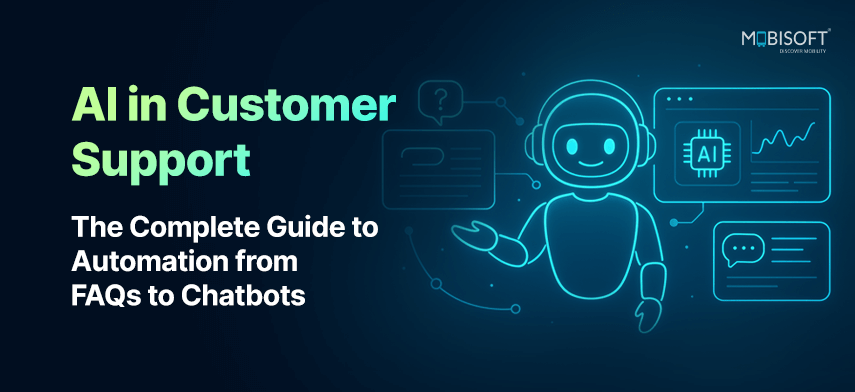
Picture this: A client reaches out for assistance via a short conversation, an email, or even a social media DM. They hope for a rapid, individual response, but behind the scenes, support teams are handling messages across an infinite number of channels. On both sides, delays accumulate, stress intensifies, and resentment escalates.
Does it ring a bell?
More than before, companies are under pressure to provide 24/7 customer support without sacrificing speed or quality. Relying only on human actors is no longer practicable at scale. Artificial intelligence (AI) enters here not to replace people, but to improve and automate customer service processes rapidly, effectively, and in a customer-centric manner.
AI in customer support has evolved far beyond basic, pre-set answers. From automated FAQ systems that guide customers to relevant solutions to smart AI-powered chatbots that manage complex questions and escalate when necessary, AI for customer support is transforming how support teams function. Today’s systems understand context, analyze intent, and engage users in natural, humanlike conversations.
From static FAQ pages to advanced generative AI customer support tools, this blog explores the transformational journey. We’ll cover the different types of AI tools for customer support, their benefits, practical implementation tips, and real-world use cases to help you deliver faster, smarter, and scalable service.
Why Automate Customer Support?

Customer service automation has undergone a radical transformation in its landscape. Consumers no longer tolerate long wait times, generic answers, or repeated interactions in an era of instant gratification and constant connectivity. They anticipate immediate, individualized help on any channel at any time. As these expectations grow, the pressure on customer support AI teams to provide quicker, better, and more scalable service also increases.
Here is where automation in customer service turns vital, not just convenient.
Rising Customer Expectations
Modern consumers want answers right away. Users anticipate real-time answers, whether they are tracing an order, solving a problem, or querying a product-related question. They also want interactions to be smooth and contextual, free from repetition or platform changing. Failure to satisfy these expectations can cause bad ratings, lost revenues, and waning client loyalty.
Operational Efficiency and Cost Savings
Manual assistance demands a lot of resources and time. Scaling a human agent team becomes costly and ineffective as your user base expands. Automating regular operations like responding to frequent queries or routing tickets using automated customer support tools frees up human agents to manage high-value, sophisticated cases. This not only cuts expenses but also raises team morale and output.
Challenges of Scaling Human-Only Support
While it might appear like a quick fix, more agents present new problems: training costs, variable service quality, lengthy onboarding times, and burnout. Sustaining continuous coverage across time zones becomes increasingly challenging. Customer support automation AI offers consistency, scalability, and around-the-clock availability, free from the need for ongoing recruiting, which helps to alleviate these problems.
The Shift Toward Self-Service and Omnichannel Engagement
Another significant trend is the rising preference for self-service. Customers want more and more help for themselves using FAQs, knowledge databases, or AI assistants before contacting a live representative. Given the growth of live chat, mobile applications, social media, messaging platforms, and communication channels, the necessity of a consistent, integrated support experience becomes imperative.
How AI in Customer Service Transforms Support Operations
Artificial intelligence in customer support enables businesses to address all of these issues simultaneously. AI-driven solutions like chatbot customer service, virtual assistants, and smart ticketing systems can swiftly react, readily scale, and customize interactions using historical data and consumer desire.
They lighten the burden on human agents, allow companies to fulfill contemporary support requirements without bankrupting them, and work around the clock. Automating customer service with AI helps future-proof support systems while also meeting current consumer expectations.
READ MORE: Types of AI-Powered Customer Support Solutions
 Portuguese (Brazil)
 English
 Arabic
 French
 Spanish
 Portuguese
 Deutsch
 Turkish
 Dutch
Dutch
 Italiano
 Russian
 Romaian
 Greek
Greek
