


 Pro Benefits
 About
About
 Voorwaarden
 Privacy
Complete Guide on How to Develop an Uber-Like Handyman App for On-Demand Services
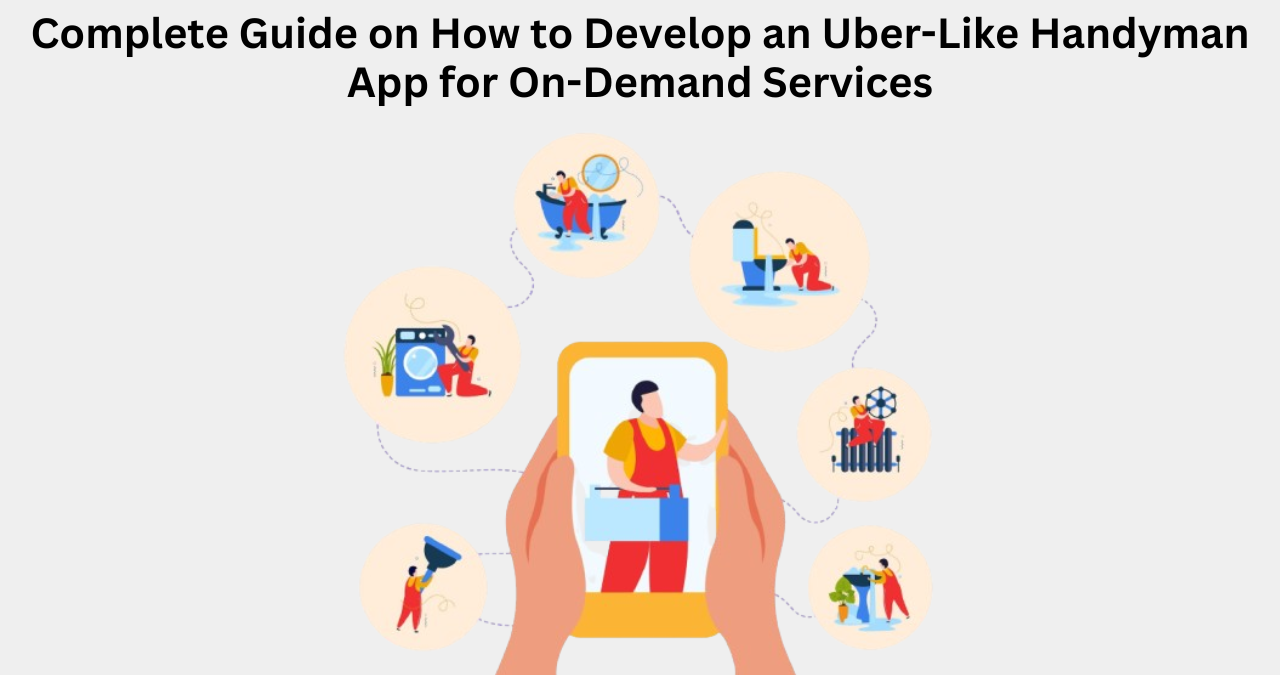
The rapid growth of the on-demand economy has transformed how people access everyday services, including home repairs and maintenance. Customers now prefer booking plumbers, electricians, cleaners, or carpenters through mobile apps rather than relying on traditional phone calls or local referrals. This shift has created a profitable opportunity for startups and service businesses to develop an Uber-like app for handyman services. Successfully building such an app requires a clear strategy, the right technology, and a strong focus on user experience in a competitive market.
Understanding the Uber-Like Handyman App Model
An Uber-like handyman app is a digital marketplace that connects customers with nearby service professionals in real time or through scheduled bookings. The platform manages service discovery, booking, payments, communication, and feedback within a single ecosystem. Customers benefit from transparency and convenience, while service providers gain consistent job opportunities and secure payments.
For businesses, this model reduces operational complexity and allows expansion without heavy physical infrastructure. The platform can support multiple service categories, dynamic pricing, and location-based matching, making it suitable for both local and multi-city operations.
Market Research and Idea Validation
Before development begins, market research is essential. Understanding customer pain points, preferred services, and pricing expectations helps shape the app’s feature set. Analyzing competitors reveals gaps in service quality, user experience, or pricing models that your app can address.
Startups should validate the idea by identifying a target audience, testing demand in a specific location, and defining a clear value proposition. This stage reduces risk and ensures the app solves real problems rather than adding another generic platform to the market.
Choosing the Right Business Model
Selecting a sustainable business model is a critical step. The commission-based model is widely used, where the platform earns a percentage from each completed service. This approach aligns revenue with transaction volume and supports scalability.
The subscription model allows service providers to pay a fixed fee for access to bookings and leads. While it offers predictable income, it requires strong demand to retain providers. Many platforms adopt a hybrid model, combining commissions and subscriptions to diversify revenue streams.
Additional income can be generated through featured listings, surge pricing during peak hours, and promotional placements within the app.
Defining Core Features for the App
Customer App Features
The customer-facing app must be simple and intuitive. Users should be able to sign up quickly, select a service category, describe their requirement, and confirm a booking in just a few steps. Location-based service matching helps display nearby professionals, reducing wait times.
Transparent pricing, secure digital payments, and real-time service tracking improve trust. In-app chat or call options allow direct communication with service providers. Ratings and reviews help users make informed decisions and encourage service quality.
Service Provider App Features
The service provider app focuses on efficiency and control. Professionals should receive instant job requests with service details, location, and estimated earnings. They can accept or reject bookings based on availability.
Features like schedule management, navigation support, and an earnings dashboard help providers manage their work effectively. Identity verification, document uploads, and skill validation ensure platform credibility and customer safety.
Admin Panel Features
The admin panel acts as the control center for the entire platform. It allows businesses to manage users, service providers, bookings, payments, and commissions from a centralized dashboard.
Admins can monitor performance metrics, handle disputes, manage service categories, and adjust pricing rules. Analytics and reporting tools provide insights into demand patterns, customer behavior, and provider performance, enabling data-driven decisions.
Selecting the Right Technology Stack
The technology stack determines the app’s performance, scalability, and maintenance cost. Cross-platform frameworks such as Flutter or React Native are popular choices, allowing startups to build apps for both Android and iOS efficiently. Native development offers high performance but increases development time and cost.
Backend development handles booking logic, notifications, payments, and real-time updates. Scalable technologies like Node.js or Laravel are commonly used. Cloud platforms ensure reliability, data security, and easy scalability as user traffic grows.
Third-party integrations include payment gateways, map services, SMS and push notifications, and analytics tools. A modular architecture allows future feature additions without disrupting existing functionality.
UI and UX Design Considerations
User experience plays a major role in the success of an Uber-like handyman app. A cluttered interface or complicated booking flow can lead to user drop-offs. The design should focus on clarity, consistency, and minimal steps to complete a booking.
For customers, the journey from service selection to confirmation should be smooth. For service providers, managing jobs and earnings should be straightforward. Responsive design ensures optimal performance across devices and screen sizes. Early usability testing helps identify and fix friction points before launch.
Security, Trust, and Compliance
Trust is critical in home service platforms, as customers invite professionals into their homes. Security measures must be integrated from the beginning.
Secure authentication, encrypted payments, and data protection policies safeguard user information. Background verification, ID checks, and skill validation for service providers build customer confidence. Clear cancellation policies and dispute resolution systems help manage conflicts fairly.
Compliance with local regulations related to data privacy, payments, and service operations ensures long-term sustainability and avoids legal issues.
Development Process and MVP Strategy
Startups should begin with a minimum viable product that includes essential features such as booking, payments, service tracking, and reviews. Launching an MVP allows businesses to test the market, gather user feedback, and refine the platform without heavy upfront investment.
Once the MVP gains traction, advanced features like AI-based matching, analytics dashboards, and multi-language support can be added. An agile development approach ensures continuous improvement and faster adaptation to user needs.
Cost to Develop an Uber-Like Handyman App
Development costs vary based on feature complexity, platform choice, and design requirements. A basic MVP costs less and focuses on core functionality, while advanced platforms with multiple service categories, analytics, and automation require higher investment.
Additional costs include UI/UX design, backend infrastructure, third-party integrations, testing, and post-launch maintenance. Planning phased development helps manage budgets while supporting long-term growth.
Read More: Why White-Label Solutions Fastest Way to Launch a Handyman App Like Uber?
Scaling the On-Demand Handyman Platform
Scalability should be built into the platform from day one. Cloud-based infrastructure supports flexible scaling as user demand increases. Expanding to new cities or adding service categories becomes easier with a well-structured backend.
Data analytics helps identify high-demand areas, optimize pricing, and improve service allocation. Automation in provider onboarding and service matching further supports efficient scaling.
Marketing and Growth Strategy
A strong marketing strategy is essential after launch. App store optimization improves visibility, while digital marketing campaigns drive targeted traffic. Referral programs encourage organic growth and increase user retention.
Partnering with local service professionals helps build supply quickly, ensuring service availability during early stages. Promotional offers and discounts attract first-time users and boost initial adoption.
Common Challenges and How to Overcome Them
Balancing demand and supply is a frequent challenge. Too many users without enough providers cause delays, while too many providers without bookings lead to dissatisfaction. Controlled onboarding and region-wise expansion help maintain balance.
Maintaining consistent service quality across locations requires continuous monitoring, feedback analysis, and provider training. Clear policies for cancellations, refunds, and disputes help protect both customers and service providers.
Future Trends in Uber-Like Handyman Apps
The future of on-demand handyman apps lies in personalization and automation. AI-driven service recommendations, dynamic pricing, and predictive demand analysis will improve efficiency. Subscription-based home maintenance plans and smart home integrations are also gaining popularity.
Platforms that invest in adaptable technology and continuous innovation will stay competitive as customer expectations evolve.
Conclusion
Developing an Uber-like handyman app for on-demand services requires careful planning, the right technology, and a strong focus on user trust and experience. From choosing a sustainable business model to building scalable architecture and launching with an MVP, every step impacts long-term success. A well-executed platform connects customers with skilled professionals while streamlining operations and enabling growth. Partnering with an experienced clone app development company helps accelerate development, reduce technical risks, and deliver a future-ready solution that adapts to market demands.
FAQs
What is an Uber-like handyman app?
It is an on-demand platform that connects customers with nearby service professionals for home repairs and maintenance through a mobile app.
How long does it take to develop a handyman app?
A basic MVP can take three to four months, while a fully scalable platform may require five to seven months.
Which business model works best for handyman apps?
Commission-based and hybrid models are the most effective, offering scalable and diversified revenue streams.
Can the app support multiple service categories?
Yes, the platform can be designed to handle various home services and expanded easily as the business grows.
Why choose a clone app development company for this project?
A clone app development company provides proven frameworks, faster development, scalability, and industry expertise, helping reduce time to market and technical risk.

 English
 Arabic
 French
 Spanish
 Portuguese
 Deutsch
 Turkish
 Italiano
 Russian
 Romaian
 Portuguese (Brazil)
 Greek
Greek
