


 Pro Benefits
 About
About
 Terms
Terms
 Privacy
 Child Safety & Protection
 Notifications
 Ayrush Global It Services Pvt Ltd
Legacy System AI Integration: Modernizing Without Replacing
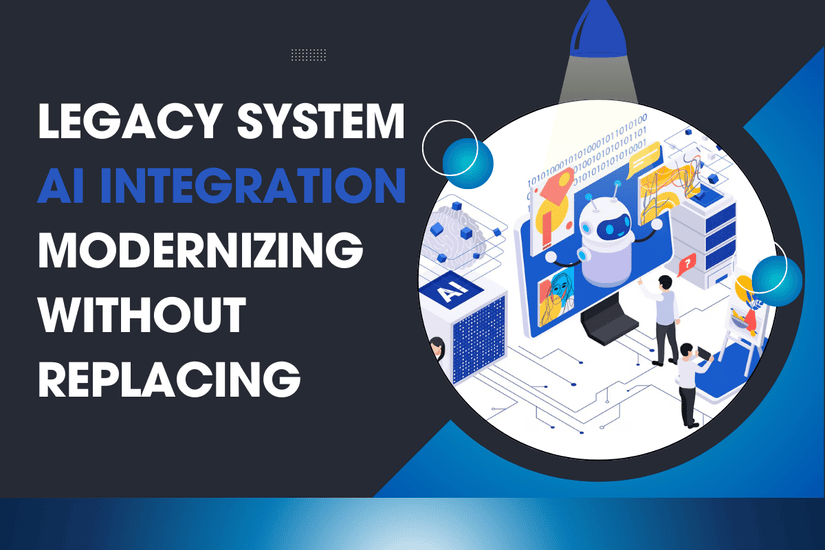
Many enterprises continue to rely on legacy systems that have powered their operations for decades. These systems often store critical data, support core business processes, and remain deeply embedded in organizational workflows. However, as digital transformation accelerates, legacy platforms struggle to keep up with demands for automation, intelligence, and real-time decision-making.
Replacing legacy systems entirely is costly, risky, and disruptive. Instead, organizations are increasingly choosing a smarter path: integrating artificial intelligence into existing systems to unlock new capabilities while preserving stability. Legacy system AI integration allows businesses to modernize incrementally, gaining intelligence without starting from scratch.
Understanding the Value of Legacy Systems
Legacy systems are often viewed as outdated, but they still offer significant value. Many are highly stable, customized for specific business needs, and trusted by internal teams. They contain years of historical data that can be invaluable for analytics and predictive modeling.
The challenge lies not in the systems themselves, but in their limited ability to adapt to modern requirements. By augmenting these platforms with AI, organizations can extend their lifespan while improving efficiency, accuracy, and responsiveness.
What Is Legacy System AI Integration?
Legacy system AI integration involves embedding AI-driven capabilities into existing software environments. Rather than replacing core systems, AI components are layered on top or connected through interfaces such as APIs and middleware.
This approach allows organizations to introduce features like intelligent automation, predictive analytics, and natural language processing without altering foundational infrastructure. Businesses often rely on specialized AI integration services to ensure seamless communication between AI models and legacy applications.
Common Challenges in Modernizing Legacy Systems
Integrating AI with legacy systems is not without obstacles. Many older platforms were not designed for interoperability, making data extraction and real-time processing difficult. Data may be siloed, poorly structured, or stored in outdated formats.
Security and compliance concerns also arise, particularly in regulated industries. Successful AI integration requires careful planning to ensure data integrity, system performance, and regulatory adherence are maintained throughout the modernization process.
Key AI Capabilities That Enhance Legacy Systems
AI brings several transformative capabilities to legacy environments. Intelligent automation reduces manual workloads by handling repetitive tasks such as data entry, reporting, and validation. Predictive analytics enables organizations to anticipate trends, detect anomalies, and make data-driven decisions.
Natural language processing allows legacy systems to interact with users through conversational interfaces, while machine learning models uncover insights hidden within historical datasets. These enhancements turn static systems into adaptive, insight-driven platforms.
Architectural Approaches to AI Integration
There are multiple architectural strategies for integrating AI into legacy systems. One common approach is the use of middleware that acts as a bridge between AI models and existing applications. Another involves exposing legacy system data through APIs, allowing AI engines to process information externally.
Cloud-based AI services are also frequently used to offload computation while maintaining on-premise legacy systems. Organizations leveraging artificial intelligence development services can design architectures that balance performance, scalability, and security without disrupting ongoing operations.
Data Preparation and System Readiness
Data is the foundation of effective AI integration. Before deploying AI models, organizations must assess data quality, consistency, and accessibility. Legacy data often requires cleaning, normalization, and enrichment to be usable for AI-driven analysis.
System readiness also includes evaluating infrastructure capacity, integration points, and workflow dependencies. Preparing both data and systems in advance reduces implementation risks and ensures smoother AI adoption.
Governance, Security, and Compliance Considerations
AI integration must align with organizational governance frameworks and regulatory requirements. This includes defining access controls, audit trails, and monitoring mechanisms to track AI-driven actions and decisions.
Security measures such as encryption, role-based access, and continuous monitoring are essential, particularly when sensitive data is involved. Strong governance ensures that AI enhances trust rather than introducing new risks.
Measuring Impact and Scaling AI Capabilities
Once AI is integrated into a legacy system, measuring its impact is critical. Metrics such as process efficiency, error reduction, cost savings, and user satisfaction help assess value creation.
Successful pilots can then be scaled across additional workflows or departments. Incremental scaling allows organizations to continuously modernize while minimizing disruption and maximizing return on investment.
Also Read: 10 Best Practices for Successful Implementation of AI Integration
Conclusion
Legacy system AI integration offers a practical path to modernization without the risks associated with full system replacement. By embedding intelligence into existing platforms, organizations can unlock new efficiencies, insights, and capabilities while preserving operational continuity.
As technology evolves, the ability to modernize incrementally will become a competitive advantage. Businesses that strategically integrate AI into their legacy systems position themselves for sustainable growth in an increasingly intelligent digital landscape.
FAQs
1. Why do organizations avoid replacing legacy systems entirely?
Replacing legacy systems is often expensive, time-consuming, and risky. Integration allows organizations to modernize while maintaining stability and continuity.
2. Can AI work with very old software platforms?
Yes, AI can be integrated with older systems using APIs, middleware, or data extraction layers, depending on system architecture and constraints.
3. How long does legacy system AI integration take?
Timelines vary based on system complexity, data quality, and use cases, but most projects follow a phased approach that delivers value incrementally.
 English
 Arabic
 French
 Spanish
 Portuguese
 Deutsch
 Turkish
 Dutch
Dutch
 Italiano
 Russian
 Romaian
 Portuguese (Brazil)
 Greek
Greek
