


 Pro Benefits
 About
About
 Termini e Condizioni
 Privacy
 Child Safety & Protection
 Notifiche
 Ayrush Global It Services Pvt Ltd
How To Estimate A Construction Bid?
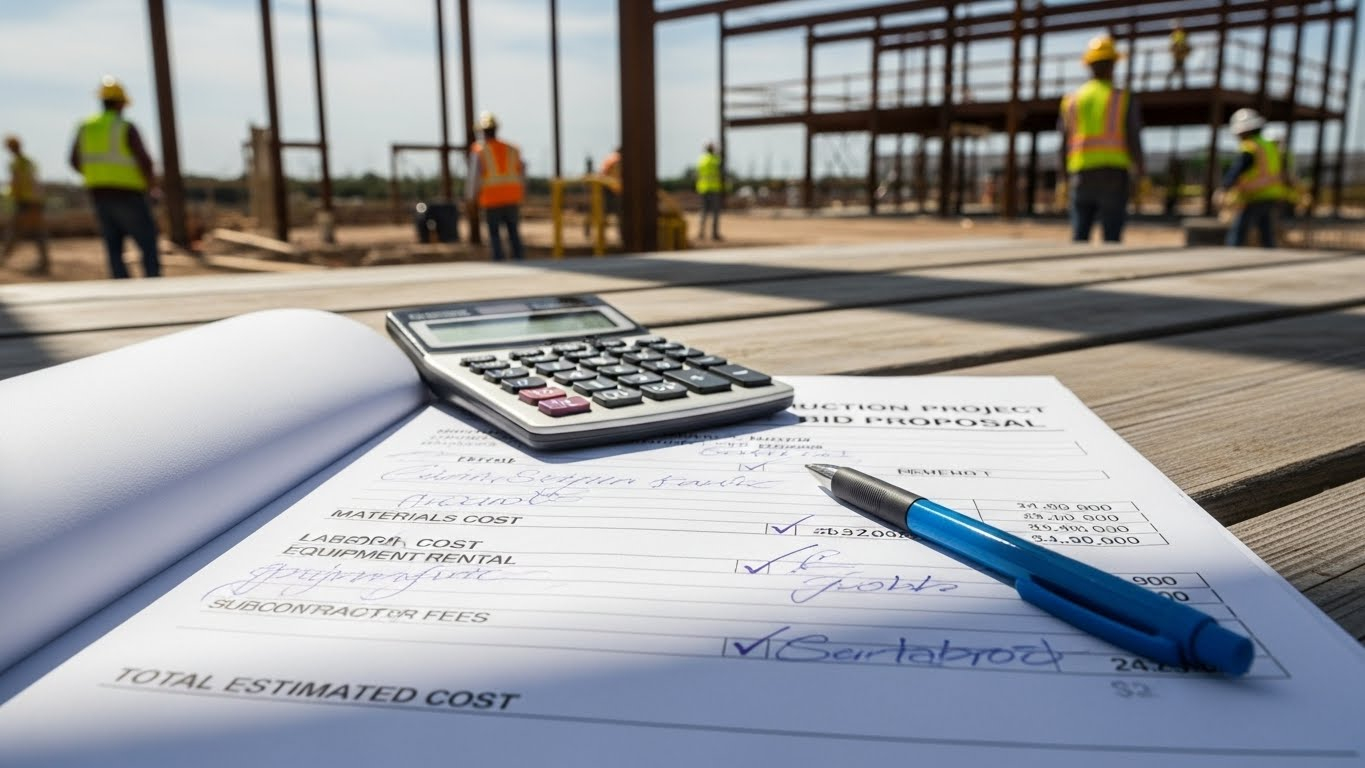
In any construction job, estimating a construction budget is crucial. It is a valuable service that helps the builder manage the project. An effective bid will clearly outline the final cost, work required, and timeline. If the bid is transparent, it reduces tension for the builder and builds client confidence. Good estimates are not based on guesswork. An accurate estimate requires a thorough study of all aspects of the work.
It is important to consider all aspects of a bid: materials, labour, equipment, the issues at hand, any site-specific concerns, danger, waste, etc. It provides a blueprint for the builder. Helps avoid unexpected issues such as additional cost or prolonged delays. Each stage of the construction process must be followed with precision. This will ensure that the end bid remains fair. This guide will explain everything clearly and in detail.
Costs Included In Construction Budget
The bid should include both indirect and direct costs. Direct costs, or the costs directly related to the task, are what you should focus on. This includes materials, services, and labour. Costs must be listed along with the most recent market rates. As soon as the costs are realistic, you can move forward without being shocked by the budget.
They are also necessary, but not necessarily directly linked to the specific job. They include storage, transport, safety gear, and staff support. Many builders ignore indirect costs. They can increase in cost and lead to stress later if these costs aren't included. It is important to list indirect costs clearly and concisely.
In addition to overhead, a bid should also consider other costs. Office rent, phones, administrative assistance, and all other costs are included. Overheads keep the company afloat during the entire project. Overhead is clearly shown by a straightforward bid.
Profit is an important part. Profitability is important for any builder who wants to be stable and continue growing. Profit margins should be fair. An extremely small profit margin could lead to a loss. High margins could drive away clients. A healthy margin is a sign of trust. Some projects may require an extra charge for things like soil tests and permits. Adding these early is important. They will make the customer feel secure.
Understanding the Builder’s Workflow
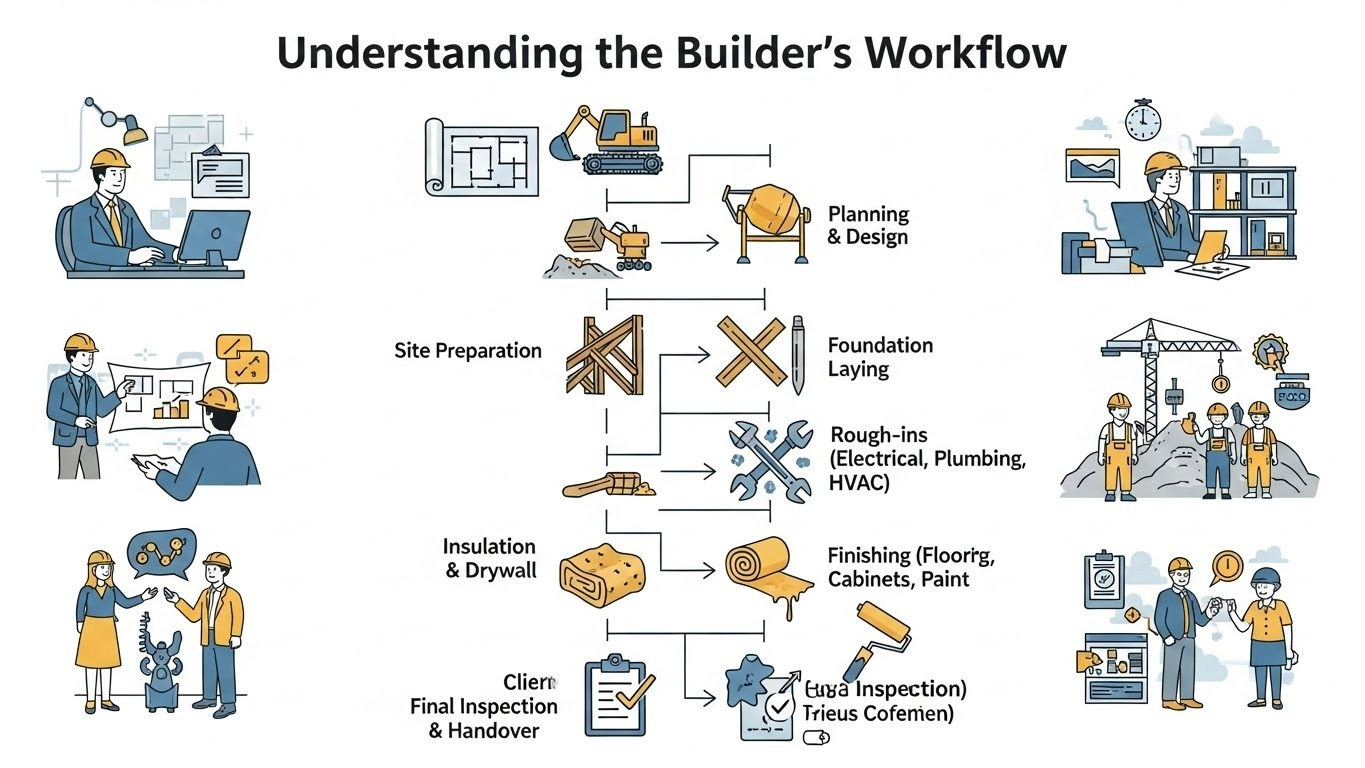
The builder studies the drawings, notes, and design. Each room, wall, pipe, wire, and finish must be understood. When the plan is clear, the builder breaks the job into small parts. These parts help show what materials and labour are needed. Construction quantity takeoff helps list each brick, tile, board, pipe, and wire with the right number. It helps the builder avoid mistakes and hidden costs. It also helps compare supplier prices and plan the order list smartly. When the material count is correct, the whole bid becomes stronger and more accurate.
Builder works on the labour hours: Labour is a major cost. Each task needs a clear time estimate. A skilled task may need fewer people but more hours. A large, simple task may need many hands. The builder must study how long each job part takes. This helps set a fair cost and a real timeline.
Check the services and equipment: Some parts of the job need small services. Other parts need heavy machines. Machines may need rent, fuel, and upkeep. A builder lists all services with cost. This step helps avoid sudden extra charges later in the job.
Builder studies the site: The site may have poor soil, tight space, steep ground, or tricky access. A hard site slows work and raises costs. A simple site makes work faster. Site study helps the builder plan labour, transport, and safety rules. When the site is clear, the bid becomes more true to real life.
Build a Bid That Considers Risk, Cost, Cushion, and Waste
All construction jobs involve some degree of risk. Prices may rise. Conditions such as weather may cause delays. Materials may arrive late. A site could have hidden issues. This is why a builder needs to provide some cushioning. This cushion will protect both the contractor and client. You must make it clear and fair.
The construction industry is no exception. Some material breaks. Some is too small. Some material is cut into offcuts. To avoid shortages or extra costs, a contractor must understand the typical waste rate. This will help avoid shortages or added costs. It is important to add waste in a clearly defined line.
Speed also increases risk. Fast jobs cost more. Fast-paced jobs cost more. Slow jobs may cost less. If you bid well, the price will match your timeline.
Use market research to make better bidding
In-depth market research is essential to making a winning bid. Prices on the market are subject to frequent change. Labor rates are constantly changing. Markets are flooded by new products. Old services will be removed. Unsuccessful builders who work with older numbers can lose their money. When a contractor studies the most recent market rates, he is in a safe position.
Comparison of suppliers can be done by comparing market studies. When comparing suppliers, a builder will consider the price, product quality, delivery speed, and reliability. This allows the builder to select the most suitable supplier. It is important to choose the right supplier for your job.
Analysing old projects is another way to help. Previous jobs reveal patterns. Some tasks require a longer time. Some materials will always be more expensive. Some services will break more quickly. Learning from past experiences helps a builder to make more accurate bids.
Present a professional and clear bid

It is essential to have a good presentation. A transparent bid creates trust. A messy bid causes fear. The entire list of terms, tasks, prices, timelines, and costs must be shown in the bid. The text should be clean. The numbering must be right. Builders should check their maths multiple times.
The bid must contain the following: start date, ending date, payment step, and rules. You must ensure that the client feels comfortable reading your bid. Clarity prevents arguments. A bid that is simple to understand makes the builder appear more knowledgeable.
Easy updates should be allowed in the bid. Clients are often changing parts of their jobs. In this case, the builder carefully updates the cost sheet. This is because a flexible offer will help to guide the project smoothly.
Strong Habits To Improve Your Bids In The Future
The builder gets better with every project. Solid habits can help you build stronger bids. Some of these habits include taking the time to carefully read every plan and material, keeping track of labour hours, as well as recording waste. These habits allow the builder to better understand why and where waste occurs.
It is important to keep notes for each job. This will improve the bids you make in the future. Notes can help to identify what went wrong or what went right. Over time, the builder gains in speed and intelligence. They become more exact and accurate.
Final thoughts
A construction offer is more than a simple number. This is an entire plan that will lead the project to completion. By following each step carefully and in great detail, a builder can make the task easier, safer, and more equitable. A good bid can save time, protect money, and build trust. When the building contractor uses the right methods, he builds his good name and future.
FAQs
What makes up a successful construction proposal?
There is a clear list of costs and tasks with all their details.
Why does a contractor add a safety cushion?
It protects the buyer and the builder against unexpected price increases or delays.
What can market analysis help with?
Market research helps builders to keep prices fresh and reduce losses.

 English
 Arabic
 French
 Spanish
 Portuguese
 Deutsch
 Turkish
 Dutch
Dutch
 Russian
 Romaian
 Portuguese (Brazil)
 Greek
Greek
