


 Pro Benefits
 Sobre
Sobre
 Termos
 Privacidade
 Child Safety & Protection
 Notificações
 Ayrush Global It Services Pvt Ltd
How Card Printers Are Transforming Secure ID and Access Management
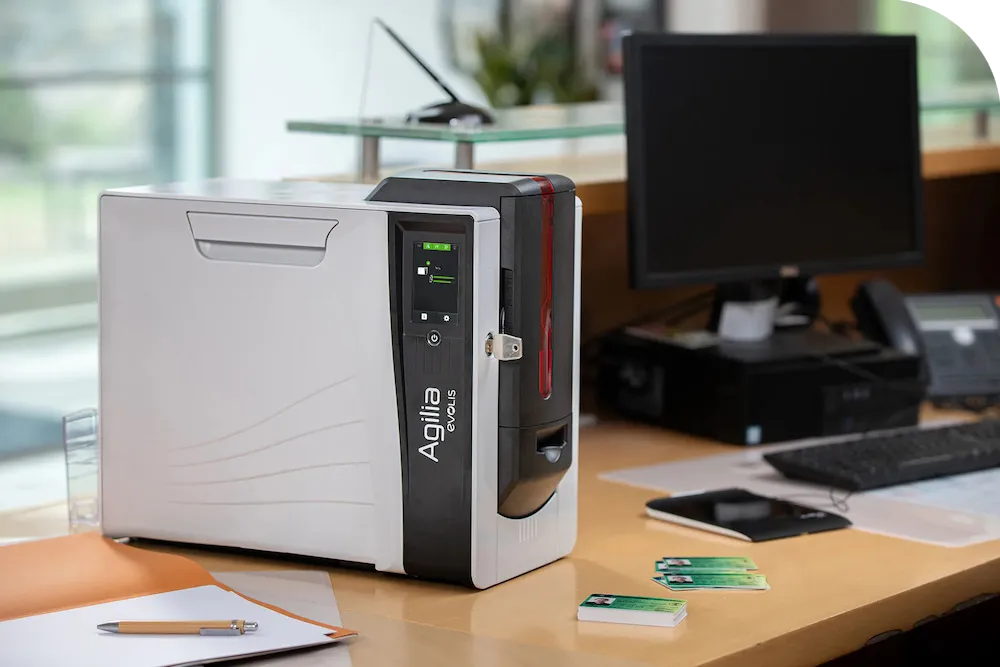
In today’s digital-first environment, security and identity verification are more important than ever. From corporate offices to hospitals and educational institutions, organisations are increasingly relying on physical identification systems to manage access, protect data, and ensure safety. At the centre of these systems are modern card printers, which have evolved far beyond simple badge printing tools.
With advancements in technology, a printer for plastic cards now plays a crucial role in secure ID creation, while the modern card printer machine has become an essential asset for organisations that require efficiency, accuracy, and control over identification processes.
The Evolution of Card Printers in Modern Security Systems
Early ID card systems were often outsourced, slow, and limited in customisation. Today’s card printers allow organisations to produce secure identification cards in-house, on demand, and with greater control over data and access.
Modern card printer machines support high-resolution printing, smart card encoding, magnetic stripe technology, and even biometric integration. This evolution has transformed the way organisations manage access, shifting from static systems to dynamic, flexible security solutions.
A reliable printer for plastic cards enables instant issuance of ID cards, reducing security gaps that occur when access credentials are delayed or manually processed.
How Plastic Card Printers Support Secure Identification
A key advantage of using a printer for plastic cards is the ability to integrate multiple security features directly into the card. These features help prevent duplication, unauthorised access, and identity misuse.
Common security features include:
-
Photo identification for visual verification
-
Barcodes or QR codes for system integration
-
Magnetic stripes or smart chips for controlled access
-
Holograms or overlays for anti-counterfeiting
By producing cards on-site, organisations maintain full control over who receives access and when. This reduces reliance on third-party providers and minimises the risk of sensitive information being exposed.
Industries Relying on Card Printer Machines
The versatility of modern card printers has led to widespread adoption across multiple sectors. Each industry uses card printer machines differently, but the core objective remains the same—secure and efficient identity management.
Corporate and Commercial Offices
Businesses use card printer machines to issue employee ID badges that control access to offices, restricted areas, and equipment. These cards can also be used for time tracking and visitor management.
Education Sector
Schools, colleges, and universities rely on a printer for plastic cards to issue student and staff IDs. These cards often integrate library access, attendance tracking, and campus security systems.
Healthcare and Medical Facilities
Hospitals and clinics use secure ID cards to manage staff access to sensitive areas and patient data. In healthcare environments, reliable card printers help ensure compliance with strict privacy and security regulations.
Government and Public Services
Government agencies use card printer machines for identification, licensing, and access control. The ability to produce secure cards internally supports efficiency and accountability.
Key Features That Improve Security and Efficiency
Not all card printer machines offer the same level of performance. Organisations evaluating card printers should focus on features that enhance both security and operational efficiency.
High-Resolution Printing
Clear images and text improve visual verification, reducing the risk of misuse or impersonation.
Encoding Capabilities
Modern printers can encode smart cards and magnetic stripes, allowing integration with access control systems.
Speed and Reliability
Fast printing speeds ensure minimal delays, particularly in high-traffic environments where IDs are issued frequently.
Software Integration
Advanced card printers integrate with ID management software, making it easier to manage databases, permissions, and card lifecycles.
These features collectively ensure that a printer for plastic cards supports secure identification while streamlining internal processes.
Why In-House Card Printing Is Gaining Popularity
More organisations are choosing to bring card printing in-house rather than outsourcing. This shift is driven by the need for flexibility, cost control, and faster turnaround times.
With an in-house card printer machine, access credentials can be issued immediately, revoked quickly, and updated as needed. This responsiveness is critical in environments where staff turnover or visitor access is frequent.
Providers such as InteractCard support organisations by offering guidance on selecting card printers that align with specific security and operational needs—without disrupting existing systems.
The Role of Card Printers in Access Management Systems
Access management is no longer limited to locked doors. Modern systems integrate physical ID cards with digital databases, creating layered security environments. Card printers act as the bridge between physical identification and digital access systems.
A well-configured printer for plastic cards ensures that each card is unique, traceable, and aligned with defined access permissions. This reduces administrative errors and enhances overall security posture.
Future Trends in Card Printing Technology
As security needs evolve, card printer machines continue to advance. Emerging trends include:
-
Contactless smart cards
-
Integration with mobile credentials
-
Enhanced encryption and data protection
-
Sustainable card materials
These innovations further reinforce the importance of choosing scalable and future-ready card printers that can adapt to changing security requirements.
Final Thoughts
From secure offices to healthcare facilities and educational campuses, card printers have become a cornerstone of modern ID and access management. A dependable printer for plastic cards enables organisations to maintain control, improve efficiency, and enhance security, while a well-chosen card printer machine supports long-term operational needs.
As organisations continue to prioritise safety and identity verification, working with experienced providers such as InteractCard helps ensure that card printing solutions align with both current demands and future growth—without unnecessary complexity or risk.

 English
 Arabic
 French
 Spanish
 Deutsch
 Turkish
 Dutch
Dutch
 Italiano
 Russian
 Romaian
 Portuguese (Brazil)
 Greek
Greek
