


 Pro Benefits
 О нас
О нас
 Условия использования
 Конфиденциальность
 Child Safety & Protection
 Оповещения
 Ayrush Global It Services Pvt Ltd
Independent Eating for Toddlers: What Parents Can Learn from Global Trends

Go online for a minute — and your feed will probably show a few cute clips of toddlers happily feeding themselves. Tiny hands holding spoons, little faces smeared with dal or yogurt, and those beautiful proud grins that melt hearts! These children, often from Western homes, seem so confident; they pour their own water, announce they’re “done,” and even help set the table afterwards.
For Indian parents, though, it can feel like a faraway dream. In most homes across India, especially joint or traditional ones, feeding is an act of love. Grandma chasing a giggling toddler with a bowl of halwa is a daily sight. We worry — what if they spill it all? What if they miss out on their nutrition? And let’s be honest, many of us secretly enjoy feeding them ourselves.
But can we blend these two worlds? Can Indian families nurture independence without losing that warmth or our cultural roots?
At Modern Early, the Top Play School in Pitampura, we believe not only can we — we should. Let’s take a look at what parents can learn from global trends while staying proudly Indian at heart.
Why Independent Eating Really Matters
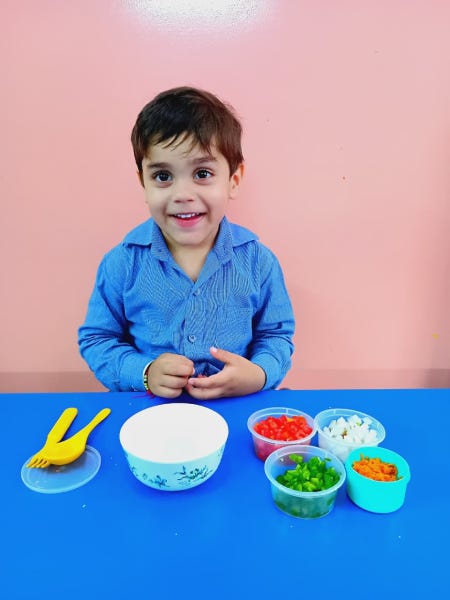
Independent eating isn’t just a Western parenting fad. It’s about giving children small, age‑appropriate responsibility and freedom to explore. When toddlers feed themselves, something amazing happens — they engage with food. They touch it, feel it, discover textures. This sensory play strengthens neural connections and fine motor skills.
Research (and everyday observations) show how self‑feeding builds several abilities:
-
Improved hand‑eye coordination.
-
Greater willingness to try diverse foods.
-
Better communication of hunger/fullness.
-
Reduced mealtime power struggles — because they feel ownership.
We see this every day inside our classrooms and dining areas. The focus isn’t only on nutrition but on the overall learning experience. That’s what makes the Best Preschools in New Delhi stand apart — they see eating as a developmental activity, not just a task.
Indian Culture & Independent Eating: Finding the Balance
Let’s admit — our hesitation is not without reason. We’re scared they won’t eat enough. We hate the mess. Our elders may see spoon‑feeding as affection.
But independence doesn’t mean neglect. It’s about “guided freedom.”
Start small. During lunch, let your child feed themselves for, say, the first 10 minutes. Offer easy‑to‑handle foods — mini idlis, tiny rotis with ghee, soft veggie sticks. Sit close, don’t rush to correct every spill. If required, help gently later.
That’s how kids build confidence while parents stay relaxed. It’s a middle path that respects our bonding traditions yet empowers growing kids.
Even at Modern Early, we blend this approach with Indian sensibilities — our mealtime educators guide, but never overrule, ensuring comfort and cleanliness through systems inspired by our health and safety standards.
How Parents Can Encourage Independent Eating at Home
1. Predictable Mealtimes
Toddlers thrive when they know what’s next. Fix meal schedules. Use the same seat or mat each time. Stability reduces anxiety, and independent eating feels normal not forced.
2. Child‑Friendly Portions
A big plate can intimidate a tiny child. Offer small portions; let them ask for seconds. It gives them a voice and builds confidence in expressing needs — something we strongly reinforce at our Top School New Delhi network.
3. Encourage Finger Foods
Finger foods are the perfect start! Bite‑sized rotis, boiled sweet potatoes, or cut fruits let toddlers practice controlled movements. Once they master this, bring in the spoon gradually.
4. Accept the “Mess Phase”
Yes, mess is inevitable. But mess means exploration. You can always protect the area with mats. The key is patience; resist jumping in every second. Even in our playful dining sections (part of the recreational areas on campus), teachers model calm behavior so children mirror them naturally.
5. Eat Together, Talk Together
Children are incredible observers. Sit with them, eat with them. Show them how you chew, sip water, wipe your mouth. A few minutes of shared calm builds lifelong healthy habits.
6. Keep Screens Away
Screens hijack attention and dull appetite. Independent eaters need focus; that’s how they sense fullness and enjoyment. Switch off the devices and keep mealtimes mindful.
7. Praise the Effort, Not Just Clean Plates
Parents often say “Don’t spill!” or “Please finish everything.” Instead, try, “I love how you’re holding the spoon!” or “You tried something new today.” These statements motivate, not shame.
Global Inspirations with Indian Adaptation
In Japan, children as young as three participate in school lunch service — they help lay the table and clear up later. In Italy, meals are long, social affairs that teach conversation and community.
We can adapt that spirit here by encouraging toddlers to perform small acts — placing their napkin, carrying their bowl to the sink, wiping minor messes. These aren’t chores, they’re confidence‑builders.
Building independence this early influences learning elsewhere too, which is why so many families exploring Education in Pitampura New Delhi choose Montessori‑style environments where responsibility is naturally woven into the day.

How Schools Support the Process
At Deepali, known as one of the Nursery Schools in Pitampura, Delhi, teachers guide toddlers through practical‑life activities like pouring, scooping, and serving in groups.
These small routines:
-
Build patience.
-
Improve social etiquette (“Please pass that!”).
-
Encourage sharing and empathy.
We also train staff meticulously in nutrition and hygiene following our campus‑wide health & safety policy. Parents often tell us their kids start helping at home too — carrying spoons or reminding elders to wash hands before meals!
If you’re curious how this looks daily, our Modern Early schedule and methodology across branches (see our campuses) show how structure and freedom can work together gracefully.
The Global Trend of Gentle Independence
Across many cultures, there’s a growing realization — childhood independence doesn’t undermine love; it deepens it. A toddler who can express hunger or fullness is healthier inside and calmer emotionally.
Western societies may start earlier, but the cultural warmth of Indian parenting ensures emotional security never gets lost. The sweet spot lies in merging both — care and independence.
Parents looking for schools that echo this philosophy often find it naturally implemented in the Best Pre‑nursery Schools in Pitampura Delhi, where initial stage programs allow exploration balanced with guidance.
Real‑World Stories from Parents
Take Megha, mother to two‑year‑old Taru. She recalls, “At first, I couldn’t watch him eat alone — so messy! But then I saw him grow calmer, even eager to try dal.”
Or Ansh’s dad, who says, “After joining Modern Early, he began saying, ‘I’ll feed myself!’ Now he wipes the table, too.”
These stories reflect what transition looks like — slow, imperfect, yet immensely rewarding.
A Broader Look at Early Education
Independent eating ties beautifully into holistic learning. Mealtimes build discipline, vocabulary, and group interaction — all key aspects of new‑age early education models followed in the Best CBSE School in Delhi network.
The ethos runs through every area — from sandbox play to language development. It’s this fusion of routine and self‑expression that builds capable learners ready for future schooling.
So, if you’re exploring admission options or visiting open houses across Top playschool school Delhi, keep an eye out for those little dining corners — they often say the most about how deep the learning truly goes!
Conclusion: Freedom with Familiarity
Independent eating isn’t about mimicking social media trends or rejecting family traditions. It’s about trust — trusting your tiny one to explore, make mistakes, and gradually discover competence.
Start small. Stay patient. Smile (yes, even when they spill that curd again). The goal isn’t perfect table manners, it’s lifelong curiosity and self‑confidence.
When parents and educators act together, children learn to feed themselves and nurture others — a truly priceless skill. That’s the heart of what we practice every day at Modern Early, nurturing little ones who eat, think, and grow independently… but always feeling deeply loved.
Modern Early Years, Deepali Campus (Early Years Facility of The Modern School ECNCR-DELHI)
Address: Deepali, Pitampura — New Delhi
Phone: 011–27012531, 011–27012532, 011–27012533
Email: deepali@modernschoolec.com
 Russian
 English
 Arabic
 French
 Spanish
 Portuguese
 Deutsch
 Turkish
 Dutch
Dutch
 Italiano
 Romaian
 Portuguese (Brazil)
 Greek
Greek
